
Three Modes of Disintegration Propaganda Hitchhiking on the 'Pig Party' Film
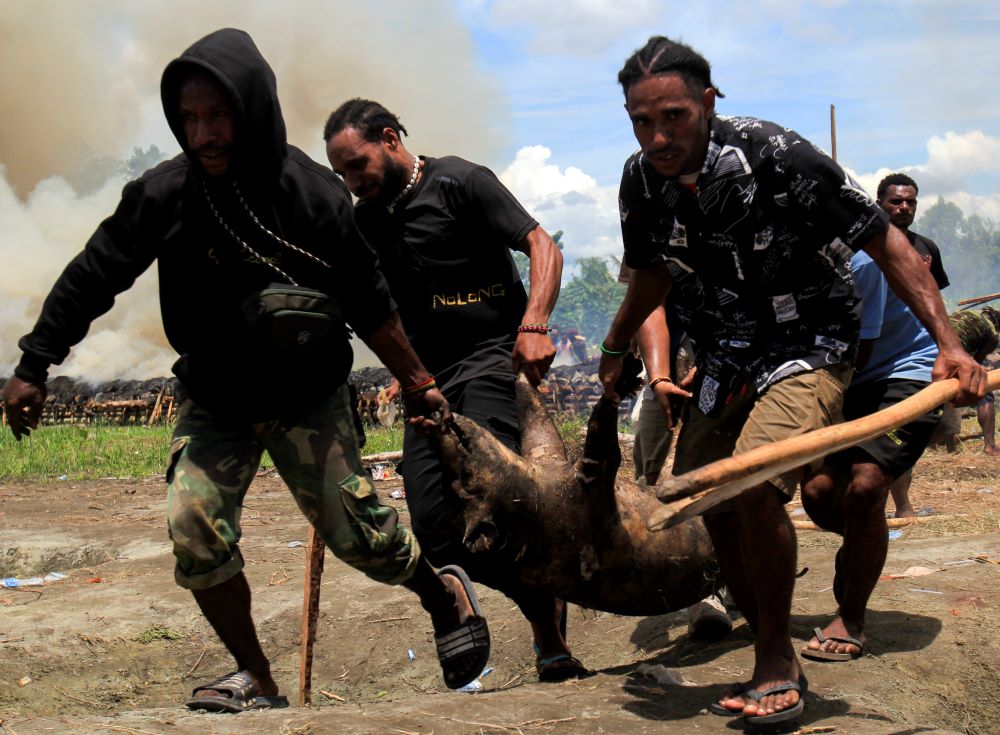
Political analyst and alumnus of the Rajaratnam School of International Studies (RSIS), Rico Marbun, has assessed that there are strong indications of an attempt to hitchhike on the film ‘Pesta Babi’ (Pig Party) to disseminate propaganda for the disintegration of Papua from Indonesia. According to Rico, this is evident from three propaganda patterns observed in the film. “The presence of this film is no longer merely social criticism. There is a communication pattern that leads to the formation of a narrative for the separation of Papua from Indonesia,” Rico stated on Tuesday. Rico explained that the first modus operandi is the consistent use of words, symbols, and visuals that separate Papua and Indonesia as two distinct entities. The second modus, he added, utilises the film to reject dialogue and nullify the various efforts the government has made to develop Papua. “Whatever the government does is considered wrong. This can be described as an effort to build total distrust of the state,” he said. Meanwhile, the third modus is the cultivation of hatred towards the government to gain political legitimacy for a disintegration agenda. According to Rico, this pattern is commonly used in various separatist movements in a number of countries, namely creating a psychological distance between the public and the state before pushing for secession demands. “The people of Papua and all Indonesian citizens must be vigilant. This film must not be allowed to become a vehicle for political propaganda that threatens national unity,” he stressed. Rico asserted that freedom of expression must be respected, but it must not be used to spread narratives that lead to national division and disrupt the integrity of the Unitary State of the Republic of Indonesia. “We support the freedom to criticise government policies, but we reject all forms of propaganda that have the potential to strengthen the spirit of separatism,” he concluded. Head of the Indonesian Army Information Service, Brigadier General TNI Donny Pramono, said that the screening of the film Pesta Babi is part of the right to freedom of opinion and expression which must be respected. “We respect freedom of expression and creative freedom in a democracy, but every information product also holds a moral responsibility not to build a stigma of hatred or distortion against state institutions,” Donny stated some time ago. According to Donny, much of the information in the film does not correspond with the facts and has the potential to aggravate the situation within society. The Indonesian Army has also requested that the filmmakers be transparent about the source of funding for the film’s production. According to Donny, this needs to be done so that the public knows who is responsible for the making of this film.