
Three Ministers Gather All Regional Heads Across Java and Bali in Yogyakarta
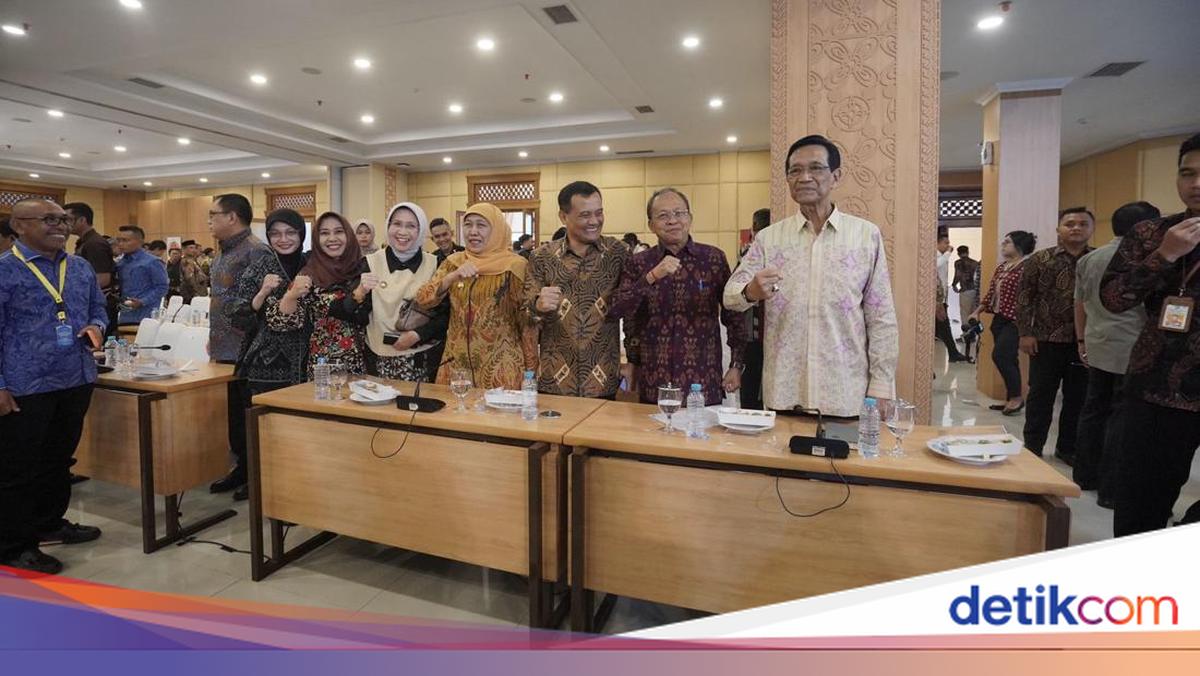
Three ministers gathered all governors, mayors, and regents from across Java and Bali in Yogyakarta. The meeting, which took place behind closed doors at the Governor’s Office of the Special Region of Yogyakarta in the Kepatihan Complex, Kota Yogyakarta, discussed a range of important issues. The three ministers were the Coordinating Minister for Political and Security Affairs, Djamari Chaniago; the Minister of Home Affairs, Tito Karnavian; and the Minister of Housing and Residential Areas, Maruarar Sirait. Also in attendance were the Head of the Central Statistics Agency, Amalia Adininggar Widyasanti, and all regional heads from Java and Bali. The meeting was held in private. After the session, the three ministers did not provide any statements to the press and immediately left the location.
Governor of the Special Region of Yogyakarta, Sri Sultan Hamengku Buwono X, stated that the meeting concerned matters of development, housing, and BPS issues, but added that it was still evolving and only at the identification stage because of time constraints. He noted that the ministers spoke at a macro level and there were no detailed explanations given, merely an identification of issues. The Sultan added that the discussion touched upon how regions could consolidate themselves according to the challenges of their own era and how to foster solidarity within the Regional Leadership Coordination Forum.
The Regent of Indramayu, Lucky Hakim, described the meeting as having a collegial tone of friendship. He mentioned there were brief presentations from the ministers and BPS. He said the core message was to motivate all regional heads, reminding them that they are paid by the people and must never hurt the people’s hearts. Lucky elaborated that the context included discussions on flexing, handling hoaxes, strengthening the Forkopimda, and preparing for potential negative issues in the future. When asked if the directives were related to the recently prominent National Nutrition Agency case, Lucky confirmed that it was mentioned, with advice to maintain personal and systemic integrity to avoid making erroneous policies that could inadvertently enrich other parties, especially if criminal intent was involved.
Lucky concluded that the guidance stressed the importance of regional heads being wise in spending regional budgets. The government was urged to prioritise the community’s needs. He emphasised that if a programme is created with complete paperwork and delivered goods but ultimately proves useless to the community, it constitutes a corruptive act. Even if no direct corruption is involved, spending on something unneeded by the public is fundamentally corruptive.