
Three Mabit Schemes in Muzdalifah for Hajj Pilgrims
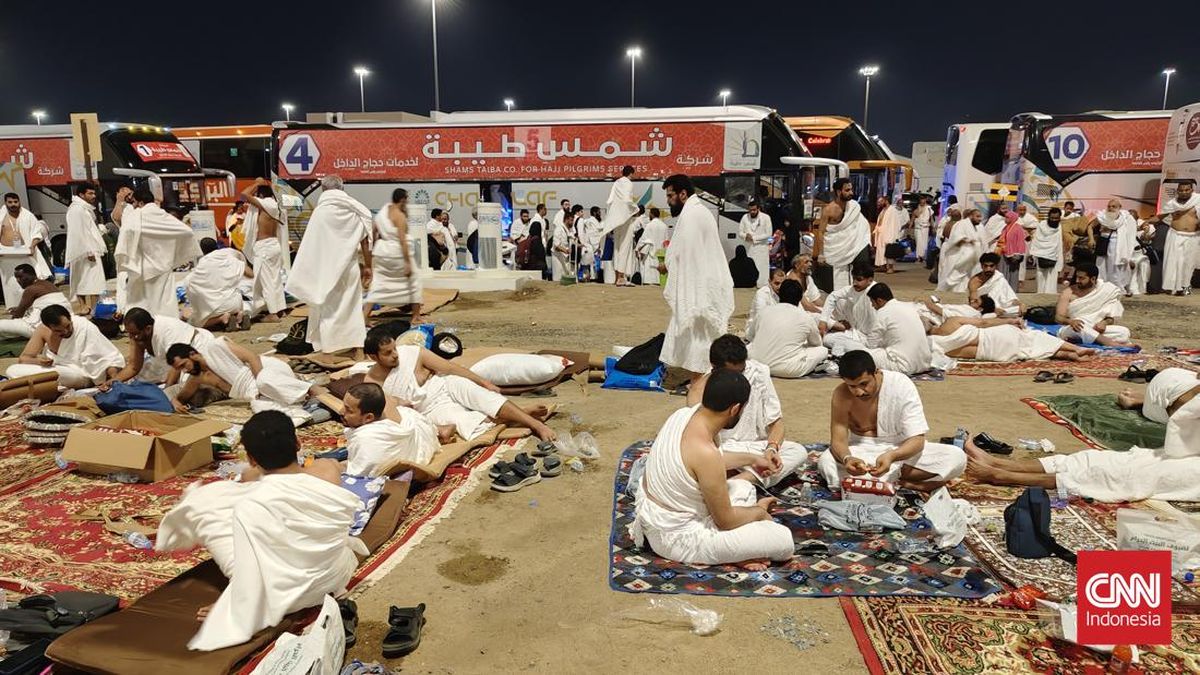
A supervisor from the Ministry of Hajj and Umrah and also the Vice-Chairman of the Indonesian Ulema Council (MUI), Cholil Nafis, explained that there are three mabit schemes, or overnight stays, in Muzdalifah that are permitted according to Islamic law for Hajj pilgrims. The schemes are intended as a solution to carry out the obligatory pilgrimage amid the crowded number of pilgrims from around the world, without neglecting the sacred proofs and the safety of life. “It is called mabit when one passes nisful lail, i.e., midnight,” Cholil said in Mecca on Wednesday (20/5), as quoted by Antara. He then detailed the three mabit schemes for Hajj pilgrims in Muzdalifah. The first is mabit adi or normal mabit. Pilgrims depart from Arafah to Muzdalifah after Maghrib. Pilgrims disembark and stay overnight until after midnight. This period is spent in dhikr, Qur’an recitation, and gathering stones for the stoning of the jamrah. After midnight, buses transport the pilgrims to Mina. The second is mabit murur. This scheme applies to pilgrims who arrive in Muzdalifah at midnight. Pilgrims only need to intention mabit without having to alight from the vehicle. The bus stops briefly in Muzdalifah before continuing to Mina. The third is murur rukhshah, or dispensation, which is an exception scheme for pilgrims who have an uzur syar’i, such as illness, advanced age, or other serious physical conditions. Pilgrims merely pass through without waiting until midnight in Muzdalifah. For the third scheme, Cholil emphasised that pilgrims who exercise the rukhshah or concession are exempt from the dam penalty. “Because of the uzur, fiqh rules do not require the dam, even though they may believe that staying in Muzdalifah is obligatory,” Cholil said. According to him, the emergency scheme aligns with the principle of hifzhun nafsi, or the protection of life in Islam. Although Surah Al-Baqarah, verse 198, prescribes Muslims to engage in dhikr at Masy’aril Haram or Muzdalifah after departing from Arafah, the presence of these three schemes is expected to balance the duties of worship with efforts to minimise the exhaustion and deaths of prospective pilgrims.”