
Three Local Revenue Options If Electric Vehicle Incentives Are Scrapped
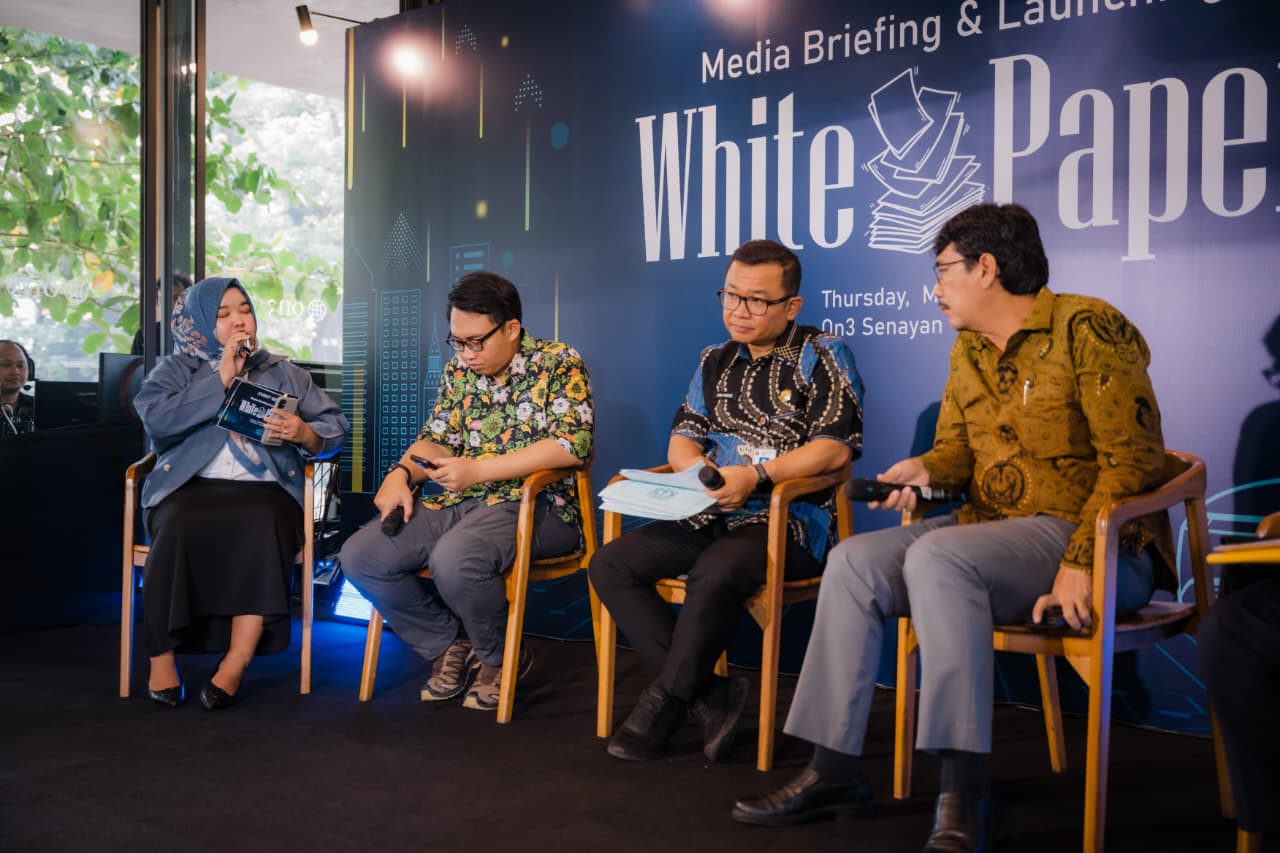
Head of Industrial and Transport Decarbonisation INDEF Green Transition Initiative (GTI) Andry Satrio Nugroho explained that there are several alternative policies before considering scrapping electric vehicle incentives. He said stopping incentives abruptly must be carefully calculated to avoid slowing the adoption of electric vehicles in Indonesia. Clarity on taxation is also important to provide certainty for both users and businesses.
According to INDEF GTI calculations, there are several potential revenue streams that could be developed by local governments. First, the implementation of a Low Emissions Zone (LEZ). For example, in Jakarta’s central business district Jalan Sudirman, the LEZ could generate Rp383 billion per year through LEZ charges. In addition to revenue, this corridor policy would also serve as an instrument to control air quality in central Jakarta.
‘This potential comes from a single area and could grow as the policy is expanded to other areas. The policy would not only have economic potential but would also have positive environmental and health impacts in central Jakarta,’ Andry said at a Media Briefing and Launch of the White Paper on Local EV Taxation in Jakarta, on Thursday 21 May.
Another policy that could be implemented is an emissions levy. Based on INDEF GTI calculations, the emissions levy could boost national revenue by Rp40 trillion per year. This figure would exceed the combined taxes on plastics and sweetened beverages, and is even three times the alcohol tax. Revenue could be shared in a Revenue Sharing Fund linked to particular economic and environmental performance, as an incentive to drive green growth at the regional level.
If it remains desirable to apply a tax on electric vehicles, the government could implement it progressively based on tax liability. According to the calculations, the national share of electric vehicle ownership in 2025 is dominated by the second ownership (i.e., second-hand ownership) at 66.2 percent. The share for first ownership remains small at 4.0 percent. The total potential from second and subsequent ownership tax amounts to Rp1.9 trillion per year.
Andry added that in the future, the government must consider various aspects related to the continuation of incentives, including the duration of the incentives, conditionality on industry and investment, and the level of EV adoption.
‘Certainty about timing and calculation is necessary to avoid confusing the business world. In addition, certainty can maintain public interest in transitioning from fossil fuel vehicles to electric vehicles,’ he said.
In the same event, Head of Revenue II at the Jakarta Regional Revenue Agency (Badan Pendapatan Daerah, DKI Jakarta) Jimmi Pardede said discussions about EV taxation are ongoing. He noted that the local government is under pressure due to reductions in transfer funding, so new revenue options are being sought.
Jimmi explained that one option is to impose EV tax progressively. This approach is expected to keep the transition to electric vehicles on track while increasing the potential for local revenue.
The tax could be levied based on the sale value. He gave an example: the higher the vehicle value, the greater the tax liability. This is necessary to ensure fairness for the public.
‘The proposal for progressive taxation is very good. The essence is that the implementation of this tax must be based on a sense of justice,’ Jimmi said.
Sunandar, Assistant Deputy for Electrification Development and Geology at the Coordinating Ministry for Economic Affairs, explained that implementing tax incentives must consider industrial conditionality and the economic condition. Tax incentives must take into account how the EV industry is developing, the number of users, and the supporting infrastructure.
‘When we talk about incentives, we cannot provide them forever. We need to see how the ecosystem of the industry, factories, batteries, and the number of users and buyers develop. Then we will assess whether the incentives are worthwhile to continue,’ he said.
Teguh Narutomo, Director of Regional Revenue at the Ministry of Home Affairs, said that calculations on the sustainability of EV taxation should also touch institutional, sociological, legal, and philosophical aspects. He noted that sociologically, for example, EVs are categorised as luxury goods and therefore should be taxed. Legally and institutionally, policy recommendations must consider the capacity of local and central governments to implement them.
Teguh added that the central government has issued a circular instructing regional governments to provide incentives for EVs. However, he emphasised that regional governments possess technical authority in this area.
‘Minister of Home Affairs Regulation No. 11/2026 on EV taxation is a mandate derived from higher rules, i.e., Presidential Regulation 55/2019 and Presidential Regulation 79/2023, not a regional demand. On certainty of implementation this is reiterated in Circular Letter of the Minister of Home Affairs No. 900.1.13.1/3764/SJ, which instructs regional governments to offer incentives in the form of tax exemptions. But regions do have fiscal autonomy in their operations,’ he said. (H-2)
The government is preparing VAT incentives for electric cars and subsidies for electric motorcycles to reduce fuel consumption and strengthen national energy resilience.
The government ending the 0 percent tax incentive for EVs.
When regional governments provide tangible incentives to EV users, the domino effect is felt by supporting industries, particularly SPKLU.
Some of the tax is borne by the government; there are scenarios with 100 percent or 40 percent. A scheme is to be devised.
Jakarta Governor Pramono Anung revealed the reasons for defending it.