
Three Key PGEO Projects Secure US$477.87 Million in Foreign Funding
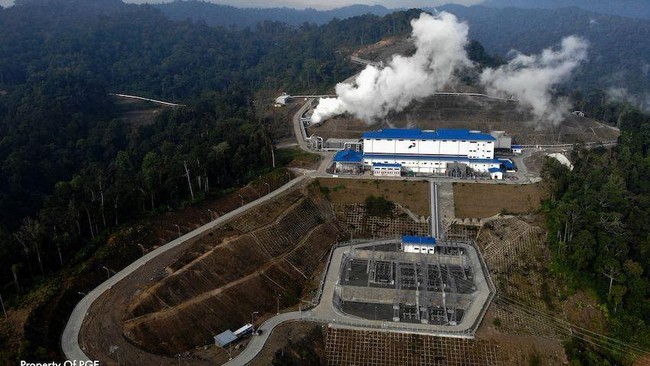
PT Pertamina Geothermal Energy Tbk (PGEO) has secured international funding support after three of its flagship projects were included in the 2026 Green Book, published by the Ministry of National Development Planning/Bappenas.
PGEO President Director Ahmad Yani stated that amidst rising clean energy needs and global energy security challenges, the inclusion of these projects in Bappenas’s Green Book serves as recognition of the projects’ readiness for the next development phase. He noted that the company’s positive performance is strengthening investor confidence in PGE’s business prospects.
According to financial reports as of 3_1 March 2026, PGEO recorded a 40% increase in net profit to US$43.90 million, compared to US$31.35 million in the same period the previous year. The company also reported revenue of US$116.56 million, a 14.8% increase from US$101.507 million year-on-year. In 2025, PGE achieved an all-time high production of 5,095 gigawatt hours (GWh), and this upward trend continued into the first quarter of 2026, with electricity production rising 15.22% year-on-year to 1,370 GWh.
The three projects include the Lumut Balai Geothermal Power Plant (PLTP) Unit 3 (55 MW), PLTP Lumut Balai Unit 4 (55 MW), and PLTP Lahendong Unit 7-8 (50 MW). The total funding allocated in the 2026 Green Book reaches US$477.87 million, comprising US$158.86 million from JICA for PLTP Lumut Balai Unit 3, US$148.97 million from JICA for PLTP Lumut Balai Unit 4, and US$170.04 million from the World Bank for PLTP Lahendong Unit 7-8.
These projects are part of PGE’s roadmap to develop geothermal potential up to 3 gigawatts (GW). Once operational, they will increase the supply of low-emission electricity and strengthen geothermal’s role in the national energy mix. The Lumut Balai projects in South Sumatra and the Lahendong expansion in North Sulawesi are expected to enhance local economies and support the national energy transition through an on-lending scheme involving concessional loans, which offer more attractive interest rates and longer tenures than commercial financing.