
Three Indonesian TNI Soldiers Killed in Lebanon, UNIFIL: Due to Roadside Explosion
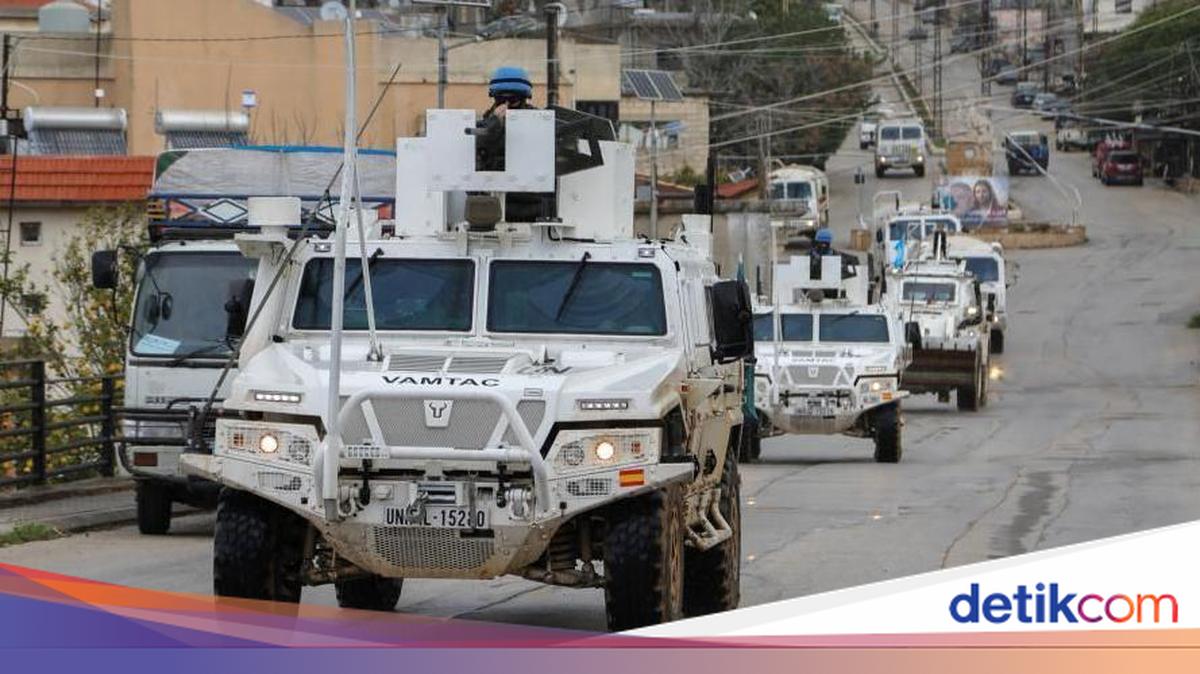
Two Indonesian soldiers serving as UN peacekeepers died on Monday (30/03) due to a “roadside explosion” in southern Lebanon, said the head of UN peacekeeping, Jean-Pierre Lacroix, citing preliminary investigation findings.
In a separate statement, the United Nations Interim Force in Lebanon (UNIFIL) said the explosion “originated from an unknown source” and “destroyed” the peacekeepers’ vehicle near Bani Hayyan.
Two other TNI soldiers were injured in the attack. One of them suffered “serious” injuries from the explosion, UNIFIL said.
This is the second fatal incident within 24 hours.
A TNI soldier died on Sunday (29/03) when a projectile, also of unknown origin, exploded in Adchit Al Qusayr, southern Lebanon.
Who are the TNI soldiers who were victims?
The TNI confirmed that the two soldiers who died in the UNIFIL area of operations on Monday (30/03) were Captain Inf Zulmi Aditya Iskandar and Staff Sergeant Muhammad Nur Ichwan.
The two soldiers who were injured are First Lieutenant (Inf) Sulthan Wirdean Maulana and Private First Class Deni Rianto.
The TNI soldier who died on Sunday (29/03) was named Farizal Rhomadhon with the rank of Chief Private.
Private First Class Farizal was personnel attached to the United Nations Interim Force in Lebanon (UNIFIL) in Company C UNP 7-1 Task Force Yonmek XXIII-S/UNIFIL.
The incident on Sunday (29/03) also injured three soldiers, namely Private First Class Rico Pramudia, Private First Class Bayu Prakoso, and Private First Class Arif Kurniawan.
Preliminary investigation findings
UNIFIL said it has conducted investigations to determine what happened in both incidents.
The “preliminary” findings on the Monday (30/03) incident “point to a roadside explosion that struck the convoy”, Lacroix told the UN Security Council.
Their deaths were “most likely” caused by an IED (improvised explosive device), said Stephane Dujarric, spokesman for the UN Secretary-General.
Regarding the Sunday (29/03) incident, Dujarric said it was likely caused by “an explosive material that fell at the position being guarded by the Indonesian troops”.
He urged Lebanon and Israel to use UNIFIL mechanisms for dialogue, stating that “the essence is that Lebanon’s sovereignty and territorial integrity must be respected”.
In a statement, UNIFIL said: “We extend our deepest condolences to the families, friends, and colleagues of these brave peacekeepers who sacrificed their lives in service to peace.”
Established by the UN Security Council in 1978, UNIFIL has since served as a buffer between Israel and Lebanon.
The peacekeeping force patrols the “Blue Line”, the de facto border between Lebanon and Israel, in cooperation with the Lebanese army.
Around 339 peacekeepers have been killed since the mission was established.
What is happening in Lebanon?
The deaths of the three TNI soldiers occurred shortly after the Israeli military announced it would intensify ground and air attacks against the armed group Hezbollah in Lebanon.
On the other hand, Hezbollah, an Iran-backed militia and political party, has fired rockets into Israel in retaliation for the ongoing US-Israel attacks against Iran.
Although a ceasefire was in place in November 2024 between Israel and Hezbollah, mediated after violence escalated between them, Israel has carried out near-daily strikes against Hezbollah targets.
Israel says the armed group is not complying with the ceasefire provisions, which require Hezbollah to disarm and leave its positions in the south, and accuses UNIFIL and the Lebanese army of not doing enough to remove their militants from the area.
Since the ceasefire began, 1,268 people have been killed in Lebanon, according to the Lebanese Ministry of Health, including 124 children.
Israel’s Defence Minister, Israel Katz, stated that a buffer zone would be established within southern Lebanese territory.
He emphasised that security control over much of the area would remain in Israel’s hands, even after the war against the Hezbollah armed group ends.
Katz described the area to be occupied as stretching to the Litani River, about 30 kilometres from the Israel border. Further, he added that all houses in Lebanese villages near the border would be razed.
This statement marks a new escalation in the conflict, while raising concerns over the humanitarian impact in the border area.