
Three Helicopters from Japan to Arrive on 10 September to Assist in Forest Fire Management
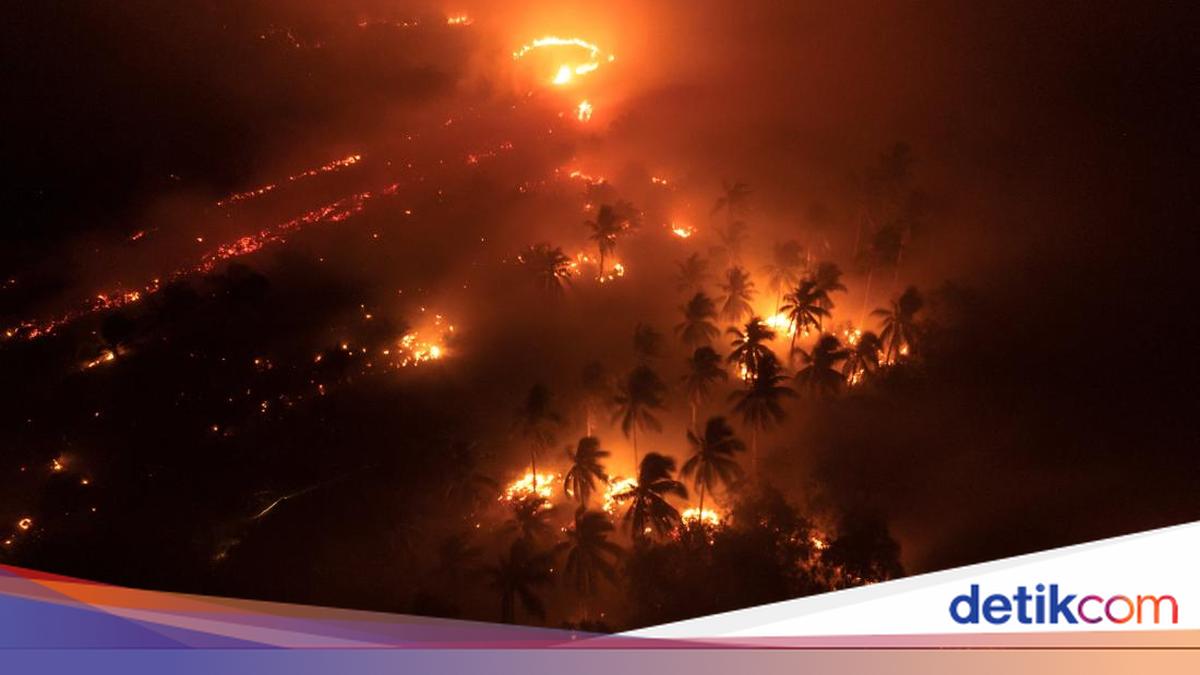
The Acting Head of the Data and Information Centre of the National Disaster Management Agency (BNPB), Berton SP Panjaitan, stated that Japan is sending helicopter assistance to Indonesia to aid in the management of forest and land fires (karhutla). The helicopters are scheduled to arrive in the country on 10 September 2026.
“Regarding the cooperation between Indonesia and Japan concerning the helicopter assistance, three helicopters will arrive shortly. We have received information that they will arrive here on the 10th, and we certainly welcome this cooperation,” said Berton during a press conference broadcast via BNPB’s official YouTube channel on Monday (31/8/2026).
Berton noted that discussions between Indonesia and Japan regarding the deployment of this fire-fighting equipment have already taken place. However, he could not yet specify the intended locations for the aircraft or the duration of their use.
“Initial discussions have certainly been conducted. We will continue to consolidate our plans until the aircraft arrive in Indonesia and begin operations,” said Bertumn.
“As for how long and where, we will receive further information so that we can provide accurate updates. At this moment, we do not have more detailed information,” he added.
Berton also detailed the development of hotspots and fire points across six provinces currently affected by forest fires. An increase in fire points was observed in West Kalimantan, Central Kalimantan, and South Kalimantan.
“We can see that in West Kalimantan, Central Kalimantan, and South Kalimantan, the number of hotspots is relatively increasing. In West Kalimantan, the increase is significant, while in South Kalimantan and Central Kalimantan, it is relatively decreasing,” said Berton.
He noted that the number of fire points in these three provinces—West, Central, and South Kalimantan—has relatively risen, with visibility reduced to less than 1 to 2 kilometres.
“However, looking at the fire point data, we found an increase in fire points in these three provinces, and visibility is approximately 1 to 2 kilometres,” he stated.
Meanwhile, in the provinces of Riau, South Sumatra, and Jambi, fire points have relatively decreased. However, hotspots in South Sumatra increased by 209, bringing the total to 1,013.
“In Riau and Jambi, hotspots have decreased significantly. Visibility varies between 4 to 5 kilometres in Riau and South Sumatra, while in Jambi, it is around 7 kilometres,” he concluded.