
Three Former Trade Ministry Working Group Members Accused of Causing State Losses of Rp39.4 Billion
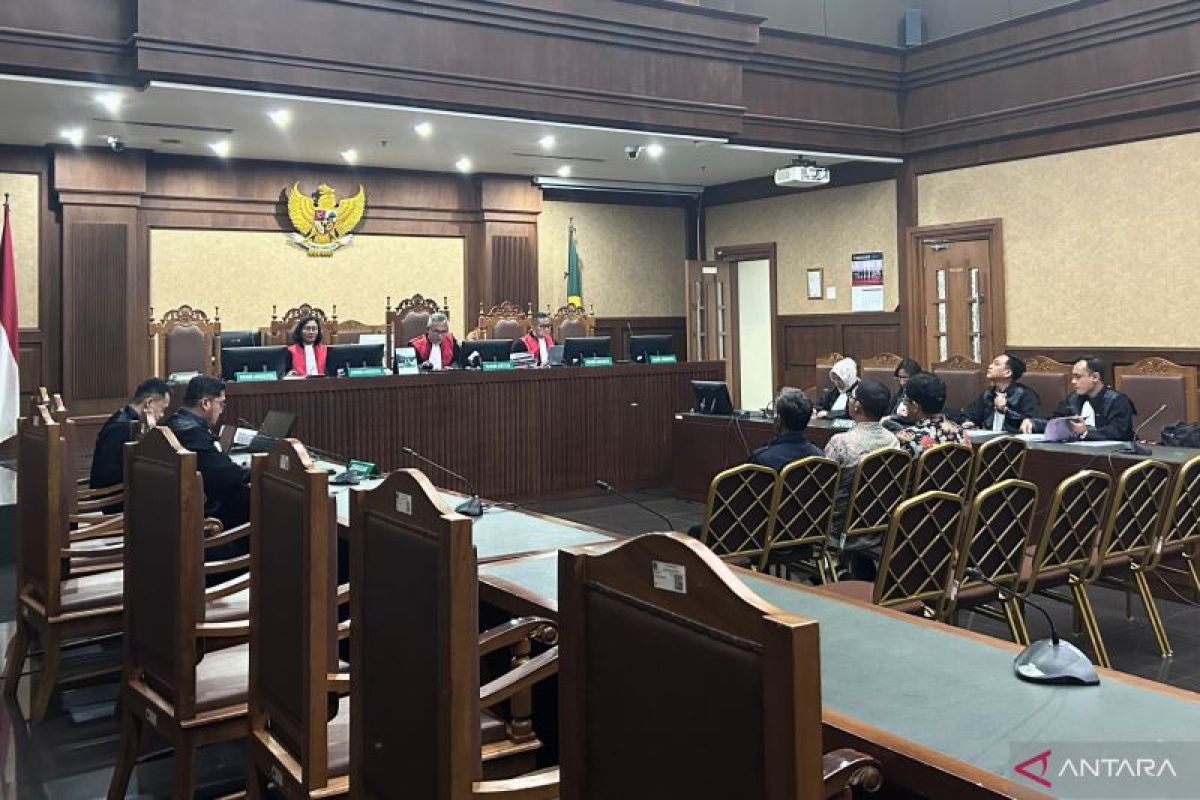
Three former members of the Working Group for the Procurement of Traders’ Carts at the Ministry of Trade have been charged with causing state losses amounting to Rp39.4 billion. The defendants are civil servants Bani Ikhsan, Chair of Working Group Team I, Yusmito, Chair of Working Group Team II, and Ryno Hilham Akbar, a working group member. Public Prosecutor Muhammad Fadil Paramajeng from the Attorney General’s Office stated during the indictment hearing at the Central Jakarta Corruption Court that the defendants committed legal acts with the aim of enriching themselves, others, and a corporation.
The prosecutor explained that the Rp39.4 billion gain arose from the difference between the state payment of Rp44.5 billion and the actual production costs incurred, which totalled just Rp5.09 billion. The defendants face criminal charges under Article 603 in conjunction with Article 20 letter C of the National Criminal Code, or Article 3 or Article 5 paragraph (2) in conjunction with Article 18 of Law Number 31 of 1999 concerning the Eradication of Criminal Acts of Corruption.
In the alleged corruption case involving procurement aid for traders’ cart business facilities at the Ministry of Trade for the 2017–2019 period, prosecutors disclosed that in September 2008, Bani had allegedly knowingly accepted a request from Commitment Making Officer Putu Indra Wijaya to rig the provider selection process. The aim was to ensure firms controlled by two goods and services providers, Bambang Widianto and Mashur, would win. Consequently, PT Piramida Dimensi Milenia and PT Arjuna Putra Bangsa were positioned to win the 2018 cart procurement tender. Although Bani knew from the outset that this agreement violated the principles of independence and objectivity, he accepted it. Bani and Ryno subsequently attended a separate, secret meeting with Putu—from which other working group members were excluded—to discuss drafting the Terms of Reference whose contents were officially made to differ from the official review meeting results. The purpose was to engineer the provider requirements so that the joint operation of PT PDM and PT APB could pass despite lacking the necessary workshop, industrial business permit, and experience.
The Terms of Reference were also deliberately manipulated to accommodate the unqualified joint operation. Furthermore, the prosecutor revealed that Bani did not clarify the IP addresses of the bidding participants, even though he should have known that multiple bidders shared the same IP address—a strong indication of collusion. Bani intentionally failed to investigate this and continued the evaluation process because he had already agreed to award the contract to these companies. He then pushed through a participant that did not meet the technical administrative requirements; the bid documents from PT PDM and PT APB lacked an explanation of the methodology for implementing the accessories work, which should have disqualified them.
The prosecutor added that the two companies essentially did not possess their own production equipment workshop, business permits, required workforce, or the supporting company letters they had attached. Owing to Bani’s interference, PT PDM and PT APB were declared the tender winners with the highest score of 85.65, leading to a contract with a value of Rp49.69 billion for the procurement of 7,200 carts within 75 calendar days. As a reward, Mashur, on Bambang’s instruction, allegedly gave Bani cash payments totalling Rp680 million through an intermediary, although Bani admitted to receiving only Rp80 million of this sum.
The prosecutor stressed that Bani’s actions constitute an inseparable causal link to the state financial loss. Without the working group determining the joint operation as the winner, there would have been no contract signing and no basis for payment from state coffers. The entire series of actions—from engineering the Terms of Reference and creating shell companies to fabricating handover minutes and disbursing funds—was alleged to be the execution of a pre-agreed criminal conspiracy involving Bani, Putu, Bambang, and Mashur, with Bani making a substantial contribution through his formal authority as the working group chair.