
Three Findings from UI Researchers on the Imipas Ministry's Food Security Programme
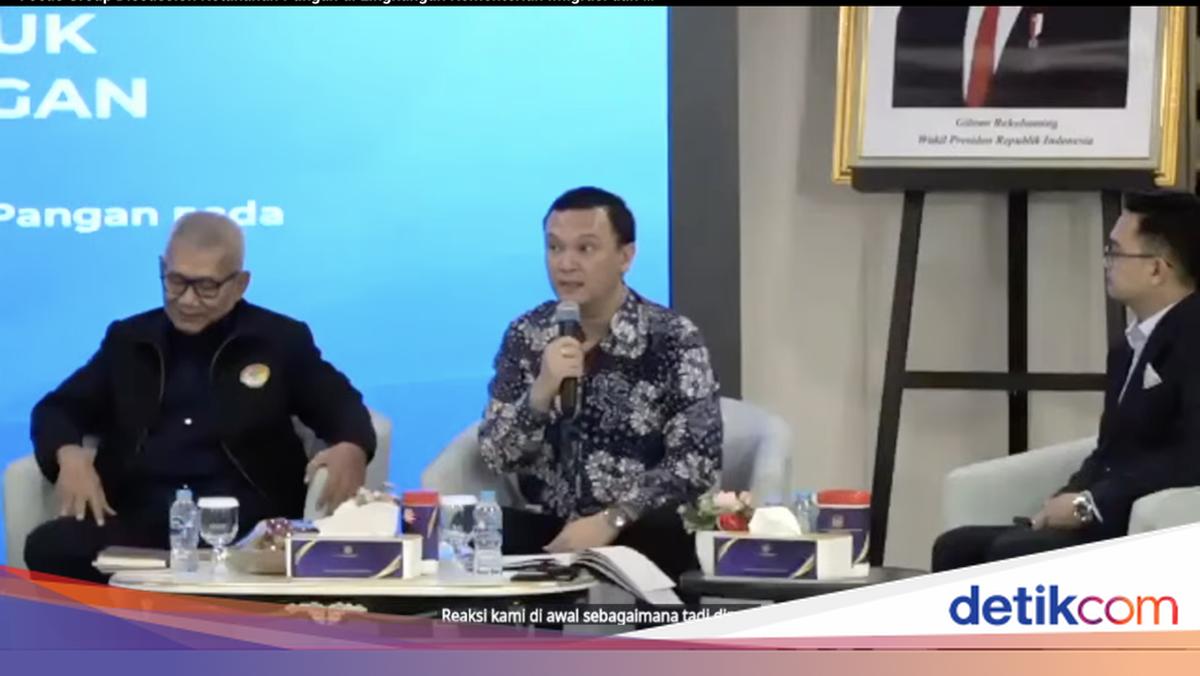
A researcher from the Demographic Institute of the Faculty of Economics and Business at the University of Indonesia, Dr Alfindra Primaldhi, has revealed the results of a rapid need assessment on strengthening technical capacity within the Ministry of Immigration and Corrections (Imipas) programme to achieve national food security. The assessment yielded three main findings.
Speaking at an Imipas Ministry focus group discussion on Tuesday (23/6/2026), Alfindra said the research was conducted across 16 provinces, spanning from western to eastern Indonesia, with interviews carried out at 16 prisons and detention centres and 15 immigration offices. The rapid assessment also examined the perspectives of local SMEs around the technical implementation units and the wider community.
The survey aimed not to capture the entire picture but to provide a quick snapshot. The assessment focused on food production in prisons and detention centres, inmate rehabilitation, land and asset management, cooperative land, and training needs. Interview locations were selected purposively together with Imipas colleagues to reflect geographical variation and other factors.
The first finding concerns institutional frameworks and core duties. The key finding shows that although the programme has been positioned as a national agenda, its formal standing within written core duties and internal standard operating procedures at the unit level remains unestablished. Many field implementers feel that food security activities are additional tasks unsupported by a definite budget structure within the regular budget document, making this an urgent requirement.
The second finding highlights technical capacity gaps. A clear competency gap exists between security staff and the technical demands of agribusiness. Alfindra noted that data indicates production functions such as aquaculture, plantations, and livestock farming at many immigration offices are either non-existent or at a basic knowledge level only.
The third finding addresses local potential, social risk, and the cooperative approach. Analysis of social capital shows that surrounding communities generally consider it reasonable for prisons and detention centres to conduct food production as a form of rehabilitation. However, there is a risk of social jealousy or resistance from local SMEs if institutional products are sold below market prices or displace existing local suppliers. For the food security programme to have a sustainable impact, the ministry must adopt an integrated business model rather than sporadic projects. The primary focus must be directed at production stability and expanding distribution channels. On the cooperative approach as an economic aggregator, cooperatives are positioned as the main institutional vehicle to manage production, record-keeping, distribution, and sales in an orderly manner. Cooperatives must function as aggregators that collect surplus harvests from various units and channel them to wider markets.
Alfindra concluded that transforming the food security programme at the Ministry of Immigration and Corrections is a strategic step highly relevant to the national development vision. Despite challenges such as land limitations within the immigration service and technical capacity gaps within the corrections service, the existing potential is very promising for further development. The programme’s success will depend heavily on regulatory certainty, budget sustainability, equipment modernisation, and the institution’s ability to build transparent partnerships with the community and local SMEs.
He stated that the implementation of the food security programme at the Ministry of Immigration and Corrections demonstrates significant success in transforming the institution’s role from merely a law enforcer to an active and productive actor in national development. Based on the strategic Rapid Need Assessment report, the ministry has successfully optimised the use of idle land into empowerment-based food production centres. The immigration service has shown adaptive success through a strategic partnership model, exemplified by the Surabaya Immigration Office, which manages 85 hectares of private land. Overall, the programme has created a self-sustaining circular economic ecosystem through the role of cooperatives as production aggregators. This success proves that synergy between state asset management, human resource development, and technical modernisation can strengthen national food sovereignty while realising the grand vision of Asta Cita. Institutionally, this acceleration programme as a new strategy to support food security increasingly demonstrates the major transformation behind the ministry’s establishment. He also expressed appreciation for Imipas Minister Agus Andrianto, noting that strong leadership accompanied by data-based governance has proven that the Ministry of Immigration and Corrections, as a legal and security institution, can become an engine for national food sovereignty as well as a humanitarian vehicle for inmate rehabilitation.