
Three Factors Behind the UAE Becoming the Arab Country Most Heavily Bombarded by Iran
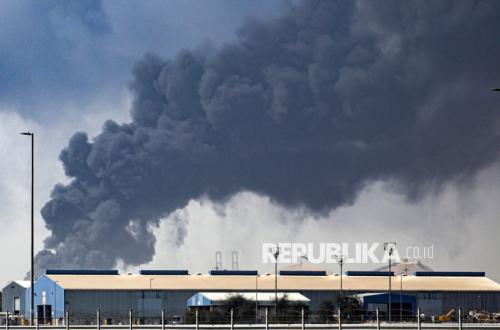
REPUBLIKA.CO.ID, DUBAI – The fragile ceasefire between Iran and the United States (US) is on the brink of collapse following reports of missile and drone attacks targeting the United Arab Emirates (UAE) on Monday (4/5/2026). Iran has neither confirmed nor denied the strikes on the UAE, as reported by Reuters, which resulted in a major fire at the Fujairah petroleum industrial centre.
Since the war broke out at the end of February, the UAE has become an Arab country targeted by Iranian attacks. However, based on data, the UAE has been the most severely hit by Iranian missiles and drones, impacting US military assets as well as civilian infrastructure, including in Dubai.
During the Iran war, UAE authorities claimed to have recorded 29 cruise missiles, 549 ballistic missiles, and 2,260 drones targeting their territory. Specifically on Monday, the UAE Ministry of Defence, via a post on X, revealed a total of 12 ballistic missiles, three cruise missiles, and four drones crossing UAE airspace, resulting in three people sustaining minor injuries.
So what is the reason behind the UAE becoming a magnet for Iranian munitions, which have tarnished its image as a global economic and connectivity hub? According to a report by India Today on Tuesday (5/5/2026), the answer lies in a combination of factors: the UAE’s geographical proximity to Iran; its emergence as a major economic power in the region; and the closeness of its royal family to Iran’s two eternal enemies, the US and Israel.
According to Brian Katulis, a senior researcher at the Middle East Institute, speaking to The Hill, many in the current Iranian regime view the UAE with envy and jealousy, particularly regarding the UAE’s economic success. While the UAE is among the countries blessed with oil resources, it has also achieved economic success through sustainable diversification policies.
Positioning itself as a main hub in the property, finance, and tourism sectors, the UAE’s image stems from its role as a major logistics connectivity power. Ports like Jebel Ali and airports such as Dubai International Airport (DXB), Abu Dhabi International Airport (AUH), and Sharjah International Airport (SHJ) have created a highly efficient multimodal hub connecting Asia, Europe, and Africa.
Considering Iran’s strategy to maximise the impact on the economic crisis, critical transportation and logistics infrastructure inevitably becomes Tehran’s primary target. In the recent war, Iranian attacks have struck and disrupted several vital facilities, including Dubai International Airport (DXB), Zayed International Airport, Jebel Ali Port, and Fujairah port and oil terminal facilities.
As Katulis told The Hill, “By striking the UAE, Iran is trying to weaken it, which plays a role in connecting the broader region with external actors and causing wider ripple effects on the global economy in terms of investment and trade, as a continuation of efforts to impact the global energy market.”
In agreement, Brian Carter, a researcher from the American Enterprise Institute (AEI), stated that the UAE is economically ‘fragile’, with the densest and most glittering city, Dubai, being the most vulnerable.
“Dubai, in particular, has world-class attractions within it and a very large presence of expatriates, which can create international political effects when you attack the UAE,” said Carter.