
Three Devious Schemes: Bank Officer in Bantul Arrested for Corruption Causing State Losses of Rp 711 Million
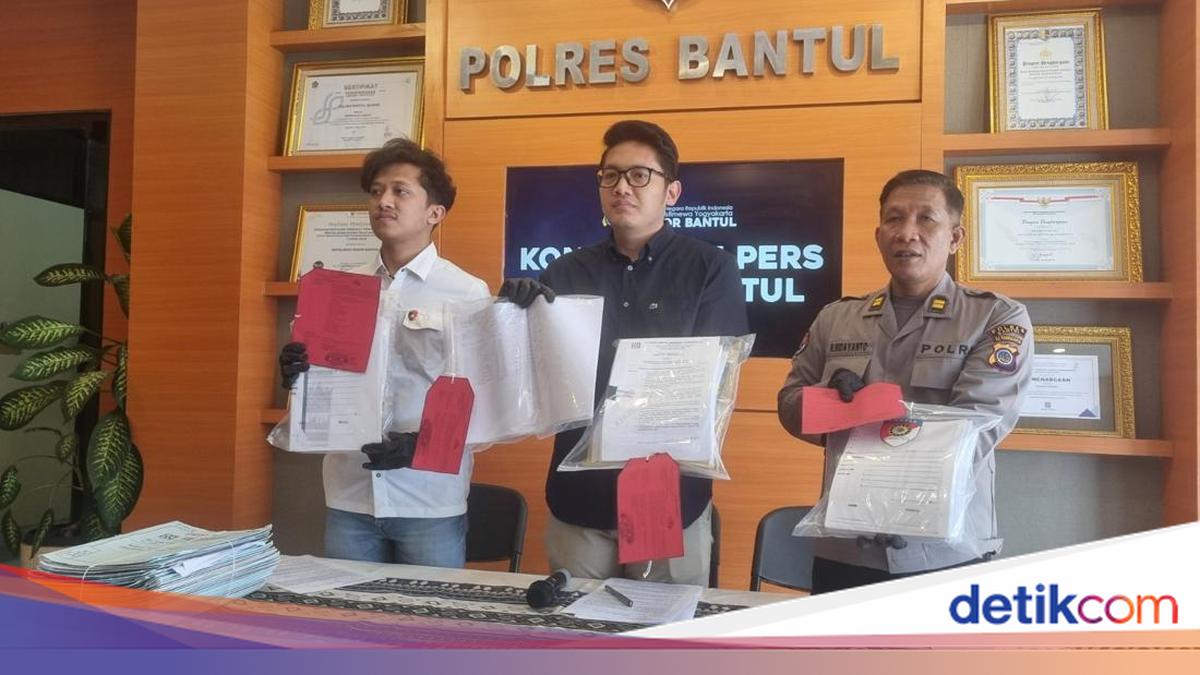
A female employee of a state-owned bank in Sanden, Bantul, has been arrested by police on suspicion of involvement in a corruption case. The suspect, identified by the initials AIIM (37), used a number of devious schemes to carry out her actions, ranging from fictitious loans to charging fees upon disbursement.
The Head of the Criminal Investigation Unit of the Bantul Police, AKP Achmad Mirza, explained that the suspect, AI (37), is a resident of Bantul. She had been working at the state-owned bank in Sanden, Bantul, since 2021.
Achmad revealed that AI, who was a loan officer at the bank, initiated People’s Business Credit (KUR) for 252 customers with a ceiling of Rp 7.6 billion in 2021. In 2022, she again initiated KUR for 437 customers with a ceiling of Rp 14 billion. “In 2024, the bank detected irregularities and conducted an internal audit,” he told reporters at the Bantul Police station on Thursday (25/6/2026).
Following an audit request regarding indications of fraud at the Bantul branch office and an investigation warrant from the Jogja RAO, an audit was conducted on 29 customers. These 29 individuals consisted of 20 KUR customers, 7 People’s Kupedes (KUPRA) customers, and 2 Fast Credit (KECE) customers initiated by AIIM. “The results showed that the perpetrator utilised referrals of prospective debtors from third parties/brokers, credit application documents were handed over to third parties/brokers, and the loan officer was indicated to have altered the postcode of customer addresses and used fictitious business premises,” Achmad stated.
Furthermore, AI also imposed a fee of up to 10 per cent on each disbursement. Achmad disclosed that part or all of the realised credit proceeds were used by third parties/brokers, and a 10 per cent fee was charged by the broker. The potential loss based on the internal audit reached Rp 1,155,930,716. “She asked people to take out loans but demanded a 10 per cent fee from the credit disbursement,” Achmad said.
Because irregularities were proven, the bank conducted a further audit through the Financial and Development Supervisory Agency (BPKP) of the Special Region of Yogyakarta. The results confirmed a state loss. “It turned out that the credit initiations carried out by AI contravened several regulations and resulted in a state loss of Rp 711,780,129. This loss is only from the examination of 20 customers in Sanden,” Achmad said.
The third scheme used by AIIM was using the identity cards of victims as a requirement to apply for loans. “The third scheme was asking for the KTP or identity card from potential victims and using it as a requirement to apply for a loan,” Achmad stated.
Based on the audit results, the bank reported AI to the Bantul Police in 2024. Police eventually arrested AI in April 2026. Regarding the involvement of brokers, Achmad mentioned they were not from within the state-owned bank. However, he did not rule out the possibility of new suspects in this case. “We are still investigating other perpetrators,” he said.
As for the proceeds of AI’s corruption, Achmad stated they were used for her personal needs. He admitted that the details of these needs are still being investigated. “The money from the corruption committed by AI was used for the needs of the suspect herself and other people. We are still looking into the details,” he said.
For her actions, AI is charged with corruption as stipulated in Article 603 of Law of the Republic of Indonesia No. 1 of 2023 concerning the Criminal Code in conjunction with Article 18 of Law No. 31 of 1999 concerning the Eradication of Criminal Acts of Corruption as amended by Law No. 20 of 2001, in conjunction with Article 126 paragraph (1) in conjunction with Article 20 letter a of Law No. 1 of 2023, subsidiary to Article 3 in conjunction with Article 18 of Law No. 31 of 1999 as amended by Law No. 20 of 2001 in conjunction with Article 126 paragraph (1) in conjunction with Article 20 letter a of Law No. 1 of 2023. “The criminal penalty is a minimum of 2 years and a maximum of 20 years in prison,” he stated.