
Three Countries Agree to Safeguard the Malacca Strait, Ensuring No Blockade Like Hormuz
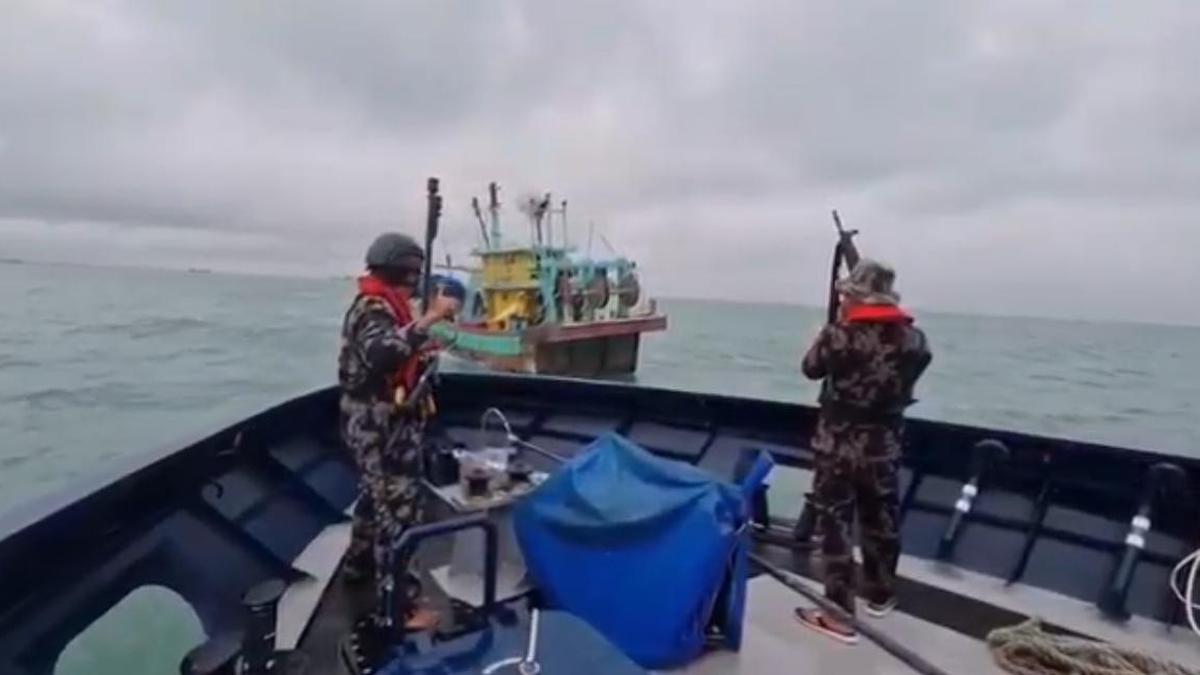
Liputan6.com, Jakarta - Singapore’s Foreign Minister Vivian Balakrishnan has emphasised that Singapore, Malaysia, and Indonesia share the same strategic interests in keeping the Malacca Strait open.
This statement comes amid escalating global tensions, particularly in the Middle East, which are beginning to pressure international shipping lanes.
Balakrishnan stated that the three countries along the Malacca Strait have cooperation mechanisms to ensure the route remains freely passable without tolls.
“We do not impose tolls. We are all economies dependent on trade. We all understand that keeping this route open is a common interest,” he said, quoted from Channel News Asia on Thursday (23/4/2026).
He stressed that the alignment of strategies among the three countries is an important factor not always found in other regions.
“The point is, the three countries have the same and aligned strategic interests to keep this route open. This should not be taken lightly in many other places,” he added.
Response to Global Tensions and the Strait of Hormuz
The statement arises amid global concerns over the potential closure of the Strait of Hormuz, which has raised fears of disruptions to international trade routes.
Balakrishnan affirmed that Southeast Asia’s approach remains firmly rooted in international law, particularly the United Nations Convention on the Law of the Sea (UNCLOS).
“To both the United States and China, we have conveyed that we operate based on UNCLOS,” he said.
He added that transit passage rights must be guaranteed for all parties and that his country will not engage in efforts to close shipping lanes.
“Transit passage rights are guaranteed for all parties. We will not participate in any efforts to close, obstruct, or impose tolls in our region,” he asserted.
Singapore’s Stance Amid US-China Rivalry
When asked whether Singapore would choose between the United States or China, Balakrishnan reaffirmed his country’s non-aligned position.
He quoted Singapore’s first Prime Minister, Lee Kuan Yew, who emphasised that principle.
“To quote Lee Kuan Yew, we will refuse to choose. The way we conduct policy is by assessing what serves Singapore’s long-term national interests,” he said.
Balakrishnan added that Singapore is not hesitant to say no to any party, including Washington or Beijing.
“We will be useful, but not exploited,” he said.
He also assessed that there has been no significant pressure from either country on Singapore to date.
Risks of Broader Conflict in the Future
Balakrishnan also highlighted Singapore’s economic ties with the United States and China. He noted that the US has substantial investments in Southeast Asia, including in Singapore, with significant returns.
Meanwhile, Singapore is one of China’s largest sources of foreign investment.
In his view, this position places Singapore strategically to benefit from developments from both countries.
However, he warned of major risks if US-China relations deteriorate, especially if conflict spreads to the Pacific region.
“If they go to war in the Pacific, what we are seeing now in the Strait of Hormuz is just the initial simulation,” he said.
“The biggest variable is not only what happens in the Middle East, but also what will happen in the Pacific,” Balakrishnan concluded.