
Three ASEAN country delegations study Indonesia's cross-cultural religious literacy
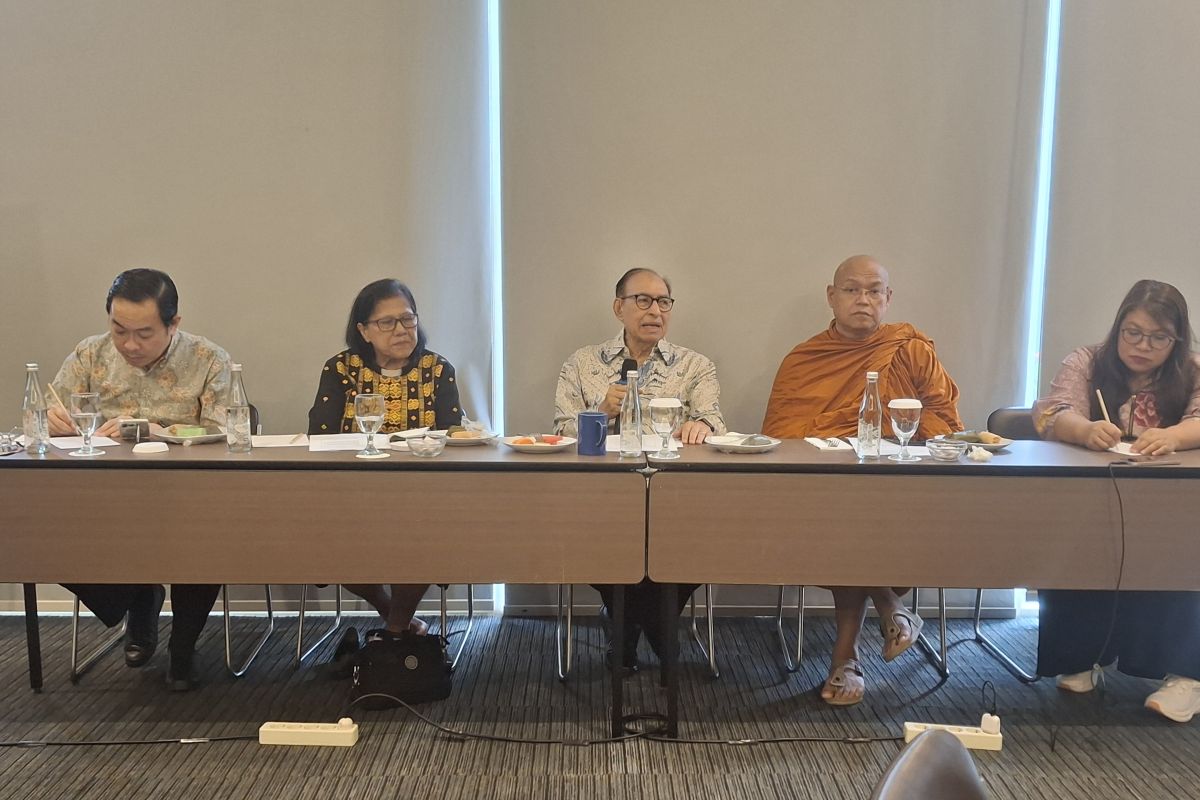
Six delegates from Cambodia, Laos, and Vietnam studied the Cross-Cultural Religious Literacy Programme (LKLB) initiated by the Leimena Institute in Jakarta on Friday.
“We want to share the experience we have in Indonesia because the Cross-Cultural Religious Literacy Programme aims to build social cohesion and is closely related to our nation’s efforts in managing diversity,” said Leimena Institute Executive Director Matius Ho at a press conference in Jakarta on Friday (21/8).
The visit by delegates from the three member countries of the Association of Southeast Asian Nations (ASEAN) in Jakarta on 19–23 August was intended to listen to and observe Indonesia’s experience in implementing the LKLB Programme, which has trained more than 11,000 teachers and educators, he said.
The delegates from the three countries mostly came from government institutions in their respective countries. Matius considered the visit very good for both parties to share experiences and good practices, and to enable the establishment of cooperation in the future.
“We want them to see that based on what is learned from Indonesia, there are good things that are beneficial for their countries, and from there we can build cooperation,” he said.
The LKLB Immersion Programme itself, Matius said, has been carried out four times since 2025. A total of 24 delegates from four ASEAN countries—Cambodia, the Philippines, Laos, and Vietnam—have come to study the LKLB Programme in Indonesia.
The programme provides a comprehensive experience for ASEAN delegates to learn about Indonesia’s LKLB model, including delegates from the Ministry of Basic, Higher, and Technical Education of the Bangsamoro Autonomous Region in Muslim Mindanao (BARMM), Philippines, who were invited to observe the LKLB Programme for Peace in Ambon, Maluku, which has similarities in terms of social conflict trauma.
Former Foreign Minister and Senior Fellow at the Leimena Institute, Alwi Shihab, said the LKLB Programme contributes to building tolerance and cooperation in the Southeast Asian region by strengthening competencies for living in a pluralistic society.
The programme covers three main competencies: personal, comparative, and collaborative.
“Starting from personal competence, it means we truly understand the core of our religious teachings in viewing others who are different. For example, Islam has never taught intolerance; in fact, Islam encourages us to cooperate,” said Alwi.
Alwi added that the LKLB Programme in Indonesia began out of concern over the high rate of intolerance among religious teachers, based on a survey by UIN Syarif Hidayatullah in 2019.
Therefore, the programme, which began in 2021, targeted the training of madrasah teachers and has expanded to include socio-cultural training for civil servants (ASN).
Researcher at the International Institute of Social Studies (ISS) of Erasmus University Rotterdam, Yuyun Wahyuningrum, said there is curiosity in ASEAN to learn about LKLB and how the approach operates in the Indonesian context.
She emphasised that LKLB is not only practical but also doable, meaning it can be applied in various community contexts.
“LKLB is one of the methodologies considered replicable in the context of Southeast Asian countries,” she said.
Yuyun said ASEAN itself has adopted the LKLB approach into the ASEAN Community Vision 2045 blueprint under the Socio-Political Community pillar and the Socio-Cultural pillar, in order to achieve social cohesion, peace, and sustainable development.
“LKLB is hard work, joint work, continuous work, and expanding work. So because every person is different, and contexts are also different, it must be done continuously. This is what the Leimena Institute has done, not only with religious teachers in Indonesia but also with important actors outside Indonesia,” Yuyun added.