
Three Analysts Uncover the Major Scenario Behind the Paralysis of the Strait of Hormuz
REPUBLIKA.CO.ID, JAKARTA — The global geopolitical landscape is no longer calm today. Behind the surge in oil prices, ships avoiding the Strait of Hormuz, and the cracking of Western allies’ solidarity, lies one big question: is the world witnessing an energy crisis, or rather a deeper strategic engineering?
Three articles from international mainstream media present different portraits, yet intertwined. From energy market analysis, Russian political critique, to global strategy readings, all point to one central theme: the role of the United States in shaping, or exploiting, the global crisis.
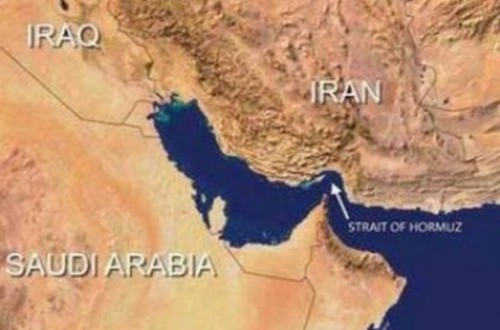
Market analyst Azhar Azam, in his article on CGTN, views the energy crisis not merely as an impact of war, but as a consequence of Washington’s strategic policies. He assesses that the attacks on Iran have disrupted vital global energy routes, particularly the Strait of Hormuz, through which one-fifth of the world’s oil flows.
“The US has weaponised the global energy market… creating a crisis that benefits its own energy sector, but burdens allies with massive economic costs.”
In Azam’s view, a paradox emerges: America is actually benefited by the surge in energy prices due to its new position as an exporter, while allies like Japan, South Korea, and Europe are squeezed by inflation and supply disruptions.
This narrative positions the crisis not as a side effect, but as an instrument.
Ideological Critique from Russia
Meanwhile, Dmitry Bavyrin from RIA Novosti brings a sharper, even cynical reading. He highlights the American political elite, who, in his opinion, are still trapped in a Cold War mentality and aggressive towards the world.
Figures like Tom Cotton are depicted as representatives of a new generation that sees conflict as the main tool of foreign policy.
“Everything happening in US foreign policy… is a long-awaited crusade against Beijing.”
In this perspective, Iran is not the final target, but a stepping stone towards a larger target: China. The conflict in the Middle East is positioned as part of a global strategy to pressure America’s main rival.
However, Bavyrin also notes another paradox: although aggressive, the results are not necessarily beneficial. War instead accelerates the consolidation of China-Russia relations and opens opportunities for other countries to seek alternatives besides Washington.