
Threat of Mines in the Strait of Hormuz: How Dangerous Is It?
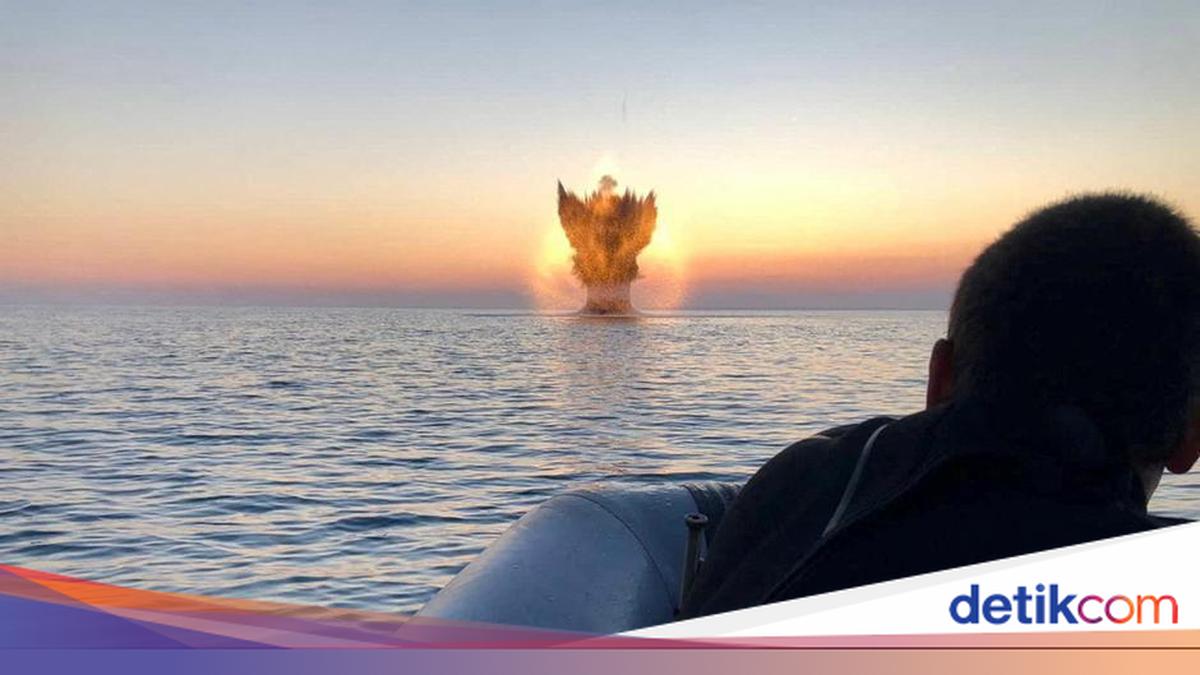
On Friday (17/04), German Chancellor Friedrich Merz stated that his country is ready to provide mine-clearing and maritime surveillance assistance to help secure the Strait of Hormuz. “We can provide mine-clearing ships; we are experts in that,” said Merz, adding that such interventions require “a strong legal basis.” The statement came after consultations with European leaders regarding the possibility of a multinational mission to secure the Strait of Hormuz post-war. On the same day, Iranian Foreign Minister Abbas Araghchi stated that the strategic waterway was “fully open” during the Israel-Lebanon ceasefire period. United States President Donald Trump also said the route was “fully ready to be passed.” However, a day later, Iran reversed its decision and closed the strait again. Nevertheless, maritime traffic remains at risk. Iranian authorities had previously indicated the possibility of underwater mines in the strait. However, experts are not entirely convinced. “We are not even sure there are mines (in the Strait of Hormuz),” said Johannes Peters, an underwater warfare expert from the Institute for Security Policy at the University of Kiel. “However, the threat itself is enough (to deter shipping). For now, no one in the war zone can really go and check it.” How do sea mines work? Sea mines are relatively cheap underwater explosive devices designed to detonate when triggered by a ship passing nearby. Based on their placement, there are three main types: - Drifting mines that float freely at or near the water’s surface - Moored mines that float below the water’s surface and are anchored to the seabed - Bottom mines that are placed on the seabed. During World War II, moored mines were the standard for the British Royal Navy. These mines were equipped with switches that triggered explosions upon direct contact with a ship. This technology mimicked German mines developed during World War I. “Modern mines are very different from that,” Peters told DW. The triggering mechanisms on newer mines no longer require direct contact. Mines can be triggered by certain magnetic effects, underwater sound waves, or changes in water pressure caused by a passing ship. To programme a mine to target a specific type of ship, “submarines can help determine the acoustic profile of enemy ships,” Peters explained. “Enemy ships will trigger the mine via their acoustic signature, while allied ships can pass through the mined area without disturbance.” Time-consuming search for explosives The mine-clearing process, which includes detection and sweeping, can take a long time. To detect mines, suspicious objects must first be found, then experts determine whether the object poses a threat or not. If dangerous, there are several ways to handle it: the mine can be lifted, disarmed, or detonated in a controlled manner underwater. Peters compares this process to “underwater ammunition taming services.” However, recent developments open opportunities to clear mines without endangering lives. “If possible, we use drones to search for objects, then identify and destroy them,” Ukrainian soldier Mykola told DW earlier this year. He is part of a Ukrainian task force clearing sea mines in the Black Sea placed by Russia during its aggression. German Navy: Hunting mines with drones The German Navy also uses drones to detect sea mines. “We mostly use autonomous systems to sweep the seabed,” said Commander Andreas from the 3rd Mine Sweeper Squadron of the German Navy to DW. For security reasons, only his first name may be published. “In the past, ships equipped with sonar systems had to pass directly over the suspected mine area to detect them,” said Andreas. “With autonomous systems, those 40 lives no longer have to be placed in direct risk situations.” This technology also greatly reduces the need for human personnel. Drones independently send footage from the seabed to a station for analysis. However, humans are still needed to distinguish between harmless debris and deadly mines, as well as to determine how to handle the found explosives. According to Andreas, the use of drones makes the Navy as a whole more efficient. However, clearing a sea area of mines after a war can still take decades, or even longer. Artyom, another Ukrainian mine clearer in the Black Sea, confirmed this. “We are still finding mines from World War II, even some from World War I,” he said. “That shows there is still work waiting for us ahead.” Is using drones too difficult in the Strait of Hormuz? The battery capacity of the drones used by the German Navy is still limited for operation in open seas. For now, drones must be launched not far from the area to be swept. “You always have to be close to the operational area,” said Andreas. “That will be difficult in sensitive areas like the Strait of Hormuz. Iranian weapons have a long range, and we have to protect our personnel.” Several companies are now developing drones that can operate longer. One of them is Euroatlas from Bremen, northern Germany. The company claims that its Greyshark underwater drone currently travels at 10 knots (18.5 kilometres per hour) for six hours, or 4 knots for three times longer. Euroatlas announced that a battery-powered autonomous version will begin production in September 2026. Mass production of the next model equipped with a fuel cell system for operations up to one week is expected to start at the end of the year. The Greyshark drone has the potential to be deployed soon Chief Sa