
Threat of Mass Layoffs in Ceramic Industry: Ministry of Industry Offers Solutions
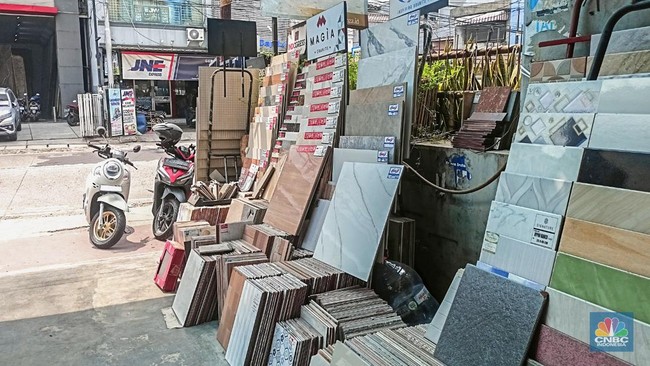
The Ministry of Industry has revealed that the main reason the Certain Natural Gas Price policy has not run optimally is the implementation of the Certain Industrial Gas Allocation policy, which has caused gas supply for industry to fall short of the allocation set by the government. Ministry spokesperson Febri Hendri Antoni Arif stated that the HGBT policy has been a key factor in attracting investors, but its on-the-ground execution has faced numerous obstacles due to shrinking gas supply. In 2025, the volume of Certain Natural Gas received by the industrial sector was recorded at only 60% to 70% of the allocation legally stipulated in Minister of Energy and Mineral Resources Decree Number 76K/2025. There is a wide gap between the regulation on paper and the physical supply commitment from upstream gas producers. The volume of gas allocation for industry has also continued to decline. Based on the ministry’s evaluation, the allocation in the 2025 decree was only about 57% of the volume previously set in the 2023 decree. This situation is exacerbated because the established quota has not been fully met by upstream gas producers or oil and gas trading businesses. The most severe problems are occurring in the Western Java and Lampung regions. Limited piped gas supply has caused HGBT realisation to decline year on year. Up to April 2026, supply realisation averaged only 46.36% of the set allocation and at one point hit a low of 37.5%. Due to the limited piped gas, industries in the region are forced to use regasified liquefied natural gas, which is far more expensive than the HGBT tariff. In June 2026, the price of regasified LNG is projected to reach US$20.57 per MMBTU, a sharp increase from the US$14-16 per MMBTU range the previous year. This extreme rise in energy costs has caused production capacity utilisation in affected sectors like the ceramic industry to plummet below 60%. As a result of this protracted gas supply disruption, Indonesia’s position as the world’s 5th largest ceramic producer in 2023 slipped to 7th place in 2024. The ministry also compared industrial gas prices in Indonesia with neighbouring countries. While the domestic HGBT price remains at US$7 per MMBTU, industries forced to use regasified gas must pay up to US$20.57 per MMBTU, far above Malaysia’s approximate US$9.7 per MMBTU and Thailand’s US$12 per MMBTU. This situation is beginning to affect investment decisions. Several foreign investors in the sanitaryware sector are reportedly considering cancelling their expansion in Indonesia and diverting investment to other countries due to energy supply uncertainty. The price of industrial gas from regasified LNG is more expensive than the export price of Tangguh LNG, which is estimated at around US$6 to US$7 per MMBTU assuming an oil price range of US$70 to US$80. Febri linked this issue to President Prabowo Subianto’s directives on natural resource management, citing the President’s frequent quotation of Article 33, paragraph (3) of the 1945 Constitution. He stated that if the regasified LNG price is indeed higher than the Tangguh export price, then industrial gas producers are not complying with the President’s orders, and the high cost threatens the operational continuity of industries and the jobs of their workers. Besides manufacturing, the ministry noted the fertiliser sector is also affected, with every US$1 per MMBTU increase in gas prices estimated to add Rp 2.23 trillion to the fertiliser subsidy budget or potentially reduce the subsidised fertiliser quota by around 600,000 tonnes. The ministry maintains that full implementation of the HGBT policy provides significant economic benefits, claiming it generated Rp 592.89 trillion in economic added value from 2020 to 2025 through increased industrial sales, additional tax revenue, new investment realisation, and fertiliser subsidy savings. To resolve the issue, the ministry has proposed two steps. In the short term, it asks the government to revoke the AGIT policy and ensure gas supply aligns with the ministerial decree. For the long term, it is pushing for the acceleration of the Draft Government Regulation on Natural Gas for Domestic Needs into a formal Government Regulation, which it believes will permanently solve industrial gas problems and support President Prabowo’s target of 8% economic growth.
Source: jawawa.id (https://jawawa.id/newsitem/threat-of-mass-layoffs-in-ceramic-industry-ministry-of-industry-offers-solutions-1782553862)
Originally published by CNBC Indonesia (https://www.cnbcindonesia.com/news/20260627160415-4-746217/ada-ancaman-phk-massal-di-industri-keramik-ini-solusi-dari-kemenperin), translated from Indonesian