
Thousands Still Missing as Flood Recovery Begins in Nepal
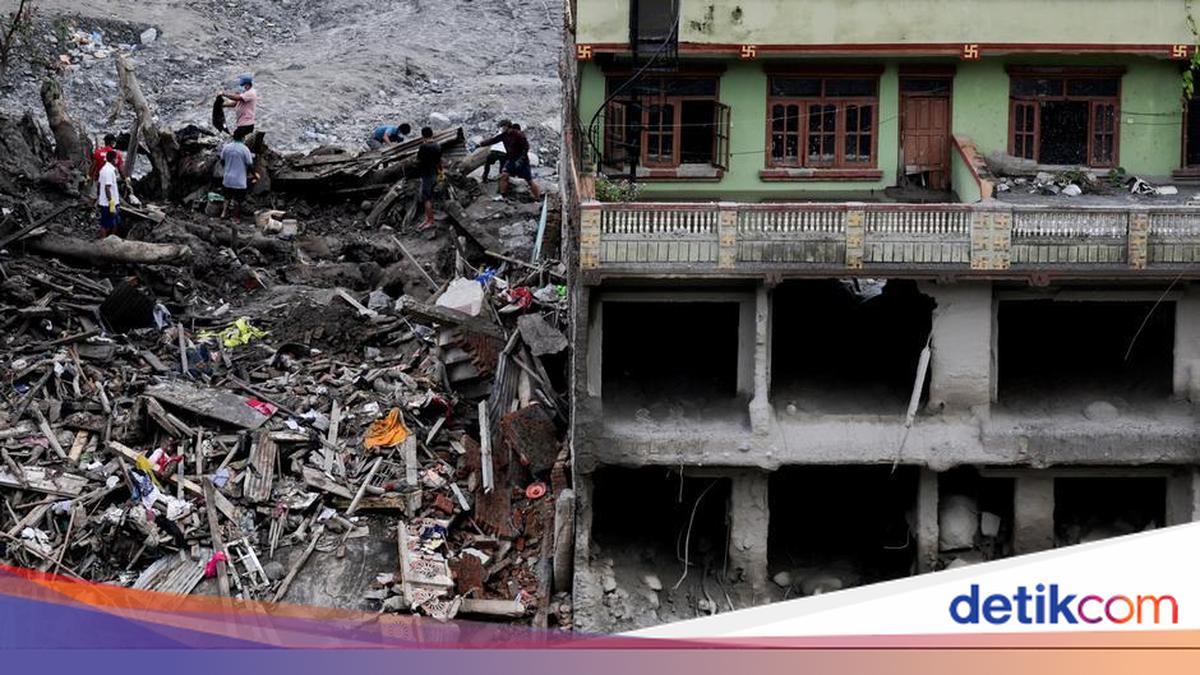
Nearly three weeks after devastating flash floods swept along the Bhotekoshi-Trishuli river system in Nepal near the Chinese border, the Himalayan nation has begun shifting from search and rescue operations towards recovery and reconstruction efforts.
Nepalese authorities said at least 1,386 bodies have been recovered across five affected districts, while more than 5,130 people remain listed as missing. The latter figure includes 587 foreign nationals and around 900 workers employed at hydropower tunnels and other energy facilities.
The floods, which authorities say were triggered by a glacier collapse, destroyed a number of settlements and swept away more than a dozen hydropower facilities. As search operations continue in flooded tunnels and along the muddy riverbanks, families of the victims are growing increasingly desperate for news of loved ones still missing.
Villages vanished within minutes
The scale of the loss of life is starkly visible in the upper reaches of the river, where entire settlements vanished within minutes. In many places, destroyed roads and bridges have cut off access, forcing rescue and recovery teams to rely on helicopters to deliver essential supplies.
Niranjan Paudyal, a resident of Sole village in Nepal’s Nuwakot district who lost his parents, uncle, aunt and sister in the flash floods, said the disaster even robbed him of the chance to bury his family members.
“We spent days combing through the debris, hoping to find traces of my parents and my missing family,” he told DW. “Unfortunately, the disaster left us no choice but to hold final rites without their bodies.”
Public land in Uttargaya Rural Municipality in Rasuwa district has largely been swept away by the floods and is unsafe to use.
“There is not even any land left after the floods to hold final rites for those who lost their lives,” said the municipality’s vice-chair, Chameli Gurung, told DW. “Relatives have to travel to Pashupati Aryaghat in Kathmandu to perform the last rites.”
In Uttargaya alone, at least 618 homes were swept away or buried, and 877 people remain missing. Only 12 bodies have been recovered. Gurung said local authorities are exploring the possibility of leasing private land to shelter displaced families before winter arrives.
Nepal’s Communications Minister Bikram Timilsina told DW that affected residents are being resettled near their original homes by securing the nearest public or private land and providing financial assistance based on household size until they can stand on their own feet.
Nepal faces a colossal recovery bill
As emergency relief efforts begin to stabilise, Nepal faces an enormous financial burden. An initial rapid damage and needs assessment placed total reconstruction requirements at around 723.3 billion Nepalese rupees (approximately IDR 84.3 trillion), according to local media reports.
The assessment estimated that almost two-thirds of the funds would be needed to restore energy and transport networks as well as education facilities.
Hydropower, which supplies almost all of Nepal’s electricity needs, has become a fast-growing source of export revenue for the country. The flood damage has deepened concerns about how Nepal will finance its recovery.
On Monday (14/09), India approved electricity exports to Nepal for 18 hours a day until at least 31 December, according to reports. “We will try to utilise all our domestic resources and seek international support to close the funding gap,” Timilsina told DW.
Nepal wants to rebuild back stronger
Nepal has formally requested assistance from the Loss and Damage Fund backed by the UN Framework Convention on Climate Change (UNFCCC). However, the fund, established to help countries cope with the impacts of climate change, has yet to begin distributing its limited resources.
Nepal is seeking to make reconstruction part of a broader economic recovery strategy, with an emphasis on climate-resilient infrastructure rather than merely replacing what has been destroyed.
“Given our previous experience in post-disaster management, what matters most is how effectively we can use the funds to restore lives and livelihoods and build disaster-resilient infrastructure,” Roshee Lamichhane, a professor at Kathmandu University, told DW.
Calls for climate justice
Beyond recovery funding, Nepal has been voicing a broader climate justice argument on the international stage.
Nepal’s Prime Minister Balendra Shah is scheduled to address the UN General Assembly in New York on 24 September, where he is expected to call for global accountability in mitigating climate impacts.
Although it contributes less than 0.1% of global greenhouse gas emissions, Nepal remains highly vulnerable to disasters driven by climate change.
“Reconstruction will be leveraged as an opportunity to build infrastructure that is resilient to climate change,” said Maheshwar Dhakal, who heads the Climate Change Management Division at Nepal’s Ministry of Forests and Environment. “We will develop guidelines with the motto of ‘tomorrow for a better future’.”
Climate scientists caution against attributing any single extreme event directly to global warming without in-depth study, but they agree that rising temperatures are accelerating glacier melt across the Himalayas.
Manjeet Dhakal, Director of Climate Analytics South Asia, said the scale of the disaster highlights the growing consequences of rising global temperatures and gives Nepal a chance to advocate for cuts in global carbon emissions on the international stage.
“How many more disasters must we wait for before there is a global response to address the impacts of climate change?” he asked, adding that developed nations and other countries must take on greater responsibility.