
Thousands of Villages Still Without Electricity, Minister Bahlil Prepares Rp10 Trillion Budget
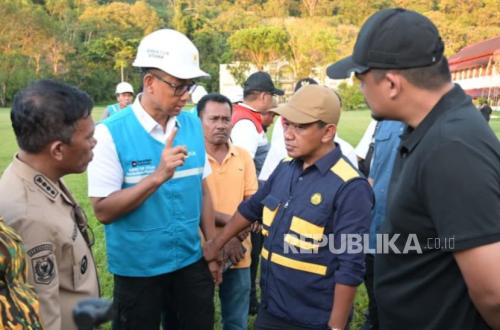
Energy and Mineral Resources Minister Bahlil Lahadalia has conducted a field visit to villages still lacking electricity access, inspecting the implementation of the village electricity programme and free new electricity connection assistance in Krembeng Hamlet, Hardimulyo Village, Kaligesing District, Purworejo Regency, Central Java. The visit is part of the government’s efforts to expand electricity access to remote areas that have not yet been reached by the national electricity grid. “The idea for this equalisation programme emerged when I discussed with the President. I conveyed that there are still thousands of villages and hamlets without electricity. The state must be present to serve all the people,” Bahlil said during a dialogue with beneficiaries of the electricity programme. Bahlil stated that, based on government data, there are approximately 5,700 villages and 4,400 hamlets that have not yet obtained electricity access. This fact, he said, shows that development equalisation has not been fully felt by all communities. To address this issue, the village electricity programme continues to be expanded so that all citizens can enjoy the benefits of electricity, whether for household needs, education, health services, or economic activities. According to Ministry of Energy and Mineral Resources data, in 2025 the government realised electricity development in 1,361 locations comprising villages and hamlets, supported by a budget of Rp3.6 trillion. Meanwhile, in 2026, the government has increased the budget allocation to approximately Rp10.3 trillion to accelerate electricity provision in areas still not covered. Bahlil explained that building electricity networks in remote areas is often not commercially viable if calculated solely based on company profits. He noted that in some cases, the investment required to serve dozens of families can reach hundreds of millions of rupiah. “Just to serve around 44 families, the investment can approach Rp700 million. Commercially, it is certainly not economical. But the government cannot only calculate profit and loss. The state’s duty is to serve the people,” he asserted. He also admitted to having an emotional connection with the condition of communities that have not yet enjoyed electricity, as he was born and raised in a village without electricity access. “I am a former village child born without electricity, so I know their sadness. How can people become educated, how can they access information quickly, how can elementary school children study well if there is no digital access? This is basic infrastructure that we must build,” he said. Bahlil explained that the village electricity programme consists of two main schemes: the construction of electricity network infrastructure and free electricity installation through the new electricity connection assistance programme. “This is to complete the 2025 programme, so now only inaugurations remain. Meanwhile, for 2026, we are inventorying everything again to be executed until 2027,” he concluded. One beneficiary, Markamah (53), who works daily as a bamboo weaver, expressed gratitude that she can finally enjoy electricity independently in her home. She recounted that for years, residents of Krembeng Hamlet only relied on oil lamps for lighting at night, while some other residents even had to tap electricity from neighbouring hamlets. “Of course I am very happy, hopefully it will be beneficial for all residents who receive it. I don’t want to buy anything yet, the important thing is the lights come on first,” said Markamah.