
Thousands of SPPGs Suspended – What's the Reason?
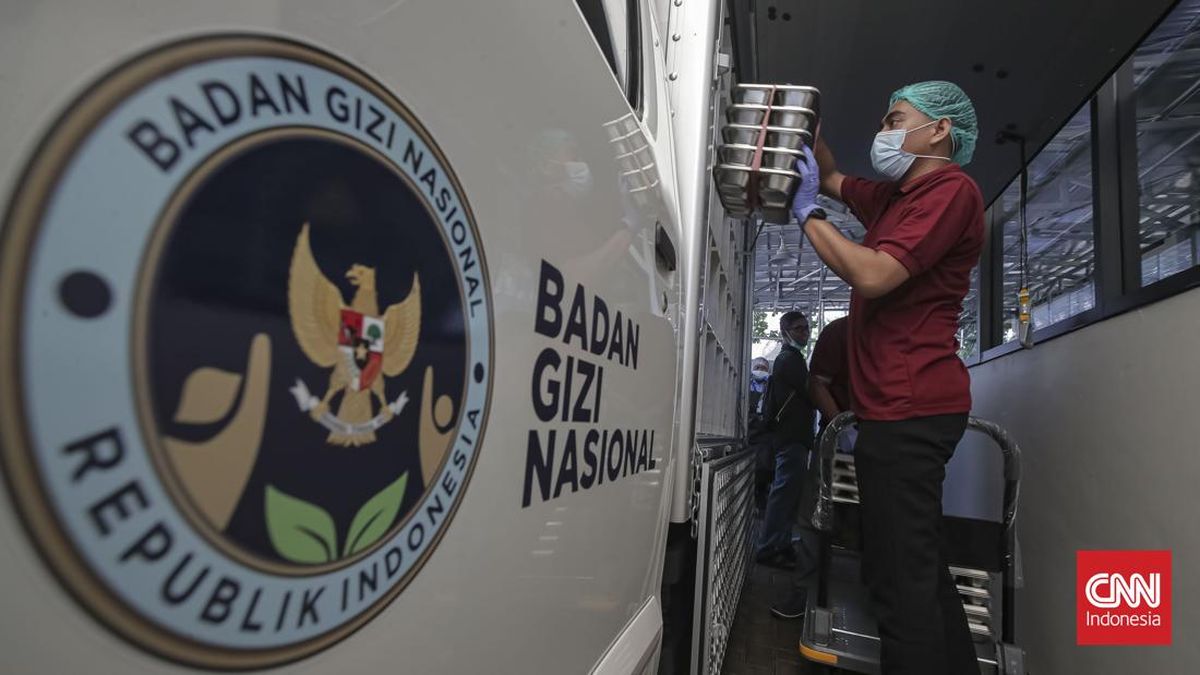
The National Nutrition Agency (BGN) stated that, between 6 January 2025 and 29 May 2026, out of the total 27,208 operational SPPGs across Indonesia, 8,182 have been temporarily suspended. The decision was made based on public feedback, including input from local officials, unannounced inspections (sidak), and monitoring of notable incidents experienced by MBG beneficiaries.
“From 6 January 2025 to 29 May 2026, out of the total 27,208 operational SPPGs across Indonesia, 8,182 have been suspended,” said Nanik S. Deyang, Deputy Head of BGN’s Public Communication and Investigation Division, in a statement on Sunday, 31 May.
In Region I, covering Sumatra Island, out of 5,968 operational SPPGs, 148 are currently suspended. Ten were suspended due to notable incidents, while 138 were suspended for infrastructure, organisational management, and nutrition quality issues. Meanwhile, 610 previously suspended SPPGs in the region have resumed operations, bringing the total number of suspended SPPGs in Region I to 758.
In Region II, covering Java Island, out of 16,594 operational SPPGs, 1,666 remain suspended. Sixty-one were suspended due to notable incidents, while 1,605 were suspended for infrastructure, organisational management, and nutrition quality issues. Additionally, 1,800 previously suspended SPPGs have resumed operations. “Thus, a total of 3,466 SPPGs in Region II have been suspended,” Nanik said.
In Region III, covering Kalimantan, Sulawesi, Nusa Tenggara, Maluku, and Papua, out of 4,646 operational SPPGs, 399 remain suspended. Twenty-five were suspended due to notable incidents, while 374 were suspended for infrastructure, organisational management, and nutrition quality issues. Meanwhile, 3,559 previously suspended SPPGs have resumed operations. Therefore, a total of 3,959 SPPGs in Region III have been suspended.
Across all regions, a total of 8,182 SPPGs have been suspended. Of these, 5,659 have had their suspension lifted and resumed operations after meeting requirements. The remaining 2,213 are still suspended for failing to comply with technical guidelines regarding management and SPPG infrastructure.
The BGN explained that SPPGs can be sanctioned for various reasons, including menus causing notable incidents such as digestive issues, diarrhoea, and vomiting; menus not meeting budget guidelines of Rp8,000 and Rp10,000; deliberate price mark-ups of raw materials; and SPPG building layouts not conforming to technical guidelines.
Additionally, some SPPGs were found to have not registered for the Sanitation and Hygiene Certificate (SLHS); lack wastewater treatment facilities (IPAL); and fail to provide accommodation for the SPPG Head, Nutrition Supervisor, and Financial Supervisor.
Others were non-compliant due to inadequate kitchen equipment as per guidelines, poor management practices, conflicts between partners and foundations, and having fewer than 15 suppliers.
Nanik added that the number of suspended SPPGs may increase as the BGN now mandates each SPPG to distribute MBG to at least 300 beneficiaries from the 3B group (pregnant women, nursing mothers, and children under five).
“If SPPGs cannot provide data on MBG distribution to the 3B group by 2 June 2026, they will be subject to major suspension (without incentives), and the SPPG Head will receive a stern warning,” said Nunik.