
Thousands of Hectares of Rice Fields in Bekasi Affected by Drought
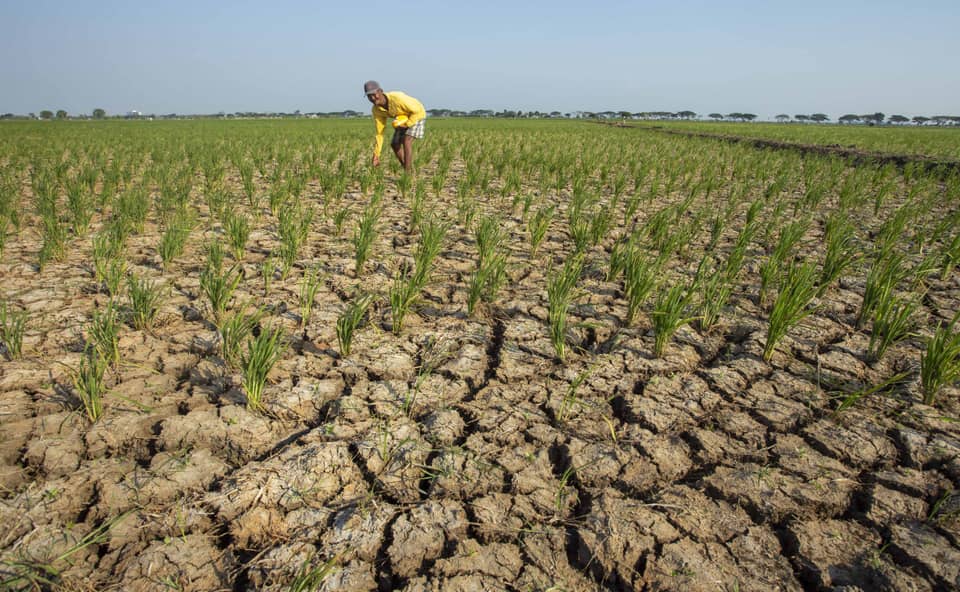
The Bekasi Regency Government in West Java has recorded 2,592 hectares of agricultural land in its area experiencing drought throughout this dry season. The affected area could widen further, given that the Meteorology, Climatology and Geophysics Agency (BMKG) predicts the peak of the dry season will continue until September 2026.
“This data is provisional and could increase as the dry season continues. We are still carrying out rigorous field data collection,” said Dodo Hadi Triwardoyo, Sub-Coordinator for Food Crops at the Bekasi Regency Agriculture Office, on Tuesday (28/7).
Dodo explained that the drought affecting the rice paddies has been triggered by a water crisis in the main irrigation channels. Due to the limited water supply, some farmers have been forced to harvest early in order to minimise potential material losses from crop failure.
The drought-affected paddy areas are distributed across several districts, particularly in the northern part of Bekasi Regency, such as Pebayuran, Tambelang, Cabangbungin, Sukatani, and Sukawangi. These areas are technically designated irrigation zones that are currently experiencing drastically reduced water flow.
Meanwhile, in the southern region, drought has struck the districts of Serang Baru, Cibarusah, and Bojongmangu. This area is considered highly vulnerable as it is dominated by rain-fed paddies that depend entirely on rainfall.
In response to the situation, the Bekasi Regency Agriculture Office has prepared a series of emergency mitigation measures. In addition to issuing advisories to farmer groups, the office has also mapped vulnerable points and inventoried the availability of water pumps and surface water sources for emergency irrigation.
As a safety net, the Bekasi Regency Government is preparing claim assistance through the Rice Farming Business Insurance Scheme (AUTP), with a protection target of 1,500 hectares of land.
In addition, cross-agency coordination is being intensified with the River Basin Centre (BBWS), Perum Jasa Tirta (PJT) II, the Ministry of Public Works, and relevant agencies at provincial level. This synergy is aimed at accelerating the normalisation of technical irrigation channels that have suffered from silting and reduced function.
“We hope these comprehensive mitigation measures can reduce the extent of affected land whilst safeguarding the region’s food productivity during the dry season,” Dodo concluded.