
Thousands of Fish Die Suddenly in Bali's Lake Batur, What Caused It?
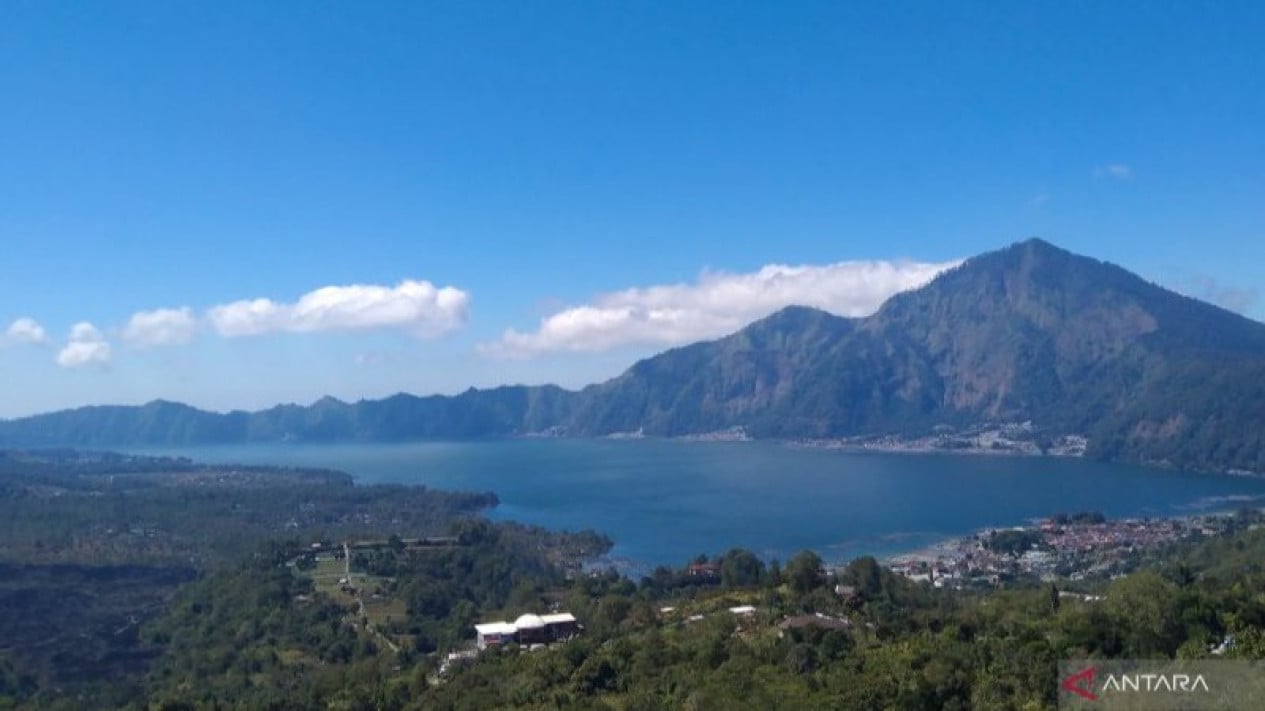
The Geological Agency of the Ministry of Energy and Mineral Resources (ESDM) has revealed that the phenomenon of thousands of fish dying suddenly in Lake Batur, Bangli Regency, Bali, was triggered by natural limnological and hydrothermal dynamics.
“This is not an indication that an eruption of Mount Batur is about to occur,” said Lana Saria, Acting Head of the Geological Agency at the Ministry of ESDM, when confirmed by ANTARA in Denpasar, Bali, on Friday.
Limnology is the science of inland aquatic ecosystems, the study of which reveals the structure and function of relationships between inland aquatic organisms and their connection to the physical, chemical and biological dynamics of the environment.
Based on the Geological Agency’s analysis, the phenomenon of gas eruptions appearing in the largest lake on the Island of the Gods is related to natural dynamics occurring within the caldera of Mount Batur.
She explained that under certain conditions, particularly when there is a mixing of water masses (overturn/upwelling), water from the lake’s bottom layer — which is low in oxygen and contains dissolved gases such as hydrogen sulphide (H2S) — can be lifted to the surface.
The release of these gases, she added, can produce a sulphurous odour, and the reduction in dissolved oxygen levels in the waters has the potential to cause mass fish deaths.
Meanwhile, regarding volcanic activity at the 1,717-metre-high volcano, Lana added that there was no indication of an increase in volcanic seismicity.
“The activity level of Mount Batur remains at Level I, or normal, with the recommendation that tourists and residents do not engage in activities within the Mount Batur crater,” she added.
Previously, since the start of this week, thousands of tilapia fish, including those farmed by local fish farmers, have died en masse.
To date, the Bangli Regency Government, through its Food Security and Fisheries Agency (KPP), has been calculating an estimate of the number of fish that have died.
“We have not yet released the figure for the number of dead fish because the sulphur emissions have not yet completely ceased,” said Wayan Sarma, Head of the Bangli KPP Agency.