
Thousands Massacred: How Fear Turned into Resistance
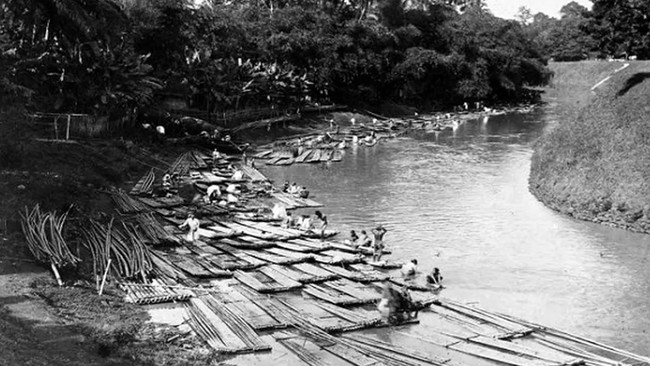
Jakarta, CNBC Indonesia — The waters of the Angke River were said to have once turned red, while the bodies of massacre victims piled up in its flow. The harrowing scene is associated with the mass killing of Chinese residents by the Dutch East India Company (VOC) in Batavia in October 1740, a tragedy that claimed tens of thousands of lives and became known as the Chinese War, or Geger Pecinan.
The bloody episode began as the Chinese population in Batavia grew amid a sluggish economy. In Tionghoa dalam Pusaran Politik (2008), Benny G. Setiono estimated their numbers at between 4,000 and more than 10,000 at the time.
VOC Governor-General Adriaan Valckenier then adopted policies to reduce the Chinese population, including relocating people to other areas such as Sri Lanka. The policies fuelled unrest after rumours spread that relocation was merely a cover for throwing Chinese residents into the sea. The historical account cited in the source does not establish whether the rumour was true.
The fear helped spark resistance. Some Chinese residents armed themselves and attacked several VOC targets, including sugar mills. The VOC then deployed military forces to confront the resistance, and tensions escalated after dozens of its soldiers were reportedly killed.
Historian M.C. Ricklefs, in Sejarah Indonesia Modern (1999), records that on 9 October 1740 Valckenier sent troops to search Chinese neighbourhoods both inside and outside Batavia’s walls.
The following day, a large-scale massacre began, and Chinese residents encountered by the troops were targeted regardless of age or sex.
The scale of the deaths is conveyed in G. Bernhard Schwarzen’s account in Reise in Ost-Indien (1751). He described streets, alleys and canals filled with bodies.
“Our feet would not even get wet when crossing the canal if we walked over the piles of corpses,” Schwarzen wrote, according to the historical source.
The tragedy is also linked to the origin of the name Kali Angke in Jakarta. According to Alwi Shahab in Betawi: Queen of the East (2002), the name Angke is said to derive from Hokkien: “ang” means red and “ke” means river. Another version links the name to a figure called Tubagus Angke.
The massacre, which continued until 22 October 1740, is estimated to have killed tens of thousands of Chinese residents, while their homes were looted and destroyed. Geger Pecinan became one of the darkest tragedies in Batavia’s history under the VOC and was followed by policies restricting the movement of Chinese residents, including their segregation in designated areas.