
Thought to Be Melting, Ice in the South Pole Instead Gains 695 Billion Tonnes
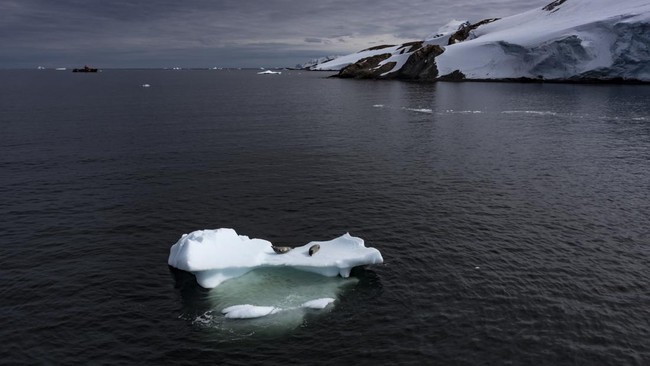
Jakarta, CNBC Indonesia - Over the past twenty years, ice in Antarctica has been steadily diminishing at an alarming rate. However, in the last three years, something unexpected has occurred.
The ice sheet in East Antarctica has instead thickened by 695 billion tonnes. This increase is the largest ever recorded in satellite observations, and its cause apparently lies not around the continent itself, but thousands of kilometres away in tropical waters, according to a report in the journal Nature on Monday (7/9/2026).
Researchers from the Chinese Academy of Sciences found that sea surface temperatures were rising in the warm tropical waters, precisely at the boundary between the western Pacific Ocean and the eastern Indian Ocean. This warming triggered changes in atmospheric wind patterns that propagated all the way to Antarctica. The resulting shift in air pressure then directed a flow of water vapour from the Indian Ocean towards East Antarctica, bringing extremely heavy snowfall over several months.
It was this accumulation of snow that temporarily increased the mass of the frozen continent.
Heat at Sea Actually Creates Snow
The connection appears implausible at first glance. Warmer oceans at the equator have actually thickened the ice at the South Pole.
The research shows that heat trapped in tropical waters triggers atmospheric pressure waves that propagate far southward. The pressure pattern that forms then creates a channel of moist air flowing continuously from the Indian Ocean towards the East Antarctic coast.
The vapour-laden air arrives at the frozen continent and falls as heavy snow. From 2021 to 2023, snow fell continuously in the Queen Mary Land and Wilkes Land regions, accumulating into an enormous additional layer of ice. Overall, Antarctica gained 695 billion tonnes of ice, enough to temporarily halt the decline in ice mass that has been under way for decades.
The researchers stress that this large gain is only a temporary event and does not mean the threat of melting ice has passed. Such events occur roughly once every ten years, depending on fluctuations in tropical sea temperatures. Overall, Antarctica has still been losing an average of 140.5 billion tonnes of ice per year over the past two decades. West Antarctica is in fact continuing to melt at an accelerating pace as warming seawater erodes the ice sheet from below.
In other words, although the ice continent may appear to be growing again, this phenomenon is merely a momentary reprieve caused by short-term shifts in weather patterns. Ongoing global warming remains the primary threat that is slowly but surely devastating the ice continent at the southern tip of the Earth.
Source: jawawa.id (https://jawawa.id/newsitem/thought-to-be-melting-ice-in-the-south-pole-instead-gains-695-billion-tonnes-1788785482)
Originally published by CNBC Indonesia (https://www.cnbcindonesia.com/tech/20260907141749-37-765821/dikira-mencair-es-di-kutub-selatan-malah-tambah-695-miliar-ton), translated from Indonesian