
Thohir Yasin: A Self-Sufficient Islamic Boarding School in Eastern Indonesia Fostered by Bank Indonesia
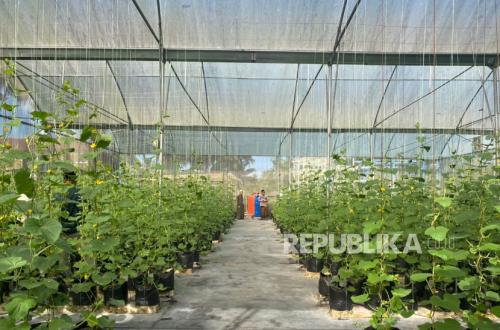
Efforts by Bank Indonesia (BI) to support the implementation of a sharia economic and financial development ecosystem based on Islamic boarding schools appear to be bearing fruit. The Salaf Modern Thohir Yasin Islamic Boarding School in Lombok, West Nusa Tenggara (NTB), has demonstrated BI’s success in fostering and supporting pesantren to become self-sufficient.
Located on Jalan Patirata, Lendang Nangka, Masbagik, East Lombok, NTB, the pesantren was established around 1991. Led by TGH. Ismail Thohir, the institution now oversees 13 educational bodies, ranging from kindergarten to university level.
Beyond religious studies, Thohir Yasin has developed economic and entrepreneurial activities to achieve self-sufficiency. The pesantren has cultivated several economic sectors, including agriculture, livestock farming, and trade.
TGH. Ismail Thohir explained that the pesantren has been under BI’s guidance since 2021. The support provided by the central bank primarily consists of business capital in the form of buildings and investment capital, such as the construction of chicken coops, a poultry slaughterhouse, a greenhouse, and the provision of a rice miller machine.
With these facilities, human resources are optimised to create economic value. The produce from farming, livestock, and trade is partly used to meet the pesantren’s basic needs, while the rest is sold outside, generating profit. The income is used for operational costs, including employee salaries, and for the expansion of the pesantren. The benefits also extend to job creation and social assistance, enabling underprivileged members of the surrounding community to access education.
Ismail expressed his happiness with the pesantren’s economic achievements, which have had a broad social impact. He acknowledged that these accomplishments would not have been possible without the role and support of Bank Indonesia over the past five years in promoting pesantren self-sufficiency.