
This State-Owned Logistics Company Secures Halal Certification at Three Major Retail Distribution Points
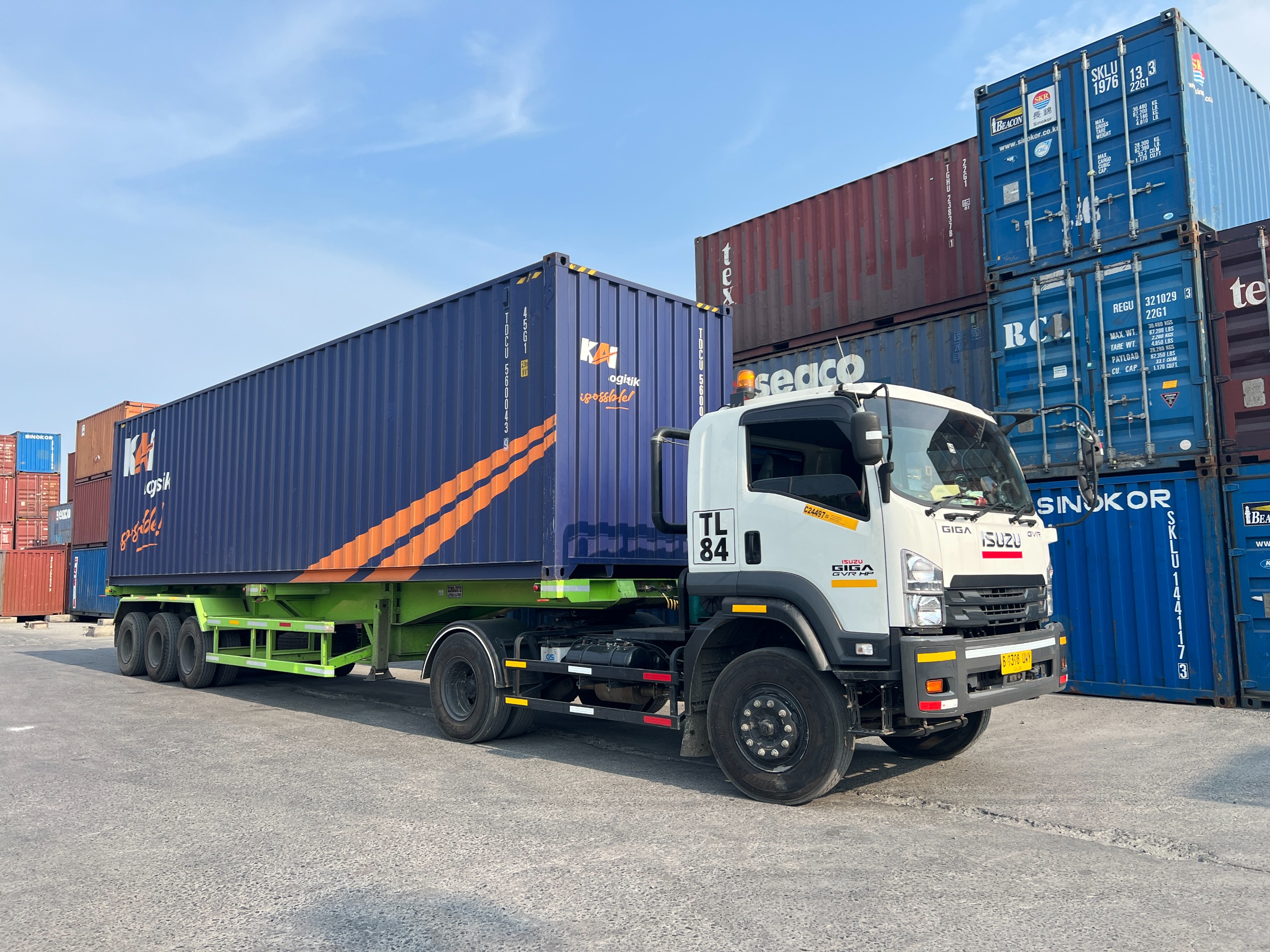
Three halal certifications for retail goods delivery services have been successfully obtained by this PT Kereta Api Indonesia (KAI) subsidiary in the logistics sector. These certifications are specifically granted to the Kalog Express service at three distribution points with massive goods flow: Kalog Express Service Point Jakarta Gudang, Semarang Poncol, and Surabaya Kota.
This initiative opens a new phase in elevating retail service standards, focusing on product safety throughout the distribution process.
KAI Logistik (Kalog) President Director Yuskal Setiawan explained on Friday (2/4) that this accomplishment represents a tangible manifestation of the company’s efforts to provide legal and operational certainty for goods owners amid increasingly competitive industry dynamics.
“This certification is not merely an administrative fulfilment but a profound commitment to building stronger market trust, particularly for sensitive sectors that rely on the integrity of distribution processes to maintain their product quality comprehensively,” he stated.
According to Yuskal, the expansion to retail services is part of the company’s roadmap, following previous certifications applied to container services at several logistics terminals. Through the Sungai Lagoa, Klari, Kalimas, and Ronggowarsito terminals, which are already certified. The company is now consistently expanding the scope of halal guarantees to the segment of small goods delivery with massive turnover volumes, to create a holistic and trusted logistics ecosystem.
CONCRETE SOLUTION
The presence of this halal-certified retail service is also positioned as a concrete solution for micro, small, and medium enterprises (UMKM) in facing the mandatory halal deadline in October 2026. Based on the mandate of Law No. 33 of 2014 on Halal Product Assurance and Government Regulation No. 39 of 2021.
“Various commodities, from food and beverages to traditional medicines, are required to have halal assurance. We are ready to ensure that the distribution chain does not become a weak point for UMKM in meeting these government standards,” he said.
Yuskal noted that the certificate numbered ID00410018283070424 was officially issued on 11 March 2026, after undergoing a series of rigorous audits by the Halal Inspection Agency (LPH) PT Sucofindo. The audit process, which took place at the end of February 2026, included in-depth examinations of the implementation of the Halal Product Assurance System (SJPH), handling procedures for materials, to cleaning and purification facilities in retail services. This comprehensive oversight ensures that every operational process in the field is aligned with applicable principles and rules.
“In daily implementation, we apply very strict separation standards to prevent cross-contamination with regular goods or animal shipments. Every package registered in the halal category is given a special label identity that allows it to be grouped exclusively in designated storage areas. These goods are placed on pallets lined with clean tarpaulin and protected with additional tarpaulin covers to maintain product sterility during transit and travel,” he explained.
INITIAL LOCATIONS
Yuskal added that Jakarta, Semarang, and Surabaya were chosen as initial locations due to their high distribution activity and important roles as major logistics hubs on Java Island.
With the presence of halal-certified services at these points, the company hopes to encourage the growth of the sharia economy in the surrounding areas, while providing added value for increasingly selective customers in choosing logistics partners.
Looking ahead, the company is committed to continuing evaluations and expanding the reach of halal-certified services to other distribution points, in line with evolving customer needs.
“This effort is part of the company’s vision to deliver logistics services that excel not only in timeliness and cost efficiency but also guarantee quality and provide peace of mind for all customers, aligned with sustainable and value-added service principles,” he concluded.