
This Small Mammal Survived the Dinosaur Extinction and Helped Shape Life on Earth
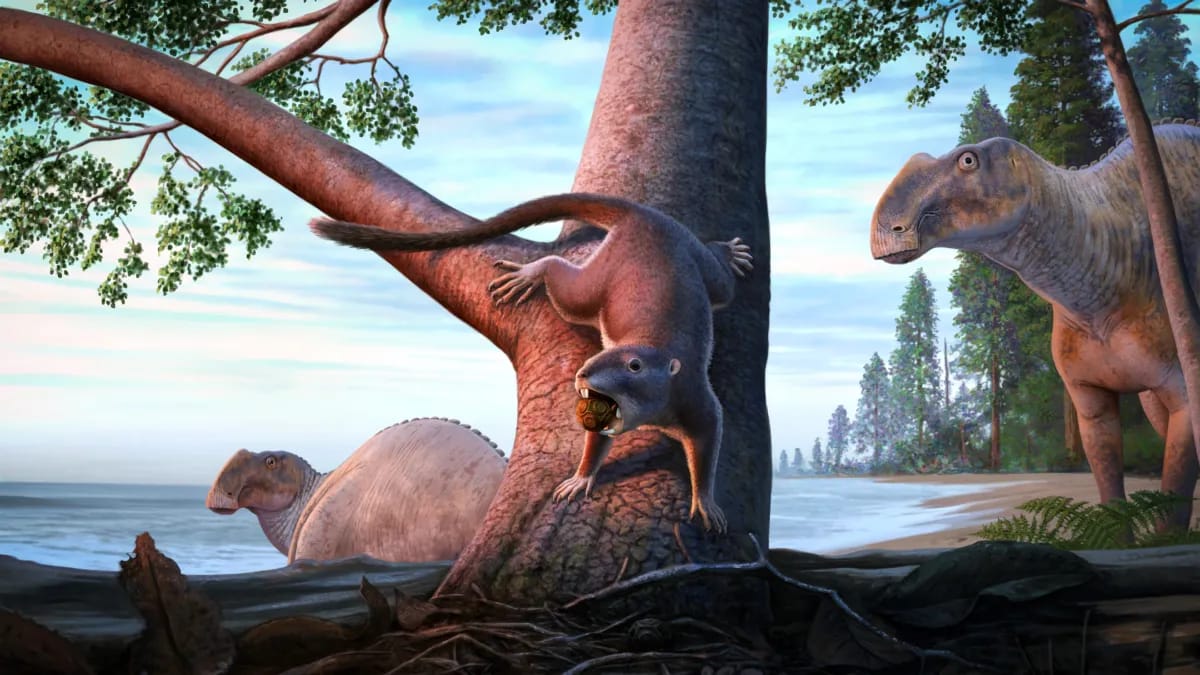
Mammals once coexisted with dinosaurs until a mass extinction event approximately 66 million years ago wiped out around 75% of life on Earth. However, some small species survived and later evolved into the ancestors of modern mammals.
Among the species believed to have survived the extinction was a small, rat-like mammal from the genus Cimolodon. This creature belonged to the multituberculates, an ancient mammal group that first appeared in the Jurassic Period and survived for over 100 million years before going extinct.
Researchers led by the University of Washington have discovered a new species within the genus based on fossils found in Baja California, Mexico. The fossils are estimated to be around 75 million years old.
The new species has been named Cimolodon desosai. It was roughly the size of a golden hamster and likely moved both on the ground and in trees. Researchers also believe it fed on fruits and insects.
‘Cimolodon was a common mammal during the Late Cretaceous, the final era of the dinosaurs,’ said Gregory Wilson Mantilla, a biology professor at the University of Washington and curator of vertebrate paleontology at the Burke Museum.
He believes this new species is likely an ancestor of the mammal group that survived the mass extinction.
‘Its small size and omnivorous diet were two key traits that helped it survive,’ he added.
The fossils were first discovered in 2009 by Wilson Mantilla and his team. Unlike most ancient mammal fossils, which typically consist of teeth alone, this specimen includes a more complete set of remains, from the skull and jaw to thigh and arm bones.
‘Finding fossils here is much harder than in other regions,’ Wilson Mantilla said.
He explained that the team initially found small teeth protruding from rock, but further investigation revealed additional bone fragments within the cracks.
With more complete fossils, scientists can more accurately estimate the animal’s size, movement patterns, and habitat.
To study the fossils, the team used digital imaging and micro-CT (micro-computed tomography) technology, which produces high-resolution detailed images. This helped researchers compare the dental structures of Cimolodon desosai with other species in the same genus to confirm it was a new species.
‘In the past, many species were named solely based on tooth shape,’ Wilson Mantilla said. ‘If a skeleton is found without teeth, it’s often difficult to determine the species.’
The name desosai was given in honour of Michael de Sosa VI, the field assistant who first discovered the fossils. De Sosa passed away while the research on the specimen was ongoing.
‘He was an exceptional field assistant and like a brother to me,’ Wilson Mantilla said. ‘It’s an honour to immortalise his name through this species.’