
This Profession Does Not Require a Bachelor's Degree but Pays Over Rp400 Million
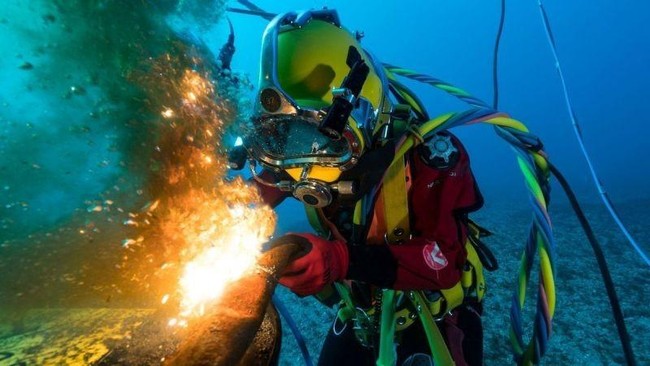
In an era of difficult job markets, there is a technical profession that does not require a bachelor’s degree but can generate a fantastic salary. What is required is technical expertise accompanied by certification. That profession is underwater welding.
Underwater welding is often described as one of the most unique yet high-risk jobs in the world. Their duties involve not only welding but also repairing and maintaining underwater structures such as offshore oil and gas platforms, undersea pipelines, ships, dams, and power plant turbines.
To work as an underwater welder, an individual must typically possess two simultaneous skills: professional diver certification and welding certification. Due to this rare combination of skills, underwater welders are considered highly specialised labour.
This work is performed under much more challenging conditions compared to conventional welding. Workers may operate at depths of tens to hundreds of metres, facing ocean currents, cold temperatures, low visibility, and high water pressure. Common techniques include wet welding, which involves welding directly in the water using specialised equipment designed to maintain a safe electric arc, and dry welding, which is performed inside specialised waterproof chambers (hyperbaric chambers) to ensure more precise welds for critical energy infrastructure projects.
Due to the high level of difficulty and risk, underwater welding is one of the technical professions with relatively large compensation. According to Salary Experts, the average income for an underwater welder can reach Rp400 million per year for senior positions. In some countries, experienced workers handling offshore projects can earn hundreds of thousands of US dollars per year, or starting from Rp2 billion per year.
The high salary is commensurate with the challenges faced, ranging from the risk of decompression sickness and hypothermia to dangers associated with the marine environment. Nevertheless, this profession remains in high demand globally, as much of the world’s critical infrastructure—from energy to maritime transport—relies on maintenance and repairs that can only be performed beneath the water’s surface.