
This Official Was Ostracised in Indonesia, Yet Honoured Abroad
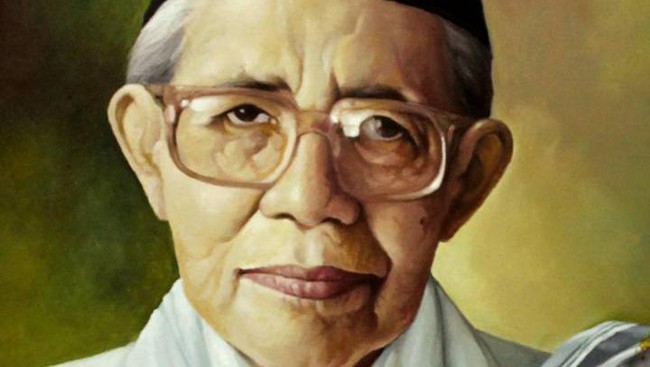
History records an Indonesian official who was once ostracised and detained at home. Abroad, however, this figure received honours and was trusted with important positions in a number of international organisations.
The figure is Mohammad Natsir, who served as a minister and Prime Minister of Indonesia in 1950. That distinguished position changed when Natsir became involved in the Revolutionary Government of the Republic of Indonesia (PRRI) movement.
In the autobiography titled Natsir: Politik Santun di Antara Dua Rezim (2016), it is noted that the government arrested Natsir in 1960. He served a period of political detention until he was finally released in 1966.
During the Soeharto era, Natsir remained branded as a dissident and lived in hardship in his own country. Yet while the Indonesian government distanced itself from him, Natsir found an honoured place on the international stage.
This was inseparable from his work as an intellectual and Islamic thinker. One of Natsir’s well-known views was the teaching that Islam prioritises sound reasoning in carrying out its teachings. On the basis of that view, he encouraged Islam to play a role in building the nation through government.
According to Izamudin Ma’mur in a study titled Abul Aʻla Mawdudi’s and Mohammad Natsir’s Views on Statehood: A Comparative Study (1995), Natsir’s thought and work kept his influence alive internationally.
That recognition came even as Natsir’s political journey in Indonesia was in a difficult situation. In 1957, he was awarded the Grand Gordon of Nikhan Istihar in recognition of his support for the independence struggle of the people of North Africa.
After his release from detention, Natsir’s international role became increasingly visible. He was known not only as a politician and Islamic thinker from Indonesia, but was also trusted with important positions in various world Muslim organisations.
One of these was the World Muslim Congress in Karachi, Pakistan. Natsir served as vice president of the organisation from 1967 until the end of his life in 1993.
Similar trust also came from Mecca. From 1969 to 1993, Natsir was a member of the Majlis Ta’sisi Rabitah Alam Islami. Then, from 1976 to 1993, he was also a member of the Majlis Alami lil Masjid.
His influence even extended to Western and Asian countries. In the 1980s, Natsir was active in international organisations in Kuwait, Britain and Pakistan. Natsir also received awards from the international community.
He was granted the highest award from King Faisal of Saudi Arabia, the Jaizatul Malik Faisal al-Alamiya. He also received honorary doctorates from various universities around the world.
This series of positions and awards shows that Natsir was not merely influential in Indonesian politics. Even as he was sidelined from the domestic political stage, he was trusted and respected internationally, particularly in the Muslim world.
That influence lasted until Natsir’s death in 1993. In Indonesia, his name was only gradually rehabilitated after the government named him a National Hero in 2008.