
This Is Why Chinese Memory Distributors Are Panicking and Selling Off Stockpiled Warehouse RAM
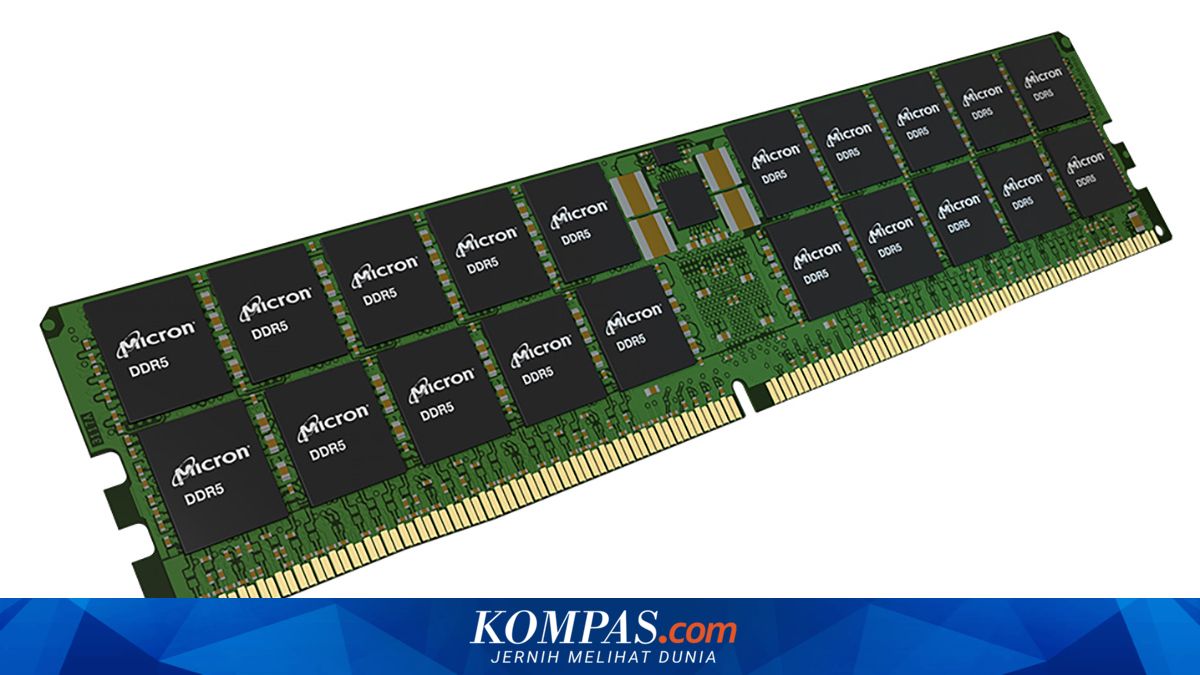
There is an intriguing phenomenon in the Chinese memory market at present. Chinese memory distributors are gripped by panic and are hastily selling off stockpiles of Random Access Memory (RAM) accumulated in their warehouses.
Previously, these distributors had hoarded large quantities of RAM when prices were elevated amid the global memory crisis triggered by the artificial intelligence (AI) industry. After prolonged stockpiling, they have suddenly begun offloading their RAM stocks.
DDR5 RAM prices in the market have been observed to drop significantly in recent weeks of late April.
In the Chinese market, the price of 16 GB DDR5 SO-DIMM modules was reported to have fallen from around 1,759 yuan (approximately Rp 4.3 million) to 1,159 yuan (approximately Rp 2.8 million). This represents a decline of about 34% compared to February 2026.
This is not the first time memory prices have fallen recently. In mid-April, 32 GB DDR5 kit prices also plunged by up to 30%, while 8 GB and 16 GB DDR4 prices dropped by up to 25%.
Distributors are now forced to release their stocks as the market weakens. Small vendors can no longer absorb RAM at high prices, and demand from home PC consumers has also decreased.
Additionally, market panic has been triggered by an innovation from Google, which introduced the “TurboQuant” memory compression technology. This technology is claimed to reduce memory usage by up to six times for AI needs.
Nevertheless, current RAM prices are still far higher than normal conditions. In the same period last year, similar modules were sold for around 246 yuan or approximately Rp 600,000.
This means that, despite the drop, DDR5 prices are still nearly five times more expensive than the previous year.
The price decline trend is also evident in global markets. In Germany, DDR5 prices fell by about 7% in March, while in the United States, Corsair’s 32 GB DDR5 kits were reported to have dropped by up to 20%.
However, memory prices in general remain at levels 4 to 5 times higher than before the major surge driven by the explosion in AI industry demand.
This situation arises because memory producers are prioritising supplies for data centres over the consumer market, making supplies for PCs and laptops limited.
Although spot market prices are starting to fall due to warehouse clearing actions, consumers may not immediately feel the impact on assembled PC or laptop prices.
This is because major manufacturers purchase RAM through long-term contracts, not daily spot market prices, as compiled by KompasTekno from Tech Radar and WCCF Tech.