
This is the technology the government is using to convert towering heaps of waste into renewable fuel
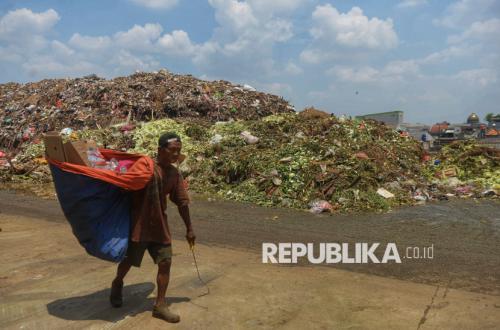
Jakarta — Coordinating Minister for Economy Affairs Zulkifli Hasan said the government has begun using pyrolysis technology to tackle longstanding piles of waste at final disposal sites (TPA). The technology is being prepared to process mountains of waste into renewable fuel as part of accelerating waste-to-energy conversion in line with Presidential Regulation No. 109 of 2025. Zulkifli said the government has previously focused on waste-to-energy projects based on incineration to turn new waste into electricity. Now, the government is widening the processing scheme by targeting long-standing waste piles at several large TPAs such as Bantar Gebang, Bandung, and Bali. “If previously waste was processed into electricity, now we push the waste piles at TPAs to be converted into renewable BBM through pyrolysis technology,” said the figure known as Zulhas in Jakarta on Tuesday, 19 May 2026. He explained that pyrolysis differs from the waste-to-energy concept. Waste-to-energy is used to process new waste into electricity, whereas pyrolysis is used to handle long-standing waste that has piled up at the TPAs. The government sees addressing long-standing waste as urgent because the volume of dumps has continued to rise in several areas. In some locations, mounds of waste have reportedly risen to resemble multi-storey buildings. “Now we have waste mountains as tall as 16 buildings. Like Bantar Gebang and other tall places. Now those using pyrolysis will be processed into BBM,” Zulhas said. He said the waste-to-energy project involves many parties, from ministries and agencies, the research community, to the defence industry. The National Research and Innovation Agency (BRIN) together with relevant ministries is said to be preparing the technology, while Danantara is involved in developing the waste-to-energy project. According to Zulhas, support also comes from PT Pindad, regional governments, and the Indonesian Army (TNI AD) to help on-the-ground implementation. The government wants waste-to-energy not to be seen only as an environmental issue, but as part of the national energy independence agenda. “In other words, waste processing is no longer seen as a burden, but as a source of energy and part of the national energy independence vision,” he said.