
This is the Reason Why Anti-Corruption Efforts Always Fail
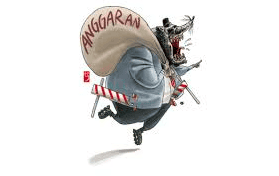
Former Deputy Chairman of the Corruption Eradication Commission (KPK), Amien Sunaryadi, has voiced criticism regarding the effectiveness of anti-corruption efforts in Indonesia. According to him, the failure to eradicate corruption from the era of President Soekarno to the administration of President Prabowo Subianto has occurred because law enforcement agencies have repeatedly made the same mistakes for decades.
These remarks were made by Amien during a Public Hearing (RDPU) with the Legislative Body (Baleg) of the Indonesian House of TDR (DPR RI) concerning the review of the implementation of the Law on the Eradication of Corruption Crimes (Anti-Corruption Law) at the Parliament Complex, Senayan, Jakarta, on Monday.
“Why has corruption in Indonesia been continuously targeted for eradication since 1955? In 1955, Mr. Djodi Gondokusumo, our Minister of Justice, was imprisoned for accepting bribes. Yet, up to 2026, corruption has not disappeared. Therefore, anti-corruption efforts from president to president have always failed. Even in the first year of Mr. Prabowo’s term, it remains a failure,” said Amien.
Amien stated that since the beginning of independence, law enforcement agencies have only pursued corruption that meets the criteria of causing losses to state finances, while dozens of other types of corruption offences are ignored. Amien likened Indonesia’s law enforcement system to repeating a collective madness in the hope of achieving different results from the same methods.
“Why is anti-corruption in Indonesia only directed at corruption that causes state financial losses? Why not other types? This has been done from the beginning until now. So, we are doing the same things over and over again and expecting corruption to disappear. As Albert Einstein would say, we are mad. We are collectively mad,” Amien remarked.
Chronologically, Amien revealed historical evidence of the ineffectiveness of anti-corruption laws over time due to a lack of in-depth research when drafting regulations. He explained that during the Soekarno era, Government Regulation in Lieu of Law (Perppu) No. 24 of 1960 was issued without evaluating the effectiveness of the War Ruler Regulations of 1957 and 1958.
He noted that the element of “causing losses to state finances” was first introduced there. While there were 22 types of corruption listed, only those involving state financial losses were enforced. By the end of Soekarno’s era, corruption continued to soar.
Subsequently, during the Soeharto era, Law No. 3 of 1971 was enacted without evaluating previous regulations. Amien noted that 17 types of corruption were identified, but the focus remained on pursuing state financial losses. Consequently, at the end of the New Order regime, the regime’s collapse was marked by an MPR Decree instructing the eradication of Corruption, Collusion, and Nepotism (KKN).
Furthermore, during the eras of Megawati, SBY, and Jokowi, the same pattern repeated. During the formulation of articles 603 and 604 in the new national Criminal Code (KUHP), policymakers were deemed to have failed to conduct objective research to see the extent of the effectiveness of Law No. 31 of 1999 in conjunction with Law No. 20 of 2001.
“This means we are merely changing articles, but we do not know if the objectives are being achieved. In Mr. Prabowo’s era, it is more or less the same; it is ineffective,” he asserted.
Amien reminded the DPR RI to exercise its oversight function regarding laws, starting from the drafting, socialisation, implementation, and enforcement stages, through to evaluation. Referring to the MD3 Law, Article 72, letter d, the Legislative Body and Commission III should possess concrete oversight reports to be compared with the minutes from when the Anti-Corruption Law was first discussed.
“At the very least, to what extent have the objectives of the Anti-Corruption Law been achieved? Which articles are working, and which are not? Most people do not know that a large portion of the Anti-Corruption Law articles are not being implemented. Everyone is just busy chasing state financial losses. That is why I am very happy and proud to appreciate today’s hearing, as it evaluates the Anti-Corruption Law,” Amien explained.
Furthermore, to break this chain of failure, Amien urged the Legislative Body and Commission III to immediately initiate large-scale national scientific research to map the real anatomy of corruption on the ground, rather than merely relying on the assumptions within legal texts.
He then shared the results of independent research he has conducted over the last decade, from 2015 to 2025. The research findings show a massive contradiction between what occurs in the real world and the activities of investigators from the police, prosecution, and the KPK.
“Most people do not know what the most common form of corruption practice is in the real world. Therefore, I propose that the Legislative Body and Commission III conduct such research. I have conducted it myself from 2015 to 2025, and the conclusion is very, very clear. The most prevalent corruption practice on the ground is bribery. That is the most frequent,” Amien concluded.