
This is How BJ Habibie Strengthened the Rupiah Exchange Rate from Rp16,800 to Rp6,500 per US dollar
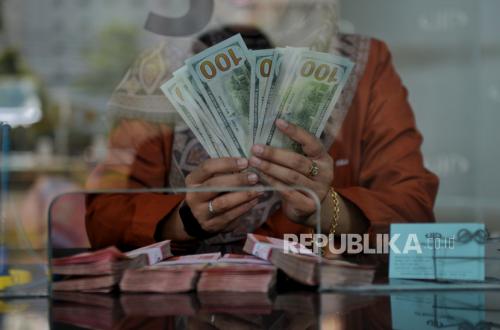
This is how economist Didik J. Rachbini recounts the story behind the strengthening of the rupiah during the presidency of Indonesia’s 3rd President, BJ Habibie, when he was a member of the National Reform Team in Economic Affairs. The rupiah at the time managed to reverse its decline, strengthening from Rp16,800 to Rp6,500 per US dollar.
Didik says Habibie’s experience of turning around the rupiah in 1998 could provide material for evaluation for the Indonesian government as it faces rupiah weakness today. The rupiah has recently hit a new low, breaking through the Rp17,700 per US dollar level.
“The rupiah has become so weak at present and is even deemed undervalued. We need to understand the reasons why markets no longer favour us so that the exchange rate continues to fall. This is an economic-political problem, not just an economic technical cause. But we have best practice on how the 1998 economic and political crisis gradually recovered. President Habibie’s experience in a short time could bring the rupiah from Rp16,800 to Rp6,500 per US dollar and could be used as a reference to formulate comprehensive policies,” Didik said in a statement to Republika on Tuesday, 19 May 2026.
Didik is known to have served as a member of the National Reform Team in Economic Affairs during Habibie’s leadership, pursuant to Presidential Decree No. 198 of 1998 on the Establishment of the National Reform Team. The economist from the Institute for Development of Economics and Finance (Indef) and Rector of Paramadina University said the key to Habibie’s success in making the rupiah regain strength was the factor of trust.
“I was a witness and directly involved. I believe Habibie managed to lower the exchange rate because of the trust that began to appear after almost a year as president in a short period,” he said.
Didik noted that Habibie’s transitional role was initially doubted as part of the New Order. But Habibie gradually gained trust due to his commitment to reforming economic institutions, his dedication to democracy and decentralising regional autonomy, and his selflessness without vested interests to restore Indonesia to normal and recover.
“Although initially strongly opposed, Habibie believed that his position as transitional president was legitimate and legal. On this basis and with full conviction, the President repeatedly stated that his task was to restore trust in the government. His position was stated both implicitly and explicitly simply as a transitional president,” he explained.
According to Didik, it is easy to understand that the 1998 crisis was fundamentally a crisis of trust and an institutional crisis, not merely a crisis of technical economic fundamentals. Therefore, the President was confident that when trust began to recover, the rupiah could return to its true level and even strengthen again.
“What Habibie did to strengthen trust, simultaneously, was not only to restore confidence in the economic realm but also political commitment to transform the nation into an open and democratic state,” he added.
The 1945 Constitution was amended with emphasis on human resources (HR) and educating the nation through allocating 20 percent of the state budget to education, improving HR through health, regional autonomy, a system of direct elections, and other democratic elements. At the time, Habibie firmly opened up space for freedom and democracy, freed the press from control, freed political prisoners, accelerated elections, and signalled a peaceful transition.
“Thus strengthening the economic and political foundations led to a recovery of confidence while normalising panic among people, the business world, and the international community. The rupiah’s strengthening during Habibie’s era was driven mainly by a restoration of trust through institutional and democratic reforms,” he explained.
Only after that did technocrats under the President, and with direct assistance from German experts, work to improve and reform Indonesia’s institutions.
“President Habibie continued and accelerated the restructuring and recapitalisation of banks, the establishment of the Bank Restructuring Agency (BPPN), and the merger of state banks into Bank Mandiri,” he said.
He added that the current banking system is far stronger and more resilient to crises. This was evident when the US housing crisis of 2008 spread to global capital markets, including Indonesia, but did not bring down Indonesian banks as in 1998. The stock market had fallen deeper and collapsed more severely in 1998.
“The epicentre of the 1998 crisis lay on Jalan Thamrin, at Bank Indonesia, where crony capitalism worked in tandem with BI policies. This institution became an oligarchic tool for extracting rents from the economy. Therefore, subsequent institutional reforms by President Habibie included granting Bank Indonesia independence. Law No. 23 of 1999 was enacted to render Bank Indonesia independent of government power so it would no longer be used to pursue economic rents,” he continued.
BI then became independent and no longer under government control that often used it to fund political projects. With its independence, BI focused on credible monetary policy. Furthermore, President Habibie directly summoned German experts to draft an anti-monopoly law so that the business world could compete fairly.
“So institutional reform of the monetary and economic sectors was the core factor, making Habibie’s short presidency a foundation for subsequent administrations,” he asserted.
“I am confident that, in various respects, today’s exchange rate problems and rising capital outflows are trust issues,” he concluded.
Source: jawawa.id (https://jawawa.id/newsitem/this-is-how-bj-habibie-strengthened-the-rupiah-exchange-rate-from-rp16-800-to-rp6-500-per-us-dollar-1779546165)
Originally published by Republika (https://ekonomi.republika.co.id/berita/tfa2zt490/ini-cara-bj-habibie-menguatkan-nilai-tukar-rupiah-dari-rp16800-jadi-rp6500), translated from Indonesian