
This Future 'Treasure' is Hidden in Indonesia's Coal-Fired Power Plants
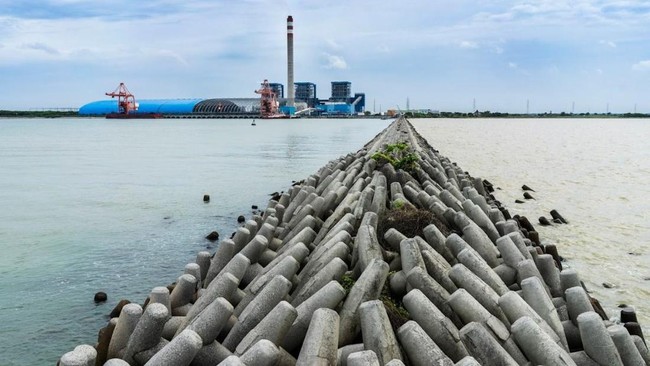
The Mineral Industry Agency (BIM) has identified a potential ‘treasure’ in the form of Rare Earth Elements (REE) stored within the combustion residue of more than 250 coal-fired power plants (PLTU) in Indonesia. The identified REE potential includes contents such as monazite, xenotime, ion-adsorbed clay (IAC), as well as fly ash and bottom ash (FABA).
Yogi Wibisonium Budhi, BIM Deputy for Research and Technological Development, stated that the secondary sources from coal-fired power plant operations are a primary focus in the mapping of national strategic mineral resources. “We have, for instance, monazite, xenotime, and IAC in the Mamuju region. There is also red mud, fly ash, and bottom ash present in numerous power plants, with over 250 PLTUs spread across Indonesia. These contain various rare earth elements that present a challenge for us to utilise,” he explained during the 36th Anniversary of the Indonesian Mining Experts Association (Perhapi) at JIExpo on Thursday.
In essence, REEs can be sourced from three levels: primary, secondary, and tertiary sources. Utilising mining and industrial by-products is considered vital as the demand for minerals, including REEs, for future technologies continues to rise. According to IEA data cited by the agency, the mineral requirements for electric vehicles have increased sixfold, while those for onshore wind power plants have increased ninefold compared to gas-fired systems.
“Looking ahead, the shift towards mineral resources that can be converted into rare earth elements will become a very important strength to consider,” he said.
Rare Earth Elements consist of 17 metallic elements within a single group on the periodic table, meaning the process of separating them into single elements presents high technical challenges. Elements such as neodymium (Nd), praseodymium (Pr), dysprosium (Dy), terbium (Tb), and yttrium (Y) are required as raw materials for permanent magnets in electric vehicle motors and wind turbines, while scandium is needed for aluminium alloys.
Indonesia is looking to increase its domestic REE potential, considering that the world is currently developing the utilisation of this ‘treasure’. “Consequently, global competition has shifted from merely possessing large reserves to how supply chains can be established,” he explained.
Furthermore, the consideration of exporting raw materials only to re-import them as finished products could potentially cause losses of up to thousands of trillion rupiah for the state due to the loss of added value. To address this, the agency intends to orchestrate cooperation between ministries, agencies, BRIN (National Research and Innovation Agency), universities, and the mining industry to accelerate domestic extraction and purification research.
“Therefore, the role of BIM here is to bridge that gap. We want to connect the research results from universities and research institutions like BRIN with the real needs of the industry,” he concluded.