
This District Has Resolved 60% of Its Organic Waste Problem
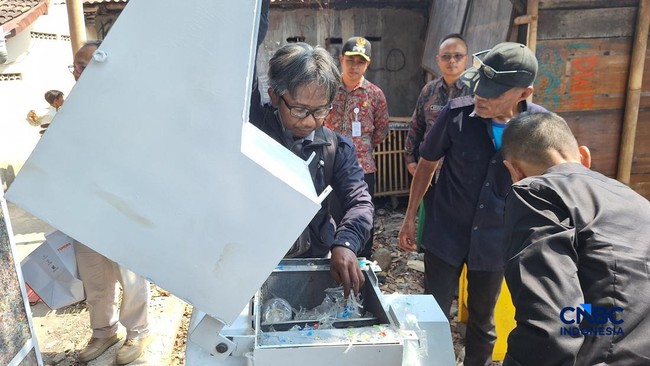
Surakarta, CNBC Indonesia – Organic waste management is a persistent challenge in many areas. But in Gilingan, Banjarsari, Surakarta, Central Java, the problem of organic waste has been almost resolved.
This achievement has been made possible by a composting facility established in partnership with Coca-Cola Indonesia through the Coca-Cola Foundation Indonesia (CCFI).
Triyono Prijosoesilo, Senior Director of Public Affairs, Communications and Sustainability at PT Coca-Cola Indonesia and Chairman of the Coca-Cola Foundation Indonesia, said the facility was provided because waste management is linked to access to clean water. Waste is also a challenge for urban communities.
“In densely populated residential areas such as Gilingan, waste is always a critical issue. If access to clean water is provided but waste management is neglected, it will still have a negative impact on public health,” he said at the inauguration of the community-based waste-management facility on Thursday (8 October 2026).
For the facility, CCFI worked with ResikPlus, a waste-management and environmental-education platform and consultancy.
“We are working with an organisation, ResikPlus, which already has some experience in this area. We are promoting waste management, both for organic waste such as food scraps and non-organic waste such as plastic. That is our main focus,” Triyono added.
ResikPlus founder Bayu Imamtoko said managing organic waste was important because it was a major household waste problem. Organic waste accounts for as much as 65% of the waste in Indonesia’s landfills.
The composting facility can address 60% of the organic waste problem. The initiative also supports Law No. 18/2008 on Waste Management, which provides for a comprehensive waste-management system from source to disposal to protect public health and the environment.
“All food scraps will be put in there and processed until they become soil again – compost,” he said.
The facility has a capacity of 2,000 litres and can turn organic waste into compost. Residents can harvest the compost from the facility after two months.
“If food-waste processing is successful, then 60% of the waste problem will have been solved,” Bayu said.
He said the programme was also in line with national waste-management regulations and Surakarta’s waste emergency. Under the law, by 2026 the final processing site may only receive residual waste.
He said the facility was intended eventually to handle 80% of Gilingan’s organic waste.
“A household produces only around 30 kilograms of food scraps a month, and 75% of that is water. Once it has become compost, it weighs only 5–10 kilograms,” Bayu explained.