
This Country Went Four Years Without a Vice-President, with the President Serving Alone Until the End of His Term
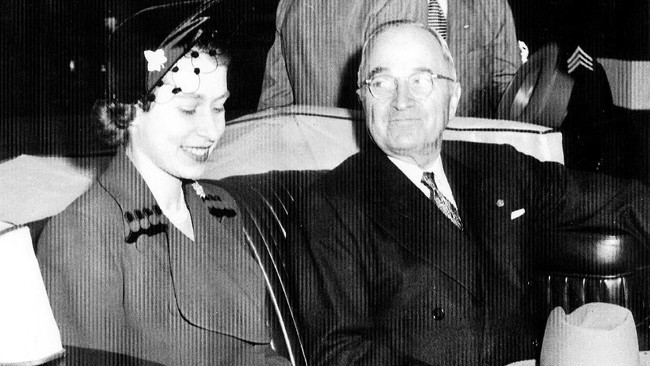
The United States once ran its government without a vice-president for almost four years. This happened during President Harry S. Truman’s administration after his predecessor, Franklin D. Roosevelt, died in office in 1945.
Truman, who was then vice-president, became the country’s leader. Unlike under today’s system, however, the vice-presidency he vacated was not immediately filled by someone else.
According to History.com, Harry S. Truman was the 33rd US president, serving from 1945 to 1953. He had initially been elected vice-president alongside Roosevelt in the 1944 presidential election.
But their time together in the White House was short. On 12 April 1945, Roosevelt died of a cerebral haemorrhage at the age of 63, less than three months after beginning his fourth term.
A few hours after learning of Roosevelt’s death, Truman was sworn in as president at the White House by US Chief Justice Harlan Stone.
In comments to reporters, Truman said he had been stunned by the sudden change. He described the feeling as though the whole planet had fallen on him.
“I don’t know whether you fellows ever had a stack of hay fall on you, but when they told me what happened yesterday, I felt like the moon, the stars, and all the planets had fallen on me,” Truman told reporters.
From that point on, Truman led the United States without a vice-president.
According to the US Senate’s historical records, the vice-presidential office remained vacant until January 1949. That meant Truman governed for around three years and nine months without a second-in-command in the White House.
This was possible because, at the time, there was no constitutional mechanism for filling a vice-presidential vacancy during a president’s term.
Leading the US amid the Second World War
Although he had to take over leadership unexpectedly, Truman faced a series of major decisions that shaped the course of US and world history. When he first became president, the Second World War in Europe was nearing its end.
Allied forces accepted Nazi Germany’s surrender on 8 May 1945.
Truman also had to make a major decision about the war in the Pacific. To end the conflict with Japan and avoid the heavy loss of life expected from a land invasion, he approved the use of atomic bombs on Hiroshima on 6 August 1945 and Nagasaki on 9 August 1945.
Japan announced its surrender on 14 August 1945. After the war, relations between the United States and the Soviet Union deteriorated further, leading to the Cold War.
Truman then adopted a policy of containment to curb Soviet expansion and the spread of communism. In 1947, he introduced the Truman Doctrine, providing aid to Greece and Turkey.
That same year, his administration also launched the Marshall Plan, a multi-billion-dollar programme to help European countries recover economically after the war.
The US gets a vice-president again
The vice-presidential vacancy ended after Truman won the 1948 presidential election. In January 1949, he was inaugurated for a full term, with Alben W. Barkley as vice-president.
Thus, for almost four years after Roosevelt died in April 1945, the United States had no vice-president serving alongside its head of state. The experience later became an important factor in discussions about how to fill a vice-presidential vacancy.
In 1967, the United States ratified the 25th Amendment to the Constitution, which established a process for a president to fill a vice-presidential vacancy by nominating a candidate who must be approved by a majority in both chambers of Congress. Under the amendment, a vacancy no longer has to remain open until the next presidential election.
Source: jawawa.id (https://jawawa.id/newsitem/this-country-went-four-years-without-a-vice-president-with-the-president-serving-alone-until-the-end-of-his-1794307832)
Originally published by CNBC Indonesia (https://www.cnbcindonesia.com/news/20261110145413-4-783925/negara-ini-4-tahun-tanpa-wapres-presiden-sendiri-sampai-akhir-jabatan), translated from Indonesian