
This Country Receives 'Blessing' from Indonesia, Its Currency Surges Against the Dollar
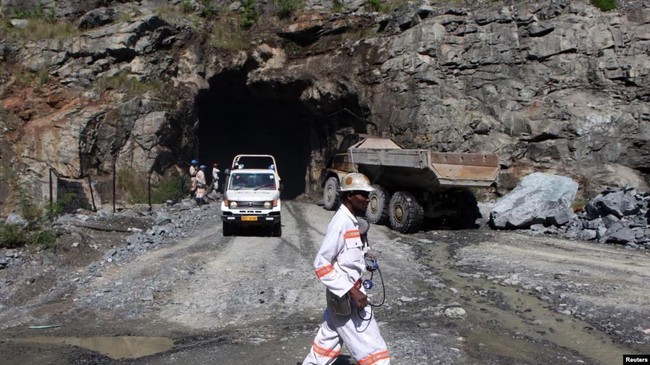
Copper is currently enjoying its golden era. Zambia has been able to maximise this copper ‘blessing’, causing its currency to strengthen significantly against the US Dollar. From artificial intelligence (AI) data centres, electric vehicles, and power grids to renewable energy projects, almost all sectors driving global economic growth require large quantities of this reddish metal.
Rising demand has kept copper prices at high levels. Goldman Sachs has raised its projection for London Metal Exchange (Leg) copper prices by the end of 2026 to US$13,735 per tonne. The investment bank expects markets to remain tight as mine supply grows more slowly than industrial needs. Simultaneously, the United States is reviewing copper import tariff policies, which is driving metal shipments towards its domestic market.
Amidst the global race to secure copper supplies, Zambia faces a different set of challenges. The government of this Southern African nation has extended a 10% export duty exemption on copper concentrate until 30 September 2026. This policy was implemented to allow mining companies to export accumulating stocks of concentrate while domestic processing facilities undergo maintenance and technical repairs.
According to Reuters, this relaxation covers 271,742 tonnes of copper concentrate. The largest quota was granted to Mopani Copper Mines with 100,000 tonnes, followed by Lumwana Mining Company with 56,986 tonnes, while First Quantum Minerals and Nkana Mining and Minerals Processing each received approximately 43,000 tonnes. Lubambe Copper Mine was allocated 15,000 tonnes and Konkola Copper Mines 12,541 tonnes.
Zambia’s challenges do not stem from a lack of resources. Based on 2024 global copper reserve data, Zambia holds approximately 21 million tonnes, placing it among the world’s top ten, equal to Indonesia. Zambia’s reserves are even larger than those of Canada (8.3 million tonnes) and India (2.2 million tonnes). This resource capacity has made Zambia one of Africa’s largest copper producers for years.
In 2025, the country exported 890,346 tonnes of copper and aims for national production to reach 3 million tonnes by 2031. This ambition is driven by the belief that global demand will continue to rise during the energy transition and digitalisation. The scale of these copper exports is also linked to reduced supplies from Indonesia. Notably, Indonesian copper exports fell following an incident at PT Freeport Indonesia (PTFI). A landslide at the Grasberg Block Cave (GBC) underground mine caused production capacity to plummet to approximately 30% of normal levels. This operational disruption is expected to impact global copper supplies, potentially reducing world supply by about 2.3% and triggering market concerns regarding availability.
With its vast copper reserves, Zambia is moving to fill this supply gap. However, large reserves do not automatically guarantee industrial efficiency. Concentrates from mines must undergo smelting and refining processes before becoming copper cathodes, which are higher-value products and a primary commodity in global trade. When smelter facilities face technical disruptions, the production flow from mines loses its processing route.
This situation is evident in the recent policy from Lusaka. The government chose to open space for concentrate exports to prevent material accumulation at mine sites. If stocks continue to grow while processing capacity has not recovered, production activities risk slowing down and corporate revenues could be pressured. Conversely, the nation loses the opportunity to gain the added value typically derived from the refining process.
This phenomenon occurs while the global market is concerned about long-term copper supplies. World production in 2024 remains concentrated in a few countries: Chile leads with 5.3 million tonnes, followed by the Democratic Republic of Congo (3.3 million tonnes) and Peru (2.6 million tonnes). China produces 1.8 million tonnes, while the United States and Indonesia each produce approximately 1.1 million tonnes. This concentrated production structure means operational disruptions in major producing nations quickly attract market attention.
For commodity investors, the Zambia case illustrates the challenges facing the global copper industry. Market focus has primarily been on mine reserves, new exploration, and demand prospects from AI and electric vehicles. Meanwhile, a country’s success in capturing high prices depends heavily on the efficiency of processing facilities situated between the mine and the end market.
Indonesia possesses copper reserves equal to Zambia, at approximately 21 million tonnes. The difference lies in the policy direction of recent years, which has pushed for increased domestic refining capacity. The Zambian experience demonstrates that the copper industrial chain does not end at mining activities. The resilience of smelters, energy supply, facility maintenance, and the ability to maintain operations are the determining factors in how much economic benefit can be derived from mineral wealth.
Zambia’s copper export policies have also supported its currency. The Kwacha has broken through 17.45 ZMW/US$, its strongest level since 17 March 2023, or more than 2.5 years ago. Throughout this year, the Kwacha has surged by 20.81%, while in 2025 it soared by 20.58%. In addition to exports, the Zambian Kwacha emerged as one of the world’s best-performing currencies in early 2026 after the government and local central bank restricted the use of foreign currencies in domestic transactions.
Source: jawawa.id (https://jawawa.id/newsitem/this-country-receives-blessing-from-indonesia-its-currency-surges-against-the-dollar-1780825366)
Originally published by CNBC Indonesia (https://www.cnbcindonesia.com/research/20260604141342-128-740150/negara-ini-dapat-berkah-dari-ri-mata-uangnya-mengamuk-lawan-dolar), translated from Indonesian