
Thirteen Suspects in Little Arisha Daycare Violence Case to Be Tried Soon
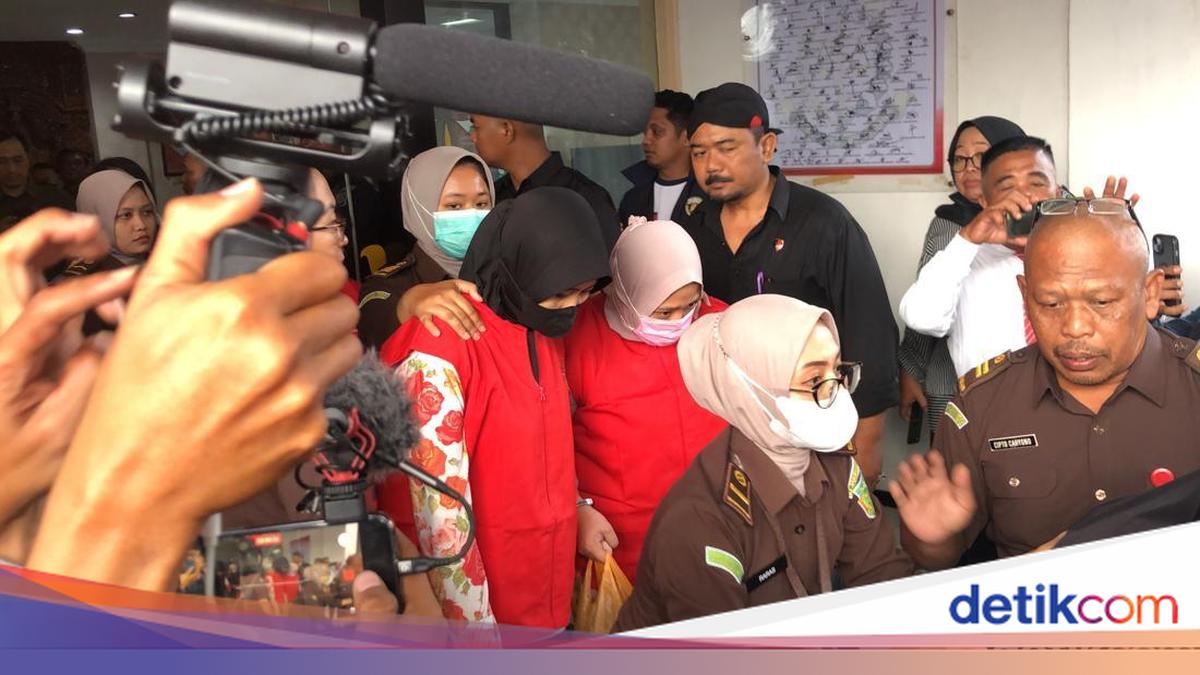
Thirteen suspects in the alleged violence case at Little Arisha Daycare in Yogyakarta, along with their case files, have been transferred to the Yogyakarta District Prosecutor’s Office. The suspects will now face trial. The transfer was carried out after the files were declared complete. “Based on the formal and material examination conducted by the public prosecutor’s team, the case files from the Yogyakarta City Police have been declared complete, or P21,” explained the Head of the Yogyakarta District Prosecutor’s Office, Hartono, during a press conference on Wednesday (24/6/2026). “Therefore, in this stage two process, our public prosecutor’s team has received, examined, and verified a number of pieces of evidence and other evidentiary materials that will form the basis for the prosecution in the upcoming trial,” he continued. Hartono stated that the next legal step after stage two is for the public prosecutor’s team to finalise the indictment thoroughly, clearly, and completely. “It will then be immediately transferred to the Yogyakarta District Court so that the trial can be held promptly to provide legal certainty for both the victims and the suspects,” he said. The Head of the Criminal Investigation Unit of the Yogyakarta City Police, Kompol Riski Adrian, revealed that the files submitted to the Prosecutor’s Office were the result of an investigation lasting 60 days. “There were 154 witnesses in the investigation dossier, and we also used three experts in education, medicine, and criminal law,” he explained. Adrian stated that although the files and 13 suspects have been handed over, the possibility of additional suspects remains. It is known that 17 individuals, consisting of caregivers and daycare security, were placed under mandatory reporting. “So far, there are none yet, but it is still developing; however, from the leads and the results of the previous case expose, there will indeed be additional suspects,” Adrian explained. “In the previous P19 from the Prosecutor’s Office, one of the points was that there must be further investigation regarding other suspects. We are following up on the 17 individuals who, at the time of the raid, were still under mandatory reporting or whose status was still as witnesses,” he concluded. The files for the 13 suspects—DK (51), AP (42), FN (30), NF (26), Lis (34), EN (26), SRm (54), DR (32), HP (47), ZA (30), SRj (50), DO (31), and DM (28)—have been divided into three separate dossiers. “The case files are grouped into three: the caregivers’ file, the principal’s file, and the foundation chairperson’s file,” said Hartono. “This is because the charges for each are different, so they cannot be combined into a single transfer,” he added. Hartono noted that the grouping relates to the specific laws applied, meaning the articles and laws used differ for each group due to their differing roles. He detailed that the caregiver group consists of 11 individuals. The remaining files are for the principal, API alias N, and the foundation chairperson, DK. Given the large number of suspects and victims, the public prosecutor’s team includes not only prosecutors from the Yogyakarta District Prosecutor’s Office but also from the Yogyakarta High Prosecutor’s Office. Hartono explained that the foundation chairperson and the principal are charged separately from the 11 caregivers. “For the principal and the foundation chairperson, we can also apply the National Education System Law, consumer protection law, and the child protection law, because the caregivers acted on their initiative and direction,” he stated. The foundation chairperson is charged under Article 71 Paragraph 1 in conjunction with Article 62 Paragraph 1 of Law Number 20 of 2023 on the National Education System, and Article 20 letter C of Law Number 1 of 2023 on the Criminal Code. Additional charges include Article 62 Paragraph 1 in conjunction with Article 9 Paragraph 1 letter E of Law Number 8 of 1999 on Consumer Protection, and Article 77 in conjunction with Article 76A of Law Number 25 of 2014, as amended by Law Number 17 of 2016 concerning child protection.