
Thinner Wallets: Indonesians Prioritise Loan Repayments Over Spending
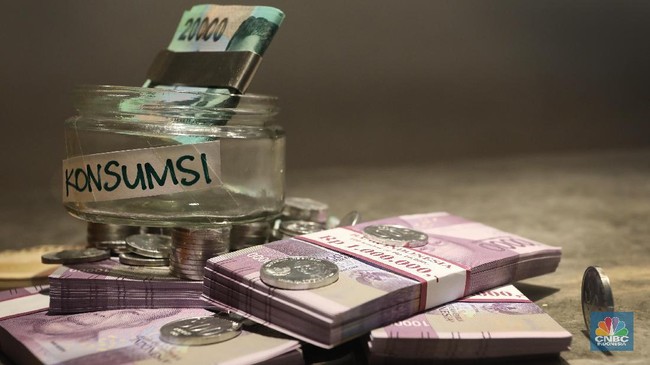
Jakarta, CNBC Indonesia — As the end of the year approaches, Indonesians are beginning to devote a smaller share of their income to consumption. At the same time, the share allocated to loan repayments has increased.
The trend was reflected in Bank Indonesia’s (BI) Consumer Survey, released on Monday (9 November 2026). Notably, the changes came as public confidence in the economic outlook continued to improve.
BI recorded a Consumer Confidence Index (CCI) of 119.9 in October 2026, up from 118.1 in September.
The figure indicates that consumer confidence remains in optimistic territory, as the index is above 100.
“Bank Indonesia’s Consumer Survey for October 2026 indicates that consumer confidence in economic conditions increased compared with September 2026,” BI said in an official statement on Monday (9 November 2026).
Rising optimism was supported by improved assessments of current economic conditions and expectations for the economy ahead.
The Current Economic Conditions Index rose from 107.5 to 109.1, while the Consumer Expectations Index increased from 128.7 to 130.7.
However, stronger consumer confidence has not been accompanied by a larger share of income being spent.
As 2026 draws to a close, households are instead allocating a smaller proportion of their income to consumption, while the share used to repay loans has risen.
Consumption falls, instalments rise
As the year-end approaches, Indonesians appear to be readjusting how they divide their income. Spending remains the largest expenditure, but its share has shrunk from the previous month.
According to BI’s October 2026 Consumer Survey, respondents allocated an average of 73.6% of their income to consumption, down from 74.9% in September 2026.
This represents a 1.3 percentage-point decline in the share of income devoted to consumption in a month.
By contrast, the share allocated to loan repayments increased. It reached 10.1% in October 2026, up from 9.7% the previous month.
Put another way, for every Rp100 of income, about Rp73.60 went towards consumption and Rp10.10 towards loan instalments.
The shift is notable because it occurred while people were, overall, becoming more optimistic about economic conditions. That optimism has yet to translate into a larger share of income being spent.
The fall in the consumption share was recorded across all spending groups surveyed by BI, from those spending Rp1 million to those spending more than Rp5 million a month.
The sharpest pressure was among respondents with monthly expenditure of Rp4.1 million to Rp5 million.
For this group, the share of income allocated to consumption fell from 74.3% in September to 71.3% in October 2026. The 3.0 percentage-point drop was the largest among all spending groups.
The same group also recorded the biggest increase in the share of income allocated to loan instalments.
That share jumped from 10.7% to 12.8%, a rise of 2.1 percentage points in just one month.
This indicates a substantial change in how the Rp4.1 million-to-Rp5 million spending group allocates its income: as the share spent on consumption shrank, more income had to go towards instalments.
A similar pattern was seen among those spending Rp3.1 million to Rp4 million a month. Their consumption share fell by 1.9 percentage points to 73.1%, while the share allocated to instalments rose by 1.3 percentage points to 11.2%.
The group spending more than Rp5 million a month showed a different pattern. Its consumption share fell by 0.5 percentage points to 71.5%, but its instalment allocation also edged down to 10.9%.
The increase in the share allocated to instalments, therefore, was not uniform across all groups.
Nevertheless, a lower proportion of income spent on consumption does not necessarily mean that the nominal value of household spending has fallen. Similarly, a higher instalment share does not automatically mean that total debt has increased.
BI’s data show changes in how respondents divide their income, and cannot establish that loan instalments directly caused consumption to decline.
Savings also increase
There was another notable aspect to the changes in household spending.
Amid a lower consumption share and higher loan repayments, people also set aside a larger share of their income for savings.
BI data show that respondents allocated an average of 16.4% of their income to savings in October 2026, up from 15.4% in September.
That was a 1.0 percentage-point increase in a month.
The rise in the savings share was recorded across all respondent spending groups.
The largest increase was among those spending Rp2.1 million to Rp3 million a month. Their savings share rose from 14.4% in September to 16.2% in October, an increase of 1.8 percentage points.
Those spending more than Rp5 million a month continued to have the largest savings share, at 17.7% of income, up from 16.9% the previous month.
The Rp4.1 million-to-Rp5 million group — which recorded the biggest fall in consumption and the largest rise in instalments — also managed to raise its savings share from 15.1% to 15.9%.
The figures suggest that not all of the reduced consumption allocation was redirected towards loan repayments; some income was also put into savings.
Households may be becoming more cautious with their finances towards the end of the year, including by setting aside more money for future needs.
However, the survey data cannot determine whether higher savings were driven by caution, increased income or other factors.
Compared with October 2025, the share of income allocated to savings rose substantially, from 14.3% to 16.4%.
By contrast, the consumption share declined from 74.7% to 73.6%, while the share devoted to instalments was lower than in October last year, when it stood at 11.0%.
This means that although the instalment share rose month on month, households have devoted a larger proportion of their income to savings over the past year.
The picture suggests that, despite stronger consumer confidence, households are changing how they use their income. Spending is taking a smaller share, loan repayments have risen on a monthly basis, and savings are becoming a more prominent part of household financial management.
Source: jawawa.id (https://jawawa.id/newsitem/thinner-wallets-indonesians-prioritise-loan-repayments-over-spending-1794459116)
Originally published by CNBC Indonesia (https://www.cnbcindonesia.com/research/20261110100914-128-783811/dompet-makin-tipis-warga-ri-pilih-bayar-cicilan-ketimbang-jajan), translated from Indonesian