
Things You Should Not Say During a TikTok Live
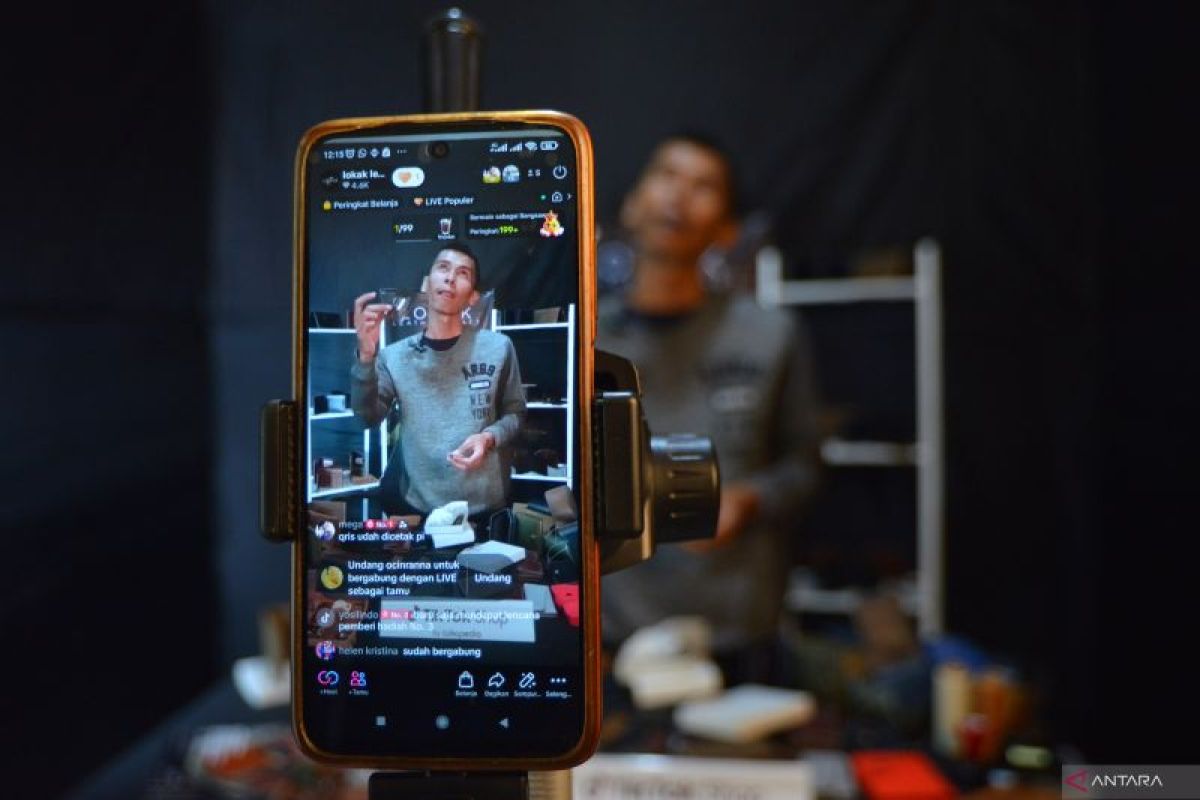
Jakarta (ANTARA) — TikTok Live is now used not only to chat and interact with viewers, but also by creators and sellers to promote a wide range of products. However, certain statements should be avoided, as they could be deemed to breach the platform’s policies or lead to restrictions on a broadcast.
This is especially important when using a live stream to sell products: how information is presented matters as much as the products on offer. TikTok has various policies covering commercial content, product claims, misleading behaviour, and goods and services subject to specific regulation.
Here are some things that are best left unsaid during a TikTok Live.
- Asking viewers to move to another platform
One practice often avoided during sales broadcasts is directing viewers to make a purchase or continue communicating on another platform.
Examples include: “Message me on WhatsApp later”, “Find our shop on Shopee”, or “Just order through Instagram”.
Mentioning platforms such as Instagram, WhatsApp, Shopee, Tokopedia, Lazada or Facebook is not automatically prohibited in every TikTok conversation. However, urging viewers to move transactions or interactions to another service can be risky, particularly if it is intended to bypass TikTok’s systems or mechanisms.
TikTok warns users to be cautious of people who pressure them to move conversations to another service, as this pattern can be used in scams.
Therefore, when selling during a live stream, it is safer to direct viewers to use the features and transaction channels available on TikTok, in accordance with its rules.
- Repeatedly asking viewers to follow
Using the words “follow” or “following” in ordinary conversation does not automatically mean a live stream breaches the rules.
However, creators should be wary of excessive or manipulative requests, especially those intended to generate inauthentic engagement.
Rather than repeatedly saying “Follow now!” or making viewers feel they must follow the account to receive something, creators can focus on the content of the broadcast and let viewers decide for themselves.
TikTok has rules against misleading behaviour and services that artificially inflate follower numbers or engagement.
- Unfairly disparaging or comparing competing brands
Other brands should also be mentioned with care.
Statements such as “Brand X’s product is rubbish; ours is the only good one” or “Don’t buy that brand because it’s definitely counterfeit” should be avoided unless there is a clear basis for the claim.
In addition to potentially misleading viewers, comparisons unsupported by evidence can make the information in a live stream less objective.
If products need to be compared, use verifiable information such as specifications, size, materials, features or current prices. Avoid making accusations against competitors simply to make your own product look better.
- Making exaggerated claims about a product’s benefits
This is particularly important for sellers of beauty, health, food and supplement products.
Avoid statements such as:
“You’ll definitely recover straight away.”
“Guaranteed to make the illness go away.”
“You’ll see the results after just one use.”
“You’ll definitely lose weight within a few days.”
“Guaranteed to keep you going for hours.”
“It will definitely make your skin fairer overnight.”
TikTok specifically prohibits promotional content that is misleading or makes exaggerated claims that cannot be substantiated.
Do not promise instant results without valid evidence. Product information should instead be based on its function, ingredients, instructions for use and claims that are permitted.
- Making careless medical claims
Health products require extra care. Do not present an ordinary product as if it were a medicine capable of curing a particular disease.
For example, do not say: “This can cure diabetes”, “This is medicine for high blood pressure”, or “Use this and your illness is guaranteed to be cured”.
If a product does have a particular function, describe it accurately and avoid promising a cure.
For products related to stamina, for example, it is safer to say “helps maintain stamina” if that is consistent with the product’s official claims, rather than promising an instant effect or making explicit sexual claims.
TikTok also applies specific policies to regulated goods and services, and to content that could pose risks to users.
- Using the word “whitening” carelessly
Beauty claims also require attention. Terms such as “whitening” should not be used casually to promise an instant change in skin colour or an unrealistic result.
Instead of saying, “This cream is guaranteed to whiten your face in three days”, explain the product’s benefits using information provided by the manufacturer.
For example, a product can be described as helping to maintain skin moisture or make skin look brighter, if that claim is consistent with the product’s official information.
The key is to avoid promises of certain results, particularly when there is no supporting evidence.
- Using language associated with scams
Do not use statements that make viewers panic or feel they must act immediately when the information is untrue.
Examples include: “If you don’t buy now, your account will be deleted” or “Transfer the money now because this is your last chance”, when no such circumstances exist.
TikTok prohibits content that promotes or facilitates scams, fraud or misleading schemes.
If a promotion is genuinely time-limited, describe it accurately. Do not invent a deadline simply to pressure viewers into buying.
- Making false promises of prizes or results
Creators should also be careful when holding giveaways or offering bonuses.
Do not say, “Everyone who joins the live will get a prize” if only a few people will actually receive one.
The same applies to claims such as “You’re guaranteed to earn commission” or “You’re guaranteed to make money” if those outcomes cannot truly be guaranteed.
Transparent information helps viewers understand what they will actually receive and avoids making them feel deceived.
- Avoiding vulgar, sexual or abusive language
Live streams should not be filled with language that is excessively vulgar or sexual, or that insults or attacks viewers or other people.
Jokes can make a broadcast feel more relaxed, but creators should consider the context and audience. TikTok has rules covering safety, harassment, sexual content and behaviour that could harm users.
- Do not reveal viewers’ personal information
Personal information is another issue that is often overlooked.
Avoid reading out a viewer’s telephone number, full address, payment details or other sensitive information in public, even if it appears in the conversation.
If there is a problem with an order or transaction, use the appropriate support channel and do not ask viewers to share sensitive data publicly in the comments.
How to speak safely during a TikTok Live
In general, creators do not need to be afraid to speak during a live broadcast. The key is to communicate honestly, avoid exaggeration and not try to circumvent the platform’s systems.
For sales broadcasts, use verifiable product information, avoid exaggerated health or beauty claims, do not make false comparisons with competitors, and use the transaction features provided by TikTok.
If a live stream is a paid promotion or promotes a brand, creators should also pay attention to the Commercial Content Disclosure setting. TikTok says content promoting a brand, product or service must enable commercial-content disclosure in accordance with its rules. The setting is also available in the live-stream settings.
This helps make a live stream not only engaging to watch, but also safer and more transparent for viewers and creators.
Source: jawawa.id (https://jawawa.id/newsitem/things-you-should-not-say-during-a-tiktok-live-1791798881)
Originally published by Antara (Indonesian) (https://www.antaranews.com/berita/5781997/hal-hal-yang-tidak-boleh-diucapkan-saat-live-tiktok), translated from Indonesian