
Thick Haze from Forest Fires Envelops Samarinda, Flights Diverted and Schools Switch to Online Learning
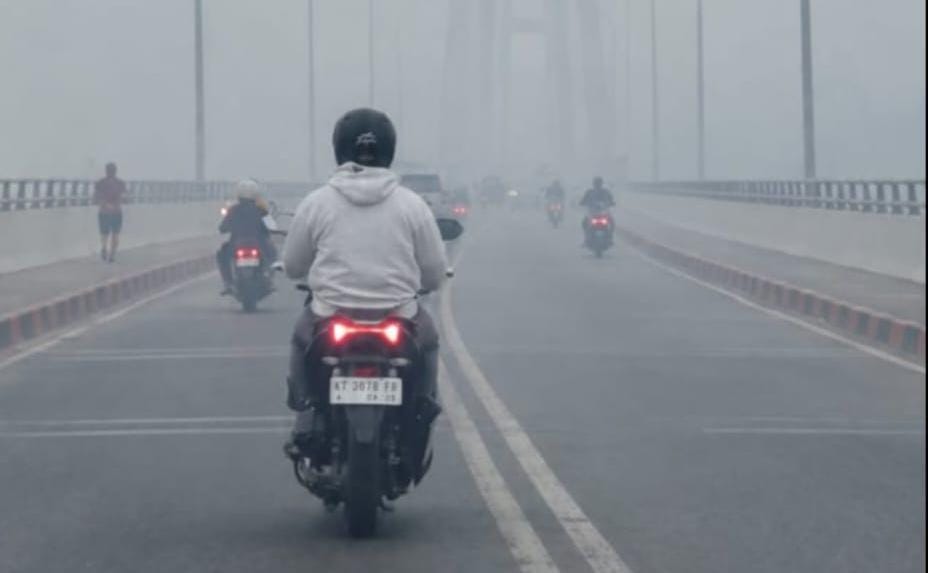
Thick haze continues to envelop the city of Samarinda, East Kalimantan, as of Thursday morning (17/09/2026). The condition developed rapidly since Wednesday afternoon, when the smoke was initially thin but gradually thickened by the evening, beginning to disrupt community activities.
The impact of the haze has even reached the aviation sector. On Wednesday afternoon, a Batik Air flight from Jakarta (BTK 6676), scheduled to land at Aji Pangeran Tumenggung (APT) Pranoto Airport in Samarinda at approximately 16:55 WITA, had to be diverted to Sultan Aji Muhammad Sulaiman Sepinggan Airport in Balikpapan. At the time, visibility in the airport area was reported to have dropped to around 1,000 metres, making landing conditions unsafe.
By Thursday morning, the air quality in Samarinda became a major concern. Data from the Air Pollution Standard Index Monitoring Station showed that Samarinda’s air quality stood at 129, categorised as unhealthy. This data aligns with monitoring from IQAir. The Acting Head of the Samarinda Environmental Agency (DLH), Suwarso, stated that on 16 September 2026, the AQI in Samarinda was recorded at 108, with PM2.5 as the primary pollutant, placing it in the unhealthy category for sensitive groups.
According to Suwarso, such air conditions have the potential to cause health issues ranging from throat irritation and coughing to shortness of breath. Consequently, the public has been urged to increase personal protection while the haze persists. “It is mandatory to use masks, such as N95 or KF94 masks, which offer high filtration efficiency and a tight seal on the face. Masks also need to be replaced regularly, approximately every 8 to 12 hours,” Suwarso said.
Residents staying indoors are also advised to close doors and windows tightly to minimise the entry of outdoor air. Outdoor activities should be reduced unless absolutely necessary. “If it is not urgent, please reduce your activities outside the house,” he added.
The impact of deteriorating air quality has also reached the education sector. The Samarinda City Education Office has implemented online learning for students, instructing schools to suspend face-to-face classes and transition to home-based learning. This policy aligns with the advisory from the Samarinda City Health Office, which requested that the public, particularly children and vulnerable groups, reduce outdoor activities until air quality improves. Universities and higher education institutions in Samarinda have also been urged to monitor air quality developments and adjust activities accordingly.
Suwarso suspects that the worsening air quality in Samarinda is linked to ongoing forest and land fires (karhutla) within the city and several other regions in Kalimantan. “The current condition is due to frequent land fires in Samarinda, which is being exacerbated by forest fires in several other areas across Kalimantan,” he concluded.