
They Speak with Tigers: The Pawang Rimueng
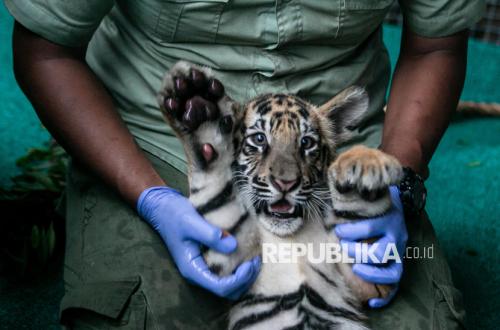
“Rimueng ka jie tamong u gampông, nyan bala ka troh u gampông.” In the traditional understanding of some Acehnese communities, this expression means, “The tiger has entered the village, which is a sign that disaster or calamity is coming to the village.” This expression demonstrates that the presence of tigers in the past held social and spiritual significance.
When tigers descend from the forest and enter human living spaces, communities do not only ask where the tigers came to, but also what is happening to the balance of the relationship between humans, the forest, and nature. From this perspective, the figure of the ‘pawang rimueng’ was born—a person believed to possess the knowledge to understand, confront, and “speak” with tigers.
In the land of Aceh, tigers have never been viewed merely as wild animals. In the socio-cultural memory of the Acehnese people, the rimueng (tiger) is an inhabitant of the vast jungle that possesses power, territory, and rules that must be respected. From the long-standing relationship between humans and the forest, the figure known as the pawang rimueng emerged—individuals with specialised knowledge to face tigers. The term Pawang Rimueng itself is recorded in Acehnese cultural documentation as a specific form of shamanic expertise (Department of National Education, 2001).
In traditional society, a pawang rimueng understands the signs of the forest: tracks, sounds, scents, claw marks, animal paths, the presence of prey, and changes in environmental behaviour. This type of knowledge can be understood as traditional ecological knowledge—knowledge that develops through long-standing relationships between communities and their environment and is passed down through generations (Berkes, 2012). Tigers themselves communicate through scent, scratches, sounds, and visual cues, allowing those who live long in the forest to learn the signs of their presence (Sunquist & Sunquist, 2002).
Consequently, the community says that these pawang can “speak with the rimueng.” This expression should not be interpreted literally to mean that tigers understand human language; scientifically, there is no evidence for this. However, the ability of the pawang to read the signs and behaviour of tigers can be seen as a form of indirect communication between humans and wildlife.
The historical trail of the pawang rimueng leads us back to the Aceh War. In Tangse, Pidie, the name Peutua Gam Masen emerged, described as a tiger handler and a figure within the Acehnese guerrilla movement around 1910. His name is recorded in Dutch military operations in the Tangse area that targeted several resistance figures (Zentgraaff, Atjeh). Tangse was a vast jungle and mountainous region vital to Muslim fighters. In such situations, the ability to read the forest, knowing paths, water sources, and animal signs, certainly held strategic importance.
This story must be read critically. Tales of pawang possessing supernatural powers or the ability to control tigers are part of community traditions and beliefs and cannot all be scientifically proven. However, the existence of the term and the tradition of Pawang Rimueng itself is a part of Acehnese culture (Department of National Education, 2001).
This tradition has continued to live on after the war era. One of the most clearly documented lineages exists in West Aceh, through Nyak Sabi – Sarwani Sabi – Jauhari. Nyak Sabi was known as a tiger handler and taught his knowledge to Sarwani from a young age. Sarwani subsequently became one of the most well-documented Acehnese tiger handlers in the modern era. He assisted the community in managing tiger conflicts and, since 2007, has been noted to work alongside the Aceh BKSDA (Natural Resources Conservation Agency) to prevent tigers from being killed during such conflicts (Mongabay, 2021).