
They Are No Longer Without Light
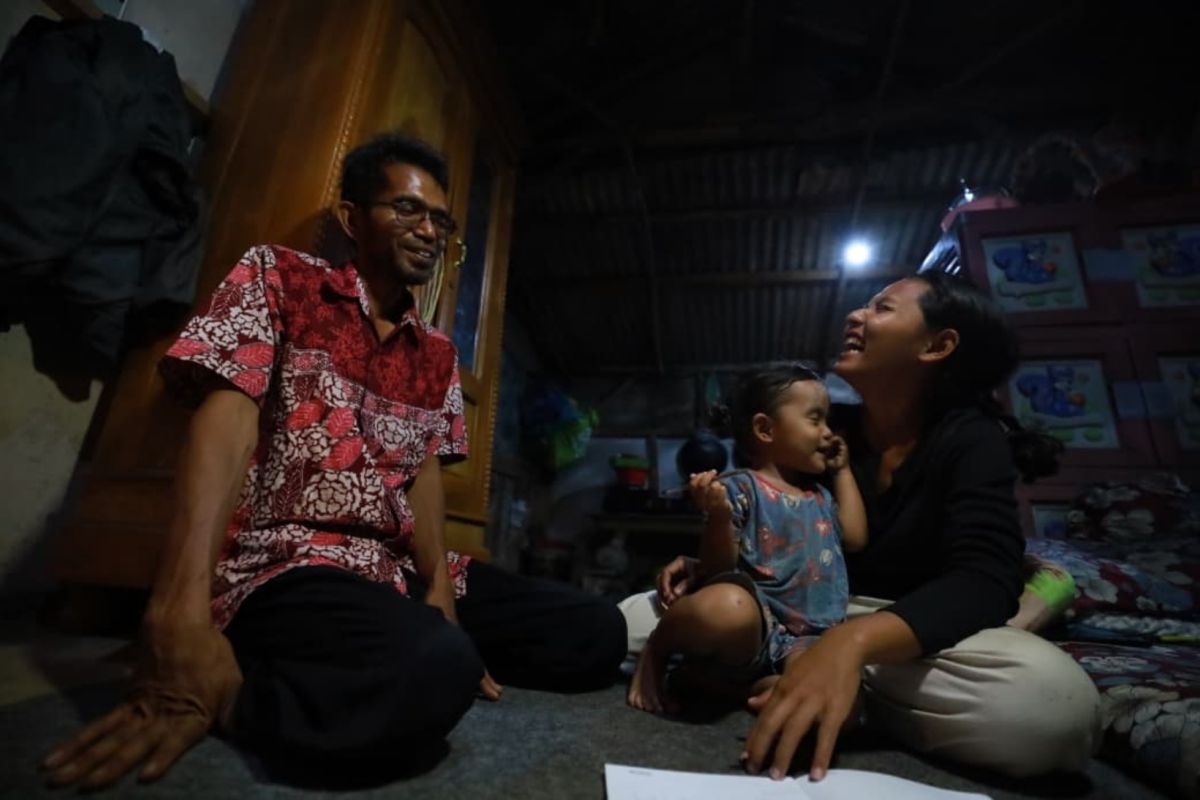
The solar-powered lamps brought not only light, but also a sense of safety and comfort.
Jakarta (ANTARA) - The residents of Cikawung Village, Tirisi Subdistrict, Indramayu Regency, West Java, wept as solar-powered lamps finally illuminated hundreds of homes, after they had lived in darkness for decades.
For tens of years, night in three hamlets of Cikawung Village — Grabyak, Pasir Toroh, and Cagak Dua — was accompanied only by silence and darkness. They lived without electricity. The only light source they relied upon was the cempor, or damar lamp.
The absence of electricity in their village had its reasons. The village is truly far from the bustle of the city. Reaching the hamlets requires a long, dusty stone road. When it rains, the journey there reveals even more clearly their isolation.
The majority of people living in the three hamlets cultivate land in areas owned by Perhutani. They are rice and mango farmers whose livelihoods depend entirely on the harvest season.
During the dry season, the mothers could only hope for the fate of their husbands, who went out each day with no certainty of work or wages.
Moreover, the houses stand quite far apart from one another. It is little wonder that electricity struggled to reach across the expanse of these three hamlets.
Now, light has begun to fill their lives, hopes are being built, and dreams are nurtured once more, like soil longing for rain.
Thanks to the Rumah Terang (Bright Home) programme initiated by the National Zakat Agency (Baznas) RI, 102 heads of families across the three hamlets can finally enjoy electric lighting through solar panel installations.
A blessing
For Onoh (45), the light illuminating his home felt like an unending blessing for which he gave thanks. During the lamp-lighting ceremony, his eyes reflected immeasurable happiness. Not without reason — he had lived with darkness for 25 years.
“Before, at night we could only rely on the cempor lamp. Its light was dim, it produced a lot of smoke, and we also had to buy the oil,” said Onoh, gazing at the lamp now illuminating his living room.
For years, his family’s activities were always limited by the sun. As soon as dusk fell, household chores had to be finished quickly. Children studied by whatever meagre lighting was available, while family time was cut short as darkness enveloped the home.
Now, the situation is slowly changing. The solar-powered lamps bring not only brightness, but also a sense of security and comfort. Children can study at night, parents can stay active longer, and homes once swallowed by darkness now radiate life.
Other residents feel the same. Emik (52) sees the arrival of the solar panel lamps as the beginning of the change they have long awaited. For Emik, light is not merely illumination, but hope for something better.
The Rumah Terang programme initiated by Baznas RI has become an answer to the limited electricity access they have faced for so long. Through solar energy, families in this remote area now have an environmentally friendly and sustainable source of energy.
For the people of Cikawung, night is no longer synonymous with limitation. Homes once lit only by damar flames now glow with light from the solar panels installed on their roofs.
Collaboration
The Rumah Terang programme in Cikawung Village is the result of a collaboration between Baznas RI and the Listrik Mandiri Rakyat (Limar, or People’s Independent Electricity) movement to provide lighting for pre-prosperous communities.
The collaboration makes use of Limar’s innovation, initiated by a Bandung man named Ujang Koswara, to bring more dignified lighting access to communities still lacking electricity facilities.
The Baznas Rumah Terang programme is one of 13 priority programmes through which Baznas extends the benefits of zakat, infak, and alms funds for the welfare of the underprivileged.
Limar lamps were developed as an effort to address the problem of “tuna cahaya” — communities without adequate lighting access because they are beyond the reach of the electricity grid, especially in remote areas.
Each household receives one lighting installation package consisting of a solar panel, five lamps, a battery, and wiring.
The lamps used in the programme have a capacity of just 1 watt each, but reportedly produce illumination equivalent to a 10-watt bulb, with a service life of more than ten years.
The LED lamps have been developed since 2008 and have been used across various regions of Indonesia. Maintenance is also simple, requiring only that the solar panels be cleaned once every three months.
Beyond providing lighting, the production of Limar lamps also involves students at several Islamic boarding schools, young people, and former prisoners who have completed vocational training programmes.
Zakat that illuminates
Baznas RI Chairman Sodik Mujahid said the Rumah Terang programme is part of the agency’s efforts to improve the quality of life in remote areas. According to him, access to energy is a basic need that can open up more opportunities for communities to develop.
“Electricity is not just about lighting, it also opens access to education, improves family economic productivity, and betters people’s quality of life,” he said.
He expressed hope that the arrival of electricity in Cikawung Village can spark residents’ enthusiasm to keep building more prosperous and self-reliant lives.
The programme, which has a national target of 452 beneficiary families, has begun with a focus on 102 families in Indramayu. It could well expand to reach thousands of other homes that have yet to experience electricity access.
Sodik hopes the aid programme will deliver tangible impact directly visible to the community, while reflecting the utilisation of nationally collected zakat funds.
Through the Rumah Terang programme, zakat funds entrusted to Baznas are expected to help more residents obtain decent lighting.
He therefore called upon zakat payers (muzaki) to work together in bringing light to families still facing limited electricity access.
For Baznas, light is not merely about dispelling darkness. It brings new hope, instilling the belief that life can change — even if it begins with a single lamp that finally shines after decades of waiting.