
These 6 Plants are the Most Resilient Against Increasingly Extreme Global Weather
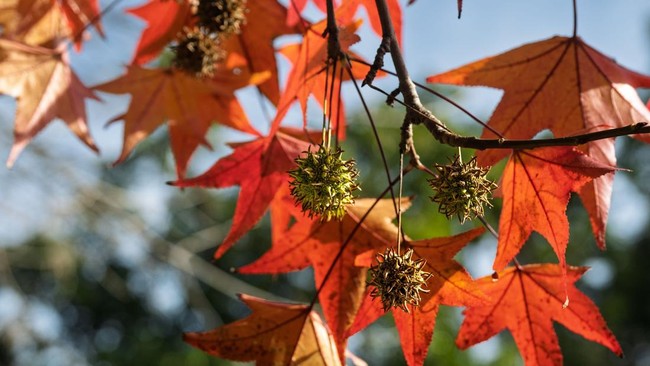
Climate change and extreme weather conditions necessitate a rethink of tree selection for urban public spaces. The types of trees suitable for planting today may not necessarily be able to survive the climatic conditions of the coming decades.
A study by the Urban Plant Lab (UPL) of more than 1.1 million public trees in London found that approximately 73% of the analysed tree population could potentially face survival difficulties due to climate change, based on climate projections for 2090.
City Trees Face a Changing Climate
The issue lies in the lifespan of trees. Trees planted on streets, in parks, or in public spaces can survive for decades. Therefore, species selection must consider more than just current weather conditions. City governments also need to account for changes in temperature, rainfall, and future climate conditions.
UPL recommends diversifying tree species in London by choosing types that are more compatible with future climate projections. Several species in the study even fall into the category of having a high level of suitability for future climatic conditions.
Interestingly, some of these species originate from Asia or its surrounding regions. One such example is Parrotia persica, which hails from the region spanning Azerbaijan to Iran. However, these findings do not mean that such species are automatically suitable for planting in Asia. The UPL study was conducted specifically for London, and the results cannot be directly applied to other regions because the climatic characteristics of each area differ. This means that the plant’s origin is not the sole factor determining its resilience to climate change.
Indonesia Begins Mapping Suitable Plants
A similar approach is being implemented in plant research in Indonesia. For instance, research by the National Research and Innovation Agency (BRIN) regarding the Manilkara kauki (sawo kecik) in the Special Region of Yogyakarta uses several climate variables to map suitable areas for the plant.
The research results indicate that approximately 1,275 square kilometres of the Yogyakarta region are estimated to be suitable for sawo kecik. Yogyakarta City and Sleman Regency possess the largest areas with high to very high suitability levels.
The study also found that sawo kecik can adapt to areas with a driest month rainfall of around 20 millimetres and a driest quarter rainfall of around 100 millimetres. These findings demonstrate that plant selection for urban areas can be based on environmental conditions and climate projections, rather than just aesthetic considerations.
Ultimately, climate change is altering the function of urban trees. Trees must serve not only as greenery but must also be capable of surviving as urban environmental conditions change in the decades to come.
Source: jawawa.id (https://jawawa.id/newsitem/these-6-plants-are-the-most-resilient-against-increasingly-extreme-global-weather-1790240154)
Originally published by CNBC Indonesia (https://www.cnbcindonesia.com/research/20260924144951-128-770589/6-tanaman-ini-paling-tahan-banting-hadapi-cuaca-bumi-yang-kian-ekstrem), translated from Indonesian