
These 5 Commodities Saved Indonesia's Trade Balance with a US$3.7 Billion Surplus
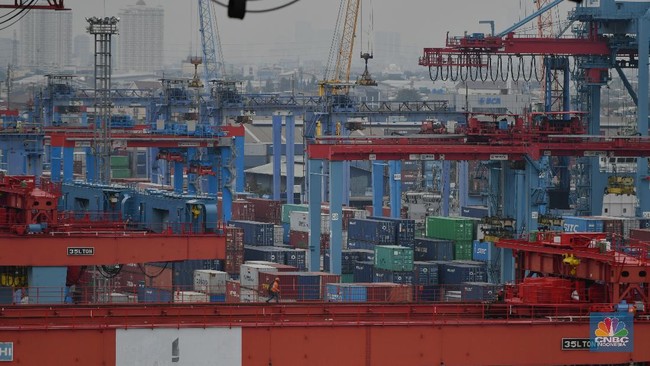
The Indonesian Central Statistics Agency (BPS) recorded a trade balance surplus of US$120 million in July 2026, following a deficit of US$450 million in June 2026.
Cumulatively, from January to July 2026, the trade balance maintained a surplus of US$3.7 billion, although this was significantly lower than the surplus of US$23.77 billion recorded during the same period last year.
Ateng Hartono, the Deputy for Distribution and Services Statistics at BPS, stated that the cumulative surplus in goods trade was supported by non-oil and gas commodities.
“The surplus throughout January to July 2026 was primarily driven by the non-oil and gas sector. This non-oil and gas surplus reached US$22.45 billion,” he said during a press conference on Tuesday (1/9/2026).
The largest contributors to the non-oil and gas surplus were animal and vegetable fats and oils valued at US$20.96 billion, mineral fuels at US$16.39 billion, iron and steel at US$10.32 billion, nickel and its derivatives at US$7.08 billion, and footwear with a surplus value of US$3.84 billion.
On the other hand, machinery and mechanical equipment recorded the largest non-oil and gas deficit, amounting to US$18.76 billion. This was followed by electrical machinery and equipment with a deficit of US$9.73 billion, plastics and plastic products at US$5.51 billion, salt, sulphur, stone, and cement with a deficit of US$2.59 billion, and cereals with a deficit of US$2.27 billion.