
'There Was Something Here Before' Exhibition Explores Indonesia-South Africa Relations
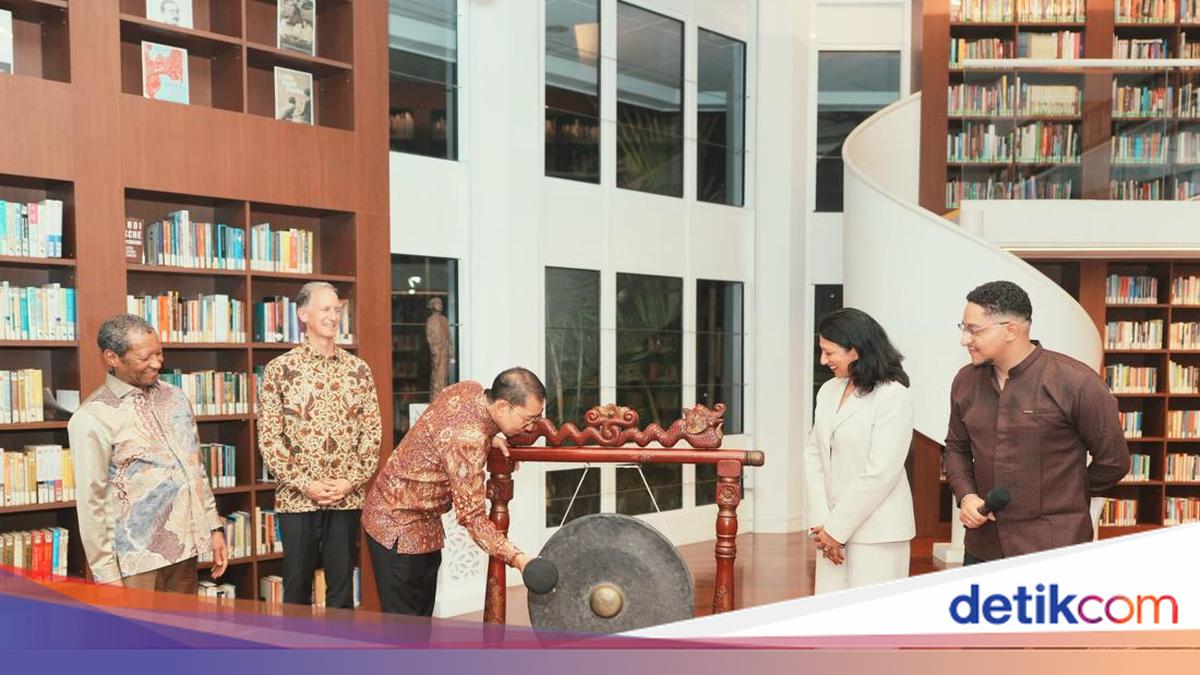
The Indonesian Minister of Culture, Fadli Zon, opened the exhibition ‘There Was Something Here Before’ by Zahira Asmal at Erasmus Huis, Jakarta. This exhibition traces the historical relationship between Indonesia and Cape Town, South Africa, through human migration across the Indian Ocean spanning more than three centuries.
Running from 3 October to 23 December 2026 at Erasmus Huis, Jakarta, the exhibition also revisits the stories of people of Indonesian descent who helped shape the life and culture of Cape Town.
In his opening remarks, Fadli expressed his appreciation to the Embassy of the Kingdom of the Netherlands and Erasmus Huis for providing a space for cultural exchange through this exhibition. He noted that Erasmus Huis plays a vital role as a platform for cultural exchange between Indonesia and the Netherlands.
The presence of this exhibition also expands the historical dialogue by involving South Africa as part of a cultural relationship that has been established for centuries.
“The exhibition ‘There Was Something Here Before’ invites us to look back at our shared history through art, research, and dialogue. This work brings together Indonesia, the Netherlands, and South Africa within a single, interconnected historical and cultural framework,” Fadli stated in a written release on Saturday (3/10/2026).
“I appreciate Zahira Asmal for inviting us to look deeper into the various layers of memory, community, and history that shape a city,” he added.
Fadli explained that one of the key figures in the historical relationship between Indonesia and South Africa is Sheikh Yusuf al-Makassari. After supporting Sultan Ageng Tirtayasa in the resistance against the expansion of VOC power in Banten, Sheikh Yusuf was arrested in 1683 and exiled to Sri Lanka in 1684.
In 1693, the Dutch colonial government subsequently transferred him to the Cape of Good Hope, South Africa. Despite being far from his homeland, Sheikh Yusuf continued to spread his teachings and exerted a significant influence on the local community.
“The exile of Sheikh Yusuf was intended to separate him from the community and networks that supported his struggle. However, his ideas and influence were never severed,” Fadlan explained.
“In Cape Town, he continued to teach and became a centre for spiritual and community life. His legacy can still be seen today through his sacred tomb and the community that has grown around his history and memory,” he continued.
Furthermore, Fadli stated that this history serves as an important foundation for strengthening cultural cooperation between Indonesia and South Africa. The Ministry of Culture is currently preparing the exhibition ‘Sacred Journey of Sheikh Yusuf Al Makasari: Legacy of Knowledge, Freedom, and Humanity’ at Indonesia House Amsterdam, Netherlands, which will be accompanied by international scientific seminars and film screenings.
The Ministry of Culture is also developing plans to establish a cultural house and an Indonesian museum in Cape Town.
“We want to build a continuity of cultural dialogue from Jakarta to Amsterdam and Cape Town. Through these various programmes, the history of Sheikh Yusuf can continue to be studied and introduced to the wider public,” said Fadli.
“We also hope that the presence of a cultural house and an Indonesian museum in Cape Town can serve as a cultural bridge that strengthens the relationship between Indonesia and South Africa sustainably,” he added.
Fadli invited all parties to use the exhibition as a shared learning space to understand and preserve the history that shapes society.
He expressed hope that this exhibition could open more conversations and strengthen the cultural ties between Indonesia, the Netherlands, and South Africa, while serving as a momentum to deepen cross-country cooperation in commemorating the 400th anniversary of Sheikh Yusuf al-Makassari.
“There is always something present before what we see today. There is life, journeys, struggles, and communities. Our responsibility is to present that history so it can be recognised, preserved, and understood by new generations,” said Fadli.
Meanwhile, the Ambassador of the Kingdom of the Netherlands to Indonesia, Marc Gerritsen, stated that this exhibition presents historical stories connecting Indonesia, South Africa, Sri Lanka, and the Netherlands.
According to him, this history can be understood not only through documents and archives but also through memories, objects, sounds, and photography that showcase the experiences of people across generations.
“History has many stories, but not all stories are told with the same voice or heard equally. For us, this exhibition is a way to connect with history while opening a space for reflection,” explained Marc.
“The story of Sheikh Yusuf and the Cape Malay community reminds us that there are still many shared historical footprints that need to be recognised and must not be forgotten,” he added.
The curator and initiator of the exhibition, Zahira Asmal, explained that ‘There Was Something Here Before’ stems from an effort to understand who built, maintained, and shaped a city. She highlighted the contributions of people from various Indonesian regions, such as Java, Sumatra, Sulawesi, and other islands.
They brought knowledge, beliefs, language, food, skills, and traditions that subsequently helped shape the life of the people in Cape Town.
“This exhibition invites us to think about who truly shapes a city. Who built it, maintained it, brought knowledge, created culture, and struggled to make it a home,” said Zahima.
“Many of them originated from Indonesia and continue to shape the life of Cape Town to this day. I hope this exhibition can make us see and appreciate their contributions and history,” she added.
‘There Was Something Here Before’ is an interactive multimedia exhibition that blends research, archival material, photography, sound, art, personal testimonies, and interactive design.
Through these various mediums, the exhibition demonstrates that a city is not merely a space.