
There Must Be Opposition Parties Outside the Government to Safeguard Democracy
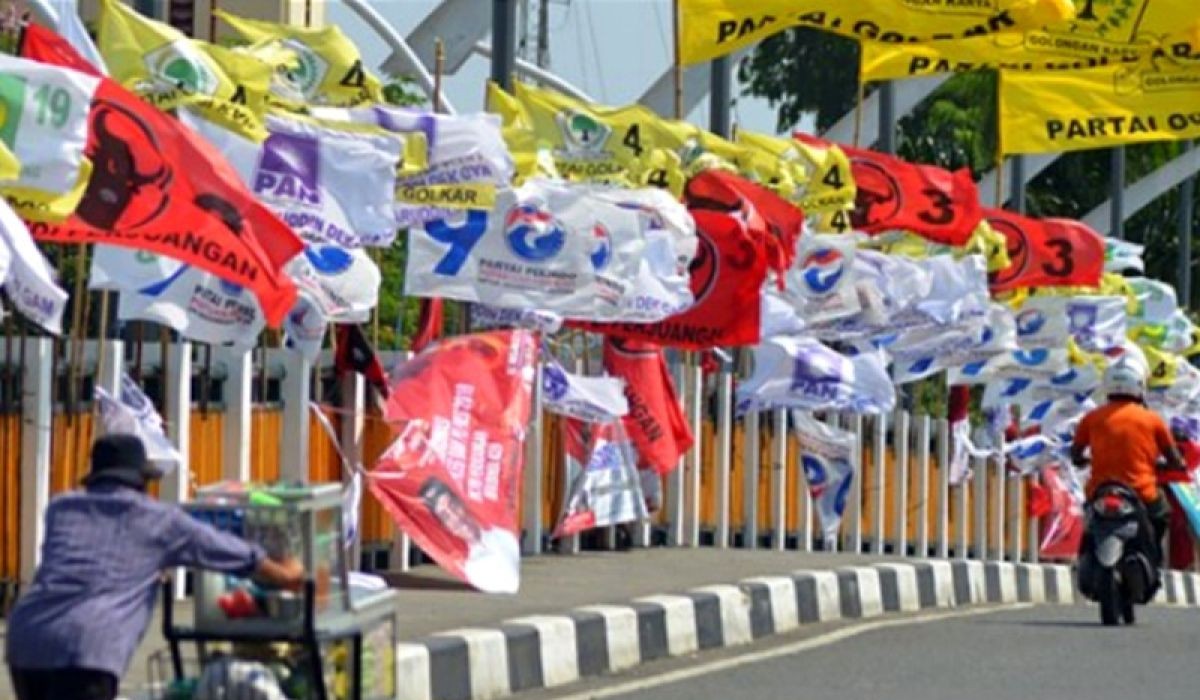
Markets view President Prabowo Subianto’s speech and BI policies positively. BRIN political analyst Lili Romi says she agrees with the President’s view on the importance of political parties outside the government. She notes that a scenario in which all parties join the cabinet coalition would harm democracy and the government’s image.
‘Saya setuju dengan pernyataan Presiden, jika semua partai gabung memang tidak baik bagi demokrasi dan juga citra pemerintah,’ Romli told reporters on Thursday (21 May).
According to Romli, opposition parties are a crucial element in a healthy constitutional system. There must be parties outside the government to act as a safety valve so the government does not operate without oversight.
‘Oleh karena itu, harus tetap ada partai yang berada di luar pemerintah untuk menjalankan fungsi pengawasan,’ she added.
Romli further argued that the function of parties outside the government is not only to monitor bureaucratic functioning, but also to be an official venue for voicing public aspirations among citizens dissatisfied with the rulers’ performance or policies.
‘Dan (menjadi) alat artikulasi publik ketika kecewa pada pemerintah,’ Romli added.
Earlier, in a speech delivering the Macro-Economic Framework and Key Fiscal Policy Guidelines (KEM-PPKF) at the DPR building, President Prabowo praised PDIP’s political stance. He acknowledged that the absence of an opposition or checks and balances is not good for the country.
‘Not all parties here are part of the government. I respect and value that. Our democracy needs checks and balances. I understand that PDIP sacrifices to be outside the government. In truth I would like to thank PDIP. You have served democracy,’ he said.
Prabowo even joked that as president, he longs for a system of mutual cooperation in which all political parties join his government.
‘If all parties were in government, how sweet that would be. How sweet it would be for me. But perhaps that would not be good. Every leader must welcome criticism; every executive must be overseen. Thank you for the oversight, Sir,’ he said.
Prabowo confessed that he often felt overwhelmed by harsh criticisms from PDIP cadres against the government.
He praised PDIP’s steps as a form of ‘political sacrifice’ to safeguard the democracy’s dignity, noting that being outside the government means foregoing various state facilities.
If the government is right, then PDIP will support and implement the programme. But if it is not right, then PDIP will offer alternative solutions.
In general, he said Megawati wishes for the bull-head party to remain solid in organisation with a uniform frequency.
Political turmoil looms over Japan after the ruling party there lost its majority in Parliament on Sunday (27 October). A tiered threshold remains something that can be formulated flexibly to be accepted by various parties.
Member of Commission II of the House of Representatives, Indrajaya, highlighted a string of OTT operations by the Corruption Eradication Commission (KPK). The latest involves the Regent of Rejang Lebong. The tug-of-war of interests makes discussions of provisions in the Electoral Bill rife with political negotiation.
Local elections via the DPRD represent a calculated political manoeuvre by elites to distribute power at the regional level. Secretary of DPD PDI Perjuangan DKI Jakarta, Pantas Nainggolan, stressed that restructuring this would lay the foundation for the party’s revival in Jakarta.