
There is No Truly Free Lunch: MBG and the Nation's Fiscal Sustainability
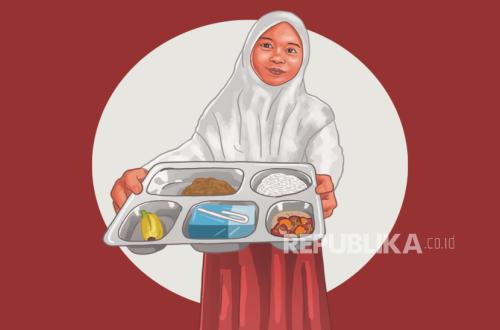
The Free Nutritious Meal (MBG) programme is one of the most ambitious policies in the history of Indonesia’s social development. The government has positioned this programme as a strategic instrument to improve the quality of human resources by meeting the nutritional needs of school children and vulnerable groups. In the long term, MBG is expected to reduce stunting rates, improve health quality, enhance learning abilities, and strengthen national competitiveness. On paper, there is almost no reason to reject such a noble objective.
However, public policy is measured not only by the nobility of its goals but also by the state’s ability to provide sufficient resources to run it sustainably. As fiscal space faces pressure due to the global economic slowdown, increasing debt obligations, and growing development expenditure needs, a critical question arises: can the state maintain a national-scale programme like MBG without sacrificing other development priorities? This question must be answered honestly so that MBG does not merely become a political symbol, but truly becomes a sustainable investment in human development.
MBG as a Strategic Investment in Human Development: It is undeniable that the quality of human resources is the primary factor determining a nation’s progress. Various studies show that nutritional status during growth periods is closely linked to cognitive ability, work productivity, long-term health, and even individual income levels in adulthood. In the Indonesian context, the challenges of human development remain significant. Issues such as stunting, unequal access to nutritious food, and child health quality are tasks that have not yet been fully resolved. Therefore, MB<0xC2><0xA0>G serves as a form of state intervention aimed at breaking the cycle of poverty and malnutrition from an early age.
From a development economics perspective, state expenditure on nutritional improvement should not be viewed merely as consumption. Such budgets are investments with the potential to yield long-term economic benefits. Children who receive good nutrition tend to have higher learning abilities, better health, and greater productivity when entering the workforce. Another advantage is the creation of a multiplier effect on the local economy. The large-scale demand for food supplies can drive increased production in agriculture, livestock, and fisheries, as well as stimulate micro and small enterprises within the programme’s supply chain. If managed well, MBG could impact not only the education and health sectors but also serve as an economic driver for regional areas. However, these potential benefits can only be realised if the programme is implemented effectively, accurately targeted, and supported by a robust governance system. Without proper management, the large investments made by the state risk yielding much smaller benefits compared to the costs incurred.
There is No Free Lunch: The Reality of Unignorable Fiscal Pressure: Behind the optimism for the Free Nutritious Meal (MBG) programme lies a fiscal reality that cannot be ignored. In public economics, the adage goes: ‘there is no such thing as a free lunch’—every public policy has a cost that must ultimately be borne by the state, the community, or future generations. The government currently faces various expenditure obligations that continue to increase annually. Spending on education, health, social protection, infrastructure development, subsidies, and even debt interest payments requires massive budget allocations. At the same time, state revenue does not always grow as expected. Dependence on tax revenue means that fiscal conditions are heavily influenced by both national and global economic dynamics. When economic growth slows or commodity prices decline, the government’s ability to collect revenue is also affected. In such situations, every priority programme will compete for space within the State Budget (APBN).
MBG, which requires a large budget, automatically becomes a factor that narrows the government’s fiscal flexibility. The larger the allocation given to one programme, the smaller the space available for other sectors. This issue does not mean that MBG is unimportant. On the contrary, it indicates that the government must undertake more careful planning so that the programme can run without posing risks to national fiscal stability. Healthy fiscal management is a primary prerequisite for ensuring the programme’s benefits can be felt in the long term. The experience of various countries shows that large-scale social programmes often face sustainability challenges when not accompanied by mature fiscal calculations. Policies that are popular during initial implementation can become a burden when economic conditions face pressure or state revenue declines. Therefore, the success of MBG is determined not only by the ability to distribute food to millions of beneficiaries but also by the government’s ability to maintain a balance between social needs and available fiscal capacity. The fundamental question is how to ensure the programme’s benefits can be enjoyed by the current generation without reducing the rights of future generations. In this context, the perspective of intergenerational justice becomes essential to discuss.
Source: jawawa.id (https://jawawa.id/newsitem/there-is-no-truly-free-lunch-mbg-and-the-nations-fiscal-sustainability-1780860253)
Originally published by Republika (https://analisis.republika.co.id/berita/tg9xp9291/tidak-ada-makan-siang-yang-benarbenar-gratis-mbg-dan-keberlanjutan-fiskal-negara), translated from Indonesian