
Theology of Independence and Indonesia's Direction
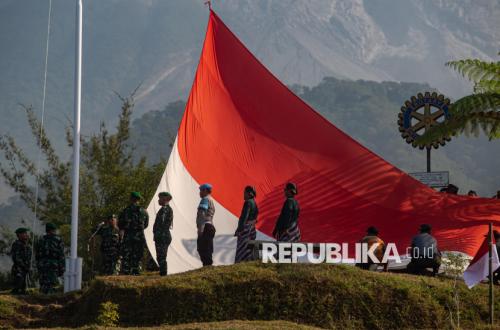
On 17 August 2026, the Republic of Indonesia will reach the age of 81 years. Over more than eight decades, the nation has passed through various waves of the times: from the revolutionary war of independence defending sovereignty, the dynamics of regime change, to geopolitical contestation and technological disruption in the 21st century.
For Muslims as the majority entity, the celebration of independence is not merely a ceremonial routine. Independence is a civilisational mandate as well as a divine blessing that demands ethical and historical accountability: to what extent has the ummah freed its nation from the shackles of ignorance, inequality, and fear?
Theologically, independence (al-hurriyah) is rooted in the prophetic mission of liberating human dignity. The Qur’an affirms this civilisational orientation in Surah Ibrahim [14] verse 1: “Alif Lām Rā. (This is) the Book (the Qur’an) which We have sent down to you (Prophet Muhammad) so that you may bring mankind out of various darknesses into light (radiant) by the permission of their Lord…”
True independence is an emancipatory movement that continuously moves humans from spaces of darkness (adz-dzulumaat)—structural ignorance, economic tyranny, poverty, and moral degradation—towards light (an-nuur), namely social justice, the nobility of reason, and the supremacy of law.
Approaching one century of the republic, the proclamation of independence must be reinterpreted not merely as the nation’s liberation from foreign colonialism, but as an unceasing endeavour to free citizens from the shackles of scientific-technological backwardness, ignorance, and mass poverty.
The Qur’an lays a very precise sociological foundation regarding the success of a nation. In Surah Quraisy [106] verses 3–4, Allah SWT says: “So let them worship the Lord (Owner) of this House (the Ka’bah), who has fed them against hunger and secured them from fear.”
This verse brings together three inseparable pillars of civilisation: a nation that is monotheistic and civilised is marked by two measurable indicators: food security and a sense of safety.