
The Youth Pledge and the Future of Energy Security
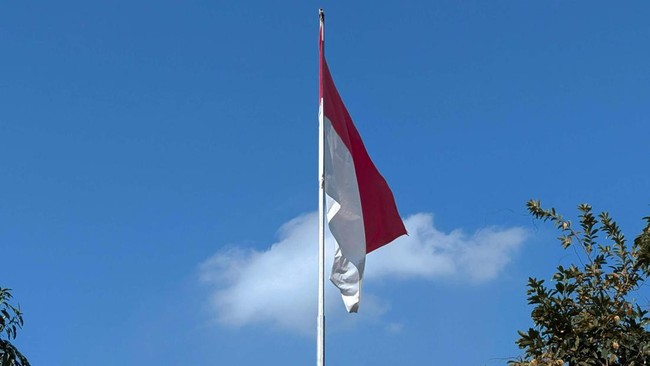
On 28 October 1928, young people from different regions, ethnic groups and linguistic backgrounds united around one aspiration: to build Indonesia as a single nation. The Youth Pledge was not merely a declaration of homeland, nation and language, but an investment in the future.
They had not yet witnessed independence, but they laid the foundations for generations to come. Nearly a century later, that spirit faces a different test. If unity was once pursued amid colonialism, it is now also tested by whether every region has the opportunity to grow and prosper.
That is why energy security is a national concern. Unity has greater meaning when geography no longer determines whether a person’s opportunities to progress are costly or affordable.
Energy is often discussed in terms of production, imports, prices and infrastructure. Yet energy determines whether fishers can go to sea, regional industries can develop, and schools and health facilities can provide reliable services. Unequal access to energy means unequal opportunities.
Conversely, affordable, reliable and sustainable supply can connect economic activity across regions. To give meaning to the Youth Pledge today is to ensure that unity goes beyond national identity and is reflected in fairer access to energy, without compromising future generations. Unreliable electricity or hard-to-obtain fuel can hamper growth long before a region is able to attract new investment.
As the Prabowo Subianto and Gibran Rakabuming Raka administration enters its second year, its energy self-sufficiency agenda should be assessed against these benefits. President Prabowo has from the outset placed energy self-sufficiency among the pillars of national sovereignty. But the ability to supply fuel today is not enough to demonstrate resilience.
Indonesia must also reduce its exposure to global price spikes, strengthen domestic supply, improve the evenness of distribution and prepare a system capable of withstanding economic and geopolitical change. The measure of resilience must therefore move beyond national supply sufficiency to energy reliability as actually experienced by households, businesses and remote areas.
Pertamina is one example of how this agenda is being pursued. Its contribution is not simply the volume of fuel distributed or infrastructure operated, but its ability to maintain supply, broaden access and support energy diversification. The One Price Fuel programme in disadvantaged, frontier and outermost regions demonstrates this focus on equitable access.
For people on remote islands, the policy is not only about setting the same price at distribution points; it also seeks to narrow the energy-cost gap with economic centres. In areas with long logistics routes and high delivery costs, differences in energy costs can affect the price of goods, business revenues and regional competitiveness.
However, the same price does not necessarily create the same opportunities. Stocks must be available, deliveries must be continuous, services must be adequate, and transport costs must not keep burdening local businesses. When supply is interrupted, the official price offers little help to fishers or business owners.
The government should therefore assess the One Price Fuel programme by its impact on economic activity, essential services and business opportunities, rather than only by the number of distribution points established. Consistent evaluation will help determine whether the policy is genuinely narrowing development gaps or merely improving administrative indicators.
Resilience also requires Indonesia to reduce its reliance on fuel imports. In this context, B50 biodiesel is an important step. The government began implementing the B50 mandate on 1 July 2026 and launched it on 9 July 2026.
The blend, which combines 50 per cent palm-based biodiesel with diesel, is intended to increase the use of domestic resources and reduce diesel imports. For Indonesia, cutting imports could also reduce exposure to global oil-price movements and pressure on foreign-exchange needs.
But B50 is more than a fuel formula. The policy connects energy with agriculture, industrial processing, technology and value creation. Pertamina has a role in procurement, processing, quality testing and distribution.
Its success will only be demonstrated if imports genuinely fall, feedstock is available, production costs are competitive, and users’ engines and infrastructure remain reliable. The government must also encourage bioenergy productivity without clearing forests or undermining food security.
Energy self-sufficiency should not come at the cost of environmental damage. Without oversight of productivity, land use and supply chains, short-term economic benefits could create new risks that weaken national resilience.
Further diversification could come from bioethanol made from local commodities. Indonesia has a range of potential feedstocks, but potential alone does not guarantee commercial viability. The industry needs a consistent supply, processing facilities, quality standards, distribution networks and clearly identified buyers.
The challenge is to build mutually beneficial relationships among farmers, processors, energy companies and consumers. Pertamina can help open markets and provide infrastructure, while the government needs to ensure cross-sector coordination and policy certainty to support sustained investment.
Without such certainty, the potential of local feedstocks will remain an opportunity on paper rather than an industry that benefits farmers and energy users. Important though it is, replacing imports with biofuels is not a complete solution. Indonesia still needs a diverse energy mix, greater efficiency, faster renewable-energy deployment, stronger electricity grids and storage technology.
Self-sufficiency does not mean forcing all needs to be met by domestic production regardless of cost. It means having a sufficient choice of energy sources, being able to manage risks and maintaining supply when global markets are disrupted.
Such choice is particularly important for an archipelagic country with differing needs and resources. A solution suitable for a major industrial area may not work for a small island; both nevertheless deserve supply that matches local needs and economic capacity.
This is where the history of the Youth Pledge speaks to us again. The young people of 1928 fought for an aspiration whose results would be enjoyed by others. We face a similar responsibility: to provide energy for people today while protecting the living environment and economic choices of future generations.
Unrestrained resource exploitation, weak governance and disregard for the environment will merely shift today’s burden into the future. Investment decisions made today must address economic needs while taking environmental limits into account, so that one generation’s progress does not diminish the opportunities of the next. Energy security should therefore not be measured solely by fuel production, reduced imports or the number of infrastructure projects.
The government should consider whether households and businesses have reliable, affordable supply, whether the economy is more resilient to external shocks, and whether changes to the energy system expand opportunities for future generations. Pertamina can play an important part in this process, but its contribution must be reflected in measurable results and lasting benefits.
The Youth Pledge reminds us that unity requires practical work across generations. The government has an opportunity to translate that principle into more even energy distribution, reduced dependence on imports and diversification that safeguards the environment.
By ensuring that no region is left behind for lack of energy and that no generation bears excessive costs for today’s decisions, Indonesia can turn energy security into a foundation for shared progress. One nation need not depend on a single energy source. What it needs is a shared commitment to energy that is resilient, fair, self-reliant and sustainable for all of Indonesia.
Source: jawawa.id (https://jawawa.id/newsitem/the-youth-pledge-and-the-future-of-energy-security-1793141427)
Originally published by CNBC Indonesia (https://www.cnbcindonesia.com/opini/20261027160744-14-779907/sumpah-pemuda-dan-masa-depan-ketahanan-energi), translated from Indonesian