
The World's Palm Oil and Coal King: Why the World Is Wary of Indonesia's New Move
Jakarta, CNBC Indonesia—President Prabowo Subianto has officially announced the formation of a Special Export State‑Owned Enterprise to manage exports of Indonesia’s strategic commodities such as coal, crude palm oil (CPO), and ferro‑alloys.
In his address to the Plenary Session of the Indonesian House of Representatives (DPR RI), Prabowo said the government has issued a Government Regulation (PP) governing the governance of export of natural resources (SDA). The export‑management state‑owned company is named PT Danantara Sumberdaya Indonesia (DSI).
Sale of all Indonesian natural resource outputs, including palm oil, coal and ferro alloys, must be conducted through this Special Export State‑Owned Enterprise.
Under this rule, all exports of strategic commodities must be made via the government‑designated state‑owned exporter as the sole exporter. The government argues the move is necessary to tighten governance of SDA trade and to curb export manipulation practices such as under‑invoicing, transfer pricing, and outward leakage of export proceeds.
The world has questioned Indonesia’s policy, deeming it overly centralised. The policy could have large impacts on the supply of coal and crude palm oil worldwide given Indonesia’s large share of these two commodities.
CPO
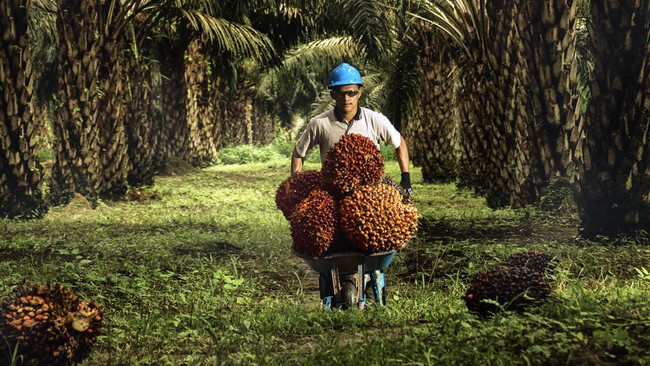
USDA reports Indonesia remains the world’s leading palm oil producer. For the 2025/2026 production period, Indonesian palm oil production is forecast at 46.7 million tonnes, equivalent to 57% of the global projected total of 81.27 million tonnes. Indonesia accounts for more than half of global palm oil. Malaysia is second with 20.2 million tonnes (about 25% of global market). Thailand follows with 3.9 million tonnes.
Indonesia’s plantation area is also the largest, with the USDA noting Indonesian oil palm plantation area around 14 million hectares in 2025/2026, the largest in the world. Malaysia ~5.6 million hectares. Nigeria ~3.2 million hectares.
This vast land base makes Indonesia a key determinant of global edible oil supply. When Indonesian palm oil production falls due to weather or domestic policy, world edible oil prices tend to rise.
Over the past decade, Indonesian palm oil production has trended upward. The average production for 2016–2025 was about 42.52 million tonnes, with an annual growth of around 3%. In 2024/2025 production reached 45.5 million tonnes and is projected to rise to 46.7 million tonnes in 2025/2026. The rise comes amid a moratorium on new land expansion and global pressure on deforestation. Growth is now more driven by plantation productivity and replanting programmes.
The Indonesian Palm Oil Association (GAPKI) estimates national CPO and PKO production in 2025 reaching 56.55 million tonnes, up 7.18% from 52.76 million tonnes in the previous year. The largest growth comes from a recovery in CPO output, reaching 51.66 million tonnes. Domestic consumption also rose to 24.77 million tonnes. The largest uptake is in biodiesel, which jumped almost 11% to 12.7 million tonnes after the implementation of the B40 programme.
Biodiesel policy has significantly reshaped the Indonesian palm oil industry in recent years. Much of the additional production is now absorbed domestically for energy. GAPKI notes biodiesel consumption accounts for more than half of domestic palm oil consumption. This tightens export supply and supports high global prices.
Nevertheless, Indonesia’s palm oil exports remain very large. GAPKI notes total palm product exports in 2025 reached 32.34 million tonnes worth US$35.87 billion, roughly Rp590 trillion. That value is up nearly 30% from the previous year due to higher global prices and increased volumes of refined products. The largest export remains refined palm oil, at 22.7 million tonnes.
Domestically, the palm oil industry also faces productivity and land‑legal issues. GAPKI notes around 41–42% of Indonesian palm plantations are managed by smallholders. Some still use uncertified planting material with low productivity. The government is promoting a replanting programme through BPDP to boost productivity without opening new land.
Coal
Indonesia’s position in the global coal market remains highly dominant. The International Energy Agency (IEA) in Coal 2025: Analysis and Forecast to 2030 notes Indonesia remains the world’s largest coal exporter. However, in 2025 Indonesian coal production is projected to begin to decline for the first time since the Covid‑19 pandemic due to a slowdown in global coal trade and lower imports from China.
Nonetheless, Asia’s dependence on Indonesian coal remains high, especially for power generation and industry. The IEA forecasts global coal consumption in 2025 at 8.85 billion tonnes, the highest on record. China remains the central market for coal, with consumption around 4.95 billion tonnes (about 56% of global consumption). India is second with about 1.3 billion tonnes.
In Southeast Asia, demand for coal continues to rise, particularly from Indonesia and Vietnam, as power generation and metal‑based industries expand.
This keeps Asia coal as the backbone of the region’s energy, even as the energy transition continues. For Indonesia, the shift in China’s demand is the most decisive factor. The IEA notes imports of coal by China and India began to fall in 2025 as domestic production increases and energy stocks remain high. The impact is directly felt in Indonesia’s exports. In the report, d
Source: jawawa.id (https://jawawa.id/newsitem/the-worlds-palm-oil-and-coal-king-why-the-world-is-wary-of-indonesias-new-move-1779542513)
Originally published by CNBC Indonesia (https://www.cnbcindonesia.com/research/20260521111206-128-736626/raja-cpo-batu-bara-dunia-ini-alasan-dunia-cemas-dengan-aksi-baru-ri), translated from Indonesian